
Building High-Performance Organizations Through Empathy and Accountability: A Founder Interview with Manju Bhaskar
In today’s business environment, growth is no longer determined solely by market opportunities, operational excellence, or financial performance. Increasingly, organizations are discovering that their ability to scale successfully depends on something far more fundamental: the strength of their people, leadership, and culture systems. While many companies invest heavily in business strategy, far fewer dedicate the same level of attention to creating workplace ecosystems that can sustain long-term growth. This gap often becomes the hidden reason behind stalled transformation initiatives, disengaged employees, leadership challenges, and scaling difficulties.
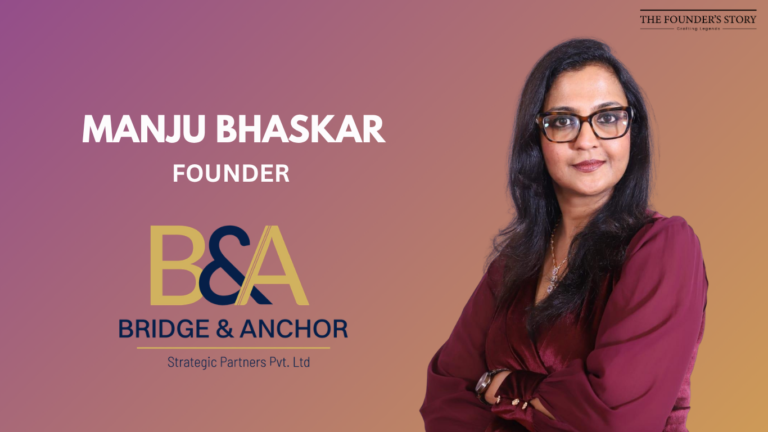
At the forefront of addressing this challenge is Manju Bhaskar, Founder of Bridge & Anchor Strategic Partners, a people and culture consulting firm dedicated to helping organizations align business objectives with human potential. As an entrepreneur, leadership advisor, and people strategy specialist, Manju has built her startup around a simple yet powerful belief: organizations thrive when leadership, culture, and business strategy evolve together. Through Bridge & Anchor Strategic Partners, she works with founders, startups, scaling businesses, and established organizations to create workplaces where empathy drives leadership, listening shapes culture, and people become the foundation of sustainable performance.
In this exclusive founder interview, Manju Bhaskar shares her entrepreneurial story, discusses the realities of organizational growth, explores leadership challenges that often go unnoticed, and explains why people strategy should be viewed as a core business driver rather than a support function.
TFS: Manju, welcome, and thank you for joining us today. It is a pleasure to have you with us. Your founder journey and the story behind Bridge & Anchor Strategic Partners have attracted attention because of your unique focus on connecting business growth with people strategy. Before we begin, could you tell our readers what inspired your entrepreneurial path?
Manju Bhaskar: Thank you for having me. I am delighted to be here and share my founder story.
My entrepreneurial journey did not begin with a desire to simply start a business. Instead, it began with a deep observation that followed me throughout my professional experiences across different organizations and leadership environments. Over time, I noticed a recurring pattern. Companies were investing significant resources into business strategy, operational excellence, technology transformation, and market expansion. However, the systems required to support people through those changes were often underdeveloped or completely overlooked.
What fascinated me was that many organizational challenges were not actually strategy problems. In many cases, leaders had strong business plans and ambitious growth goals. The real issue emerged when leadership capabilities, organizational culture, communication systems, and employee experiences failed to evolve at the same pace as the business itself.
As a result, businesses frequently encountered resistance, disengagement, communication gaps, leadership misalignment, and retention challenges. These issues were often treated as isolated people problems when, in reality, they were strategic business challenges with human roots.
That realization became the foundation of my startup journey. I wanted to build an organization that could help businesses bridge the gap between business objectives and people experience while also creating stable systems that support sustainable growth. That vision ultimately became Bridge & Anchor Strategic Partners.
TFS: What systemic gap in organizations pushed you to build your own firm instead of continuing within existing corporate structures?
Manju Bhaskar: The biggest systemic gap I observed was the disconnect between business strategy and people strategy.
Organizations are incredibly disciplined when it comes to developing financial plans, growth roadmaps, operational frameworks, and market expansion strategies. However, many fail to apply the same rigor when building leadership capabilities, culture systems, employee engagement frameworks, and organizational development structures.
As I continued working with businesses, I realized that growth often exposed weaknesses that had been hidden during earlier stages. Teams expanded faster than communication systems could support them. Leadership responsibilities increased faster than leaders were prepared for them. Culture became diluted because organizations assumed it would naturally sustain itself.
Consequently, businesses found themselves struggling despite having strong market opportunities and capable employees. The challenge was not a lack of ambition. The challenge was a lack of alignment.
That insight motivated me to create Bridge & Anchor Strategic Partners. I wanted to help organizations build intentional connections between business performance and human experience. When those elements work together, organizations become more resilient, adaptable, and sustainable. That is the gap I set out to address as a founder and entrepreneur.
TFS: The name “Bridge & Anchor” reflects both movement and stability. How does this dual philosophy influence your decisions as a founder?
Manju Bhaskar: The philosophy behind our name influences every decision we make.
The word “Bridge” represents movement, connection, and progress. Organizations constantly face transitions. They move from startup stages to scaling phases. They evolve from founder-led structures to leadership teams. They navigate growth, transformation, restructuring, and innovation. During these transitions, gaps naturally emerge.
Our role is to help organizations bridge those gaps. We help connect leadership with employees. We connect vision with execution. We connect strategy with culture. We connect organizational aspirations with practical implementation.
At the same time, transformation without stability can create chaos. This is where the concept of the “Anchor” becomes equally important. Anchor symbolizes trust, consistency, accountability, and sustainable systems. Growth should never come at the expense of organizational health. Businesses need strong foundations that support long-term success.
As a founder, I evaluate decisions through both lenses. I ask whether a decision helps create meaningful progress while also strengthening long-term stability. When organizations achieve both movement and stability simultaneously, they create sustainable success rather than temporary growth.
TFS: What is the biggest misconception founders have about building high-performing teams and workplace culture?
Manju Bhaskar: This is one of the most common patterns I observe among founders and startup leaders.
Passion is incredibly powerful during the early stages of a business. It fuels resilience, innovation, creativity, and determination. Entrepreneurs often rely on passion to navigate uncertainty and overcome challenges. However, passion alone cannot sustain organizational growth indefinitely.
Many founders assume that if everyone remains motivated and committed, culture will naturally develop and alignment will automatically occur. Unfortunately, that assumption becomes increasingly risky as organizations grow.
As teams expand, complexity increases. New employees join. Communication becomes more layered. Decision-making becomes more distributed. Expectations become more diverse.
Without intentional structures, misunderstandings begin to emerge. Accountability becomes inconsistent. Cultural values become open to interpretation. Eventually, even highly motivated teams struggle to maintain alignment.
This is why empathy, listening, and intentional leadership matter so much. Sustainable performance is not built through pressure. It is built through clarity, trust, communication, and shared purpose. The most successful founders eventually realize that structure does not limit growth. Structure enables growth.
TFS: At what point does culture stop being organic and start requiring intentional design?
Manju Bhaskar: Culture requires intentional design the moment a founder can no longer personally influence every employee.
In very small teams, culture develops naturally because interactions happen constantly. Founders have direct visibility into employee experiences. Decisions are communicated quickly. Expectations are understood through daily interaction.
However, growth changes that dynamic. As organizations scale, founders cannot personally shape every conversation, decision, or employee experience. New managers enter the organization. Teams become distributed. Communication channels multiply.
At that point, culture can no longer rely on proximity. It must rely on systems. Intentional culture design involves leadership behaviors, recruitment practices, onboarding experiences, communication frameworks, recognition systems, performance management approaches, and accountability structures.
Organizations that fail to design culture intentionally often discover that culture develops anyway—but not necessarily in ways that support business objectives.
Therefore, culture should never be left to chance. It should be treated as a strategic asset that requires ongoing investment and leadership attention.
TFS: What behaviours distinguish leaders who truly believe people are their greatest asset?
Manju Bhaskar: The difference becomes visible in their daily actions rather than their statements. Many leaders claim that people are their greatest asset. However, genuine belief reveals itself through behavior.
Leaders who truly value people invest significant time in listening. They create opportunities for meaningful dialogue. They actively seek feedback rather than waiting for problems to surface. They prioritize employee development even during periods of business pressure.
Furthermore, they make decisions by considering long-term human impact alongside immediate business outcomes. They understand that sustainable performance emerges from engaged, capable, and supported teams.
These leaders also demonstrate consistency. They do not prioritize people only during favorable business conditions. They maintain their commitment during challenging periods as well.
In contrast, leaders who merely use people-centric language often reveal different priorities through their actions. They consistently prioritize output over development, short-term results over long-term capability building, and immediate efficiency over employee experience. The distinction becomes very clear over time.
TFS: When a startup transitions from survival to scaling mode, what is the first invisible crack you notice?
Manju Bhaskar: Without question, the first invisible crack is communication breakdown.
During the startup phase, communication happens naturally. Team members often sit together, solve problems quickly, and share information informally. As the organization grows, those informal systems begin to fail.
Information becomes fragmented. Teams operate with different assumptions. Priorities become unclear. Decision-making slows down because employees lack visibility into broader objectives. Interestingly, everyone may still be working extremely hard. Yet productivity begins to decline because effort is no longer aligned.
This communication gap often creates secondary problems. Accountability becomes unclear. Collaboration suffers. Trust weakens. Employee frustration increases. The challenge is not the absence of effort. The challenge is the absence of structured communication systems that support growth.
Organizations that recognize and address this early tend to scale far more effectively than those that wait until communication challenges become cultural problems.
TFS: What is the toughest conversation you’ve had to initiate with a founder?
Manju Bhaskar: One of the most difficult conversations involves helping founders recognize that they may have become the bottleneck within their own organization.
For entrepreneurs who have built a company from the ground up, control often feels necessary. Their involvement contributed significantly to the startup’s early success. Naturally, they develop strong attachments to decision-making processes. However, the behaviors that help founders build a business are not always the same behaviors required to scale one.
At times, excessive involvement slows decision-making. Constant oversight limits leadership development within teams. Reluctance to delegate reduces organizational agility. These conversations can be challenging because they require founders to examine their own leadership habits honestly.Yet they are also among the most transformative discussions. Once founders shift from being central operators to strategic leaders, organizations often experience dramatic improvements in capability, accountability, innovation, and growth.
TFS: How do you build accountability without suppressing individuality?
Manju Bhaskar: The key is creating clarity rather than control. Many organizations mistakenly associate accountability with rigid oversight. Employees then perceive accountability as micromanagement, which limits creativity and engagement.
True accountability operates differently. It begins with clear expectations. People need to understand their responsibilities, objectives, decision-making authority, and success metrics.
Once those elements are established, individuals should have flexibility in how they achieve outcomes.
This balance creates an environment where ownership and innovation coexist. Employees understand what they are accountable for, yet they retain the freedom to contribute unique perspectives and solutions.
When accountability focuses on outcomes rather than excessive control, organizations create both consistency and creativity. That combination is essential for sustainable growth.
TFS: Are fractional leadership roles a trend or a structural shift?
Manju Bhaskar: I firmly believe they represent a structural shift. The modern business environment demands both expertise and agility. Organizations need access to experienced strategic leadership, yet many do not require or cannot justify traditional full-time executive structures.
Fractional leadership provides an effective solution. It enables businesses to access specialized expertise when they need it while maintaining operational flexibility. This model is particularly valuable for startups and scaling organizations that need executive-level guidance without significant overhead costs.
Additionally, workforce expectations continue to evolve. Many experienced leaders are increasingly seeking portfolio careers that allow them to contribute across multiple organizations.
As a result, fractional leadership addresses needs on both sides of the market. I believe we are witnessing a fundamental change in how leadership expertise is accessed, delivered, and integrated into organizations.
TFS: Early attrition: hiring flaw, leadership gap or cultural misalignment?
Manju Bhaskar: In most cases, it is a combination of factors. However, expectation versus reality is usually the primary issue.
Organizations often focus heavily on attracting talent. Yet they spend less time ensuring that the employee experience matches what candidates were promised during recruitment. When onboarding lacks structure, leadership support is inconsistent, or workplace culture differs from expectations, employees quickly become disengaged.
Early attrition rarely begins when someone submits a resignation letter. Instead, it begins during the first days, weeks, and months of the employee experience. Every interaction either strengthens or weakens commitment.
Retention therefore starts long before turnover becomes visible. It begins with recruitment, onboarding, leadership quality, communication, and cultural consistency. Organizations that understand this perspective are significantly more successful in retaining talent.
TFS: How can founders institutionalize listening without slowing execution?
Manju Bhaskar: Founders often worry that listening will create unnecessary complexity. In reality, effective listening improves execution. When leaders listen intentionally, they identify obstacles before those obstacles become major problems. They gain visibility into employee experiences, operational friction points, and emerging challenges.
This enables faster and better decision-making. The key is creating structured listening mechanisms rather than relying solely on informal conversations. These mechanisms may include feedback systems, leadership check-ins, pulse surveys, team discussions, and open communication channels.
Importantly, listening should not become bureaucracy. The objective is not collecting endless feedback. The objective is gathering meaningful insights that support action.
Organizations that listen effectively often execute faster because they spend less time resolving preventable misunderstandings and cultural friction.
TFS: What is broken in academic institutions preparing talent?
Manju Bhaskar: Academic institutions do an excellent job of developing technical knowledge. However, many graduates enter the workforce without sufficient preparation for professional realities.
Modern workplaces require much more than technical competence. Employees must communicate effectively, collaborate across functions, adapt to change, manage relationships, navigate ambiguity, and demonstrate emotional intelligence.
Unfortunately, these capabilities often receive limited attention within traditional educational frameworks. As a result, many talented individuals experience significant challenges during the transition from academic environments to professional workplaces.
Organizations then assume responsibility for developing skills that could have been introduced much earlier. I believe stronger partnerships between academia and industry can help bridge this gap and better prepare future talent for evolving workplace expectations.
TFS: Where does data stop and leadership intuition begin?
Manju Bhaskar: Data and intuition should complement each other rather than compete.
Data provides visibility into trends, patterns, behaviors, and outcomes. It helps leaders understand what is happening within the organization. However, data alone rarely tells the complete story. Human behavior is influenced by emotions, motivations, relationships, experiences, and perceptions. These elements often require contextual understanding that numbers alone cannot provide.
This is where leadership intuition becomes valuable. Strong leaders use data to identify signals and emotional intelligence to interpret meaning. They combine analytical thinking with human understanding. The most effective leadership decisions emerge when evidence-based insights and human-centered judgment work together. Neither should operate in isolation.
TFS: How does founder isolation shape team dynamics?
Manju Bhaskar: Founder isolation is one of the most underestimated challenges in entrepreneurship. Founders carry enormous responsibility. They navigate uncertainty, make difficult decisions, manage competing priorities, and absorb significant emotional pressure. When founders lack support systems, that pressure often influences organizational dynamics in subtle but powerful ways.
Communication may become less transparent. Decision-making may become reactive. Trust may weaken. Teams may sense stress even when leaders do not openly discuss it.
Employees frequently take emotional cues from leadership. Therefore, founder well-being directly affects workplace culture. This is why founders need trusted advisors, peer networks, mentors, and support systems. Supporting founders is not simply about helping individuals. It is about strengthening entire organizations.
TFS: Beyond financial success, what impact do you want Bridge & Anchor to create?
Manju Bhaskar: My vision extends far beyond revenue growth or business expansion. I want Bridge & Anchor Strategic Partners to help redefine how organizations think about people strategy. For too long, many businesses have viewed culture, leadership development, employee experience, and people practices as secondary functions. In reality, these elements influence every aspect of organizational performance.
I want organizations to recognize that people strategy is business strategy. I want more leaders to lead with empathy while maintaining accountability. I want more organizations to create environments where listening is intentional, communication is transparent, and development is continuous. Most importantly, I want workplaces where people and performance grow together rather than being viewed as competing priorities.
If our work helps organizations build healthier cultures, stronger leaders, and more sustainable growth models, then we will have achieved the impact we set out to create as a founder-led organization.
TFS: Manju, thank you for sharing such thoughtful insights and for taking us through your founder journey. Your perspectives on leadership, culture, organizational growth, and people strategy offer valuable lessons for entrepreneurs, startup founders, business leaders, and organizations at every stage of growth.
Manju Bhaskar: Thank you. It has been a wonderful conversation. If there is one message I would like readers to remember, it is this: sustainable growth happens when people and business strategy evolve together. Organizations achieve extraordinary results when they invest intentionally in leadership, culture, communication, and employee experience.
As founders and leaders, we often focus on growth metrics, operational targets, and strategic objectives. While those elements are important, lasting success ultimately depends on the people who bring those strategies to life every day.
I hope more organizations embrace empathy, listening, and intentional leadership as strategic advantages rather than soft concepts. When businesses create environments where people feel valued, supported, and empowered, performance naturally follows.
Thank you again for the opportunity to share the Bridge & Anchor story.