
The Founder’s Story of Alan Bray: Building the Future of Procurement Through Supplier Intelligence and AI
In an era where artificial intelligence is reshaping every business function, procurement remains one of the largest untapped opportunities for digital transformation. While enterprises have invested billions of dollars in ERP systems, sourcing platforms, and supplier management tools, many procurement teams still struggle with fragmented data, disconnected workflows, and manual decision-making processes.
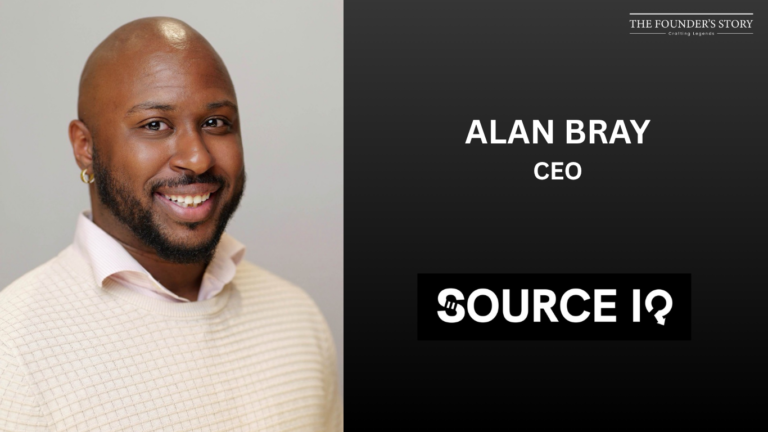
Standing at the center of this transformation is entrepreneur and Founder Alan Bray, the visionary behind SourceIQ. As Founder and CEO, Alan is building an entirely new category of supplier intelligence that combines AI, real-time analytics, and data infrastructure to help organizations source suppliers more intelligently and create stronger economic ecosystems.
Alan’s entrepreneurial story is anything but conventional. His journey spans technology sales, fintech, machine learning infrastructure, CRM systems, and startup environments that exposed him to the power of data and intelligent systems. Those experiences ultimately inspired him to launch SourceIQ, a startup dedicated to solving one of procurement’s biggest challenges: creating a single source of truth for supplier intelligence.
Today, SourceIQ is emerging as a next-generation procurement technology company that helps organizations centralize supplier data, automate sourcing workflows, improve vendor discovery, and make faster, more informed decisions. However, beyond the technology itself, the company’s larger mission is to democratize access to opportunity and create a more inclusive and efficient supplier ecosystem.
In this exclusive founder interview, Alan Bray shares his entrepreneurial journey, the story behind SourceIQ, his perspective on AI in procurement, and his vision for the future of supplier intelligence.
TFS: Alan, welcome. It is a pleasure to have you with us today. SourceIQ is solving one of the most complex problems in procurement by combining supplier intelligence, data infrastructure, and artificial intelligence. We are excited to hear your founder story and learn more about the journey that brought you here.
Alan Bray: Thank you very much. I appreciate the opportunity. Procurement is going through an incredible transformation, and I believe we’re only scratching the surface of what is possible.
TFS: Can you take us back to the beginning of your professional journey—what experiences shaped your path toward procurement, sourcing, and eventually founding SourceIQ?
Alan Bray: My journey into procurement has been incredibly unconventional. I didn’t start my career in supply chain or procurement. Instead, I came from a technology sales background. However, throughout my professional life, I have always been deeply curious. I have always enjoyed understanding how businesses work and how technology can create meaningful change.
A major turning point happened during my time at Splunk. I became heavily involved in BEAM, the company’s employee resource group that supports Black employees globally. Being part of the organization during its early planning stages gave me a unique perspective because I wasn’t simply participating in initiatives. I was actively thinking about how those initiatives could scale and create measurable business outcomes.
Coming from sales, I naturally looked at everything through the lens of ROI and organizational impact. I started asking questions that many people were not asking at the time. How do we build systems that create opportunity? How do we move beyond individual efforts and create something repeatable and scalable?
Those questions completely changed my perspective. I began developing relationships with organizations that already had strong connections within underrepresented communities. Instead of trying to create everything internally, I focused on building partnerships that could extend our reach and make our efforts significantly more effective.
That experience planted an entrepreneurial seed. Later, I moved from Dallas to San Francisco and joined a Y Combinator-backed fintech startup that was expanding into the United States. Because the company was still small, I had the opportunity to work across multiple areas of the business and take on responsibilities that extended far beyond my original role.
I traveled internationally and gained exposure to how startups scale, make decisions, and solve complex problems. That experience was transformative. For the first time, I realized that I not only wanted to build something of my own, but I also had the ability to do it.
At that point, I became obsessed with one idea. I wanted to build a technology platform that could create stronger connections between businesses, corporations, and diverse communities. I believed these initiatives needed more than good intentions. They needed infrastructure, systems, and repeatable processes that organizations could implement effectively.
As I continued conducting market research, my focus evolved. I initially started in the areas of diversity, talent, and human resources. However, the more conversations I had, the more I realized that supplier diversity and procurement represented an even larger opportunity.
I discovered a major problem. Organizations already possessed enormous amounts of information. The challenge was that the data existed in silos. Systems were disconnected. Relationships were fragmented. Valuable insights were trapped inside emails, spreadsheets, and individual experiences.
As a result, organizations struggled to track outcomes, proactively manage relationships, and make informed decisions. I realized that the real opportunity was not creating another point solution. The real opportunity was creating infrastructure. That realization became the foundation of SourceIQ.
The startup was born from a simple but powerful belief: when organizations have access to connected data and intelligent systems, they can create better outcomes, stronger relationships, and greater access to economic opportunity.
TFS: Was there a specific moment or frustration that made you realize supplier diversity and sourcing needed a completely different approach?
Alan Bray: Absolutely. As I began conducting discovery sessions with supplier diversity leaders, certifying organizations, and procurement professionals, I noticed a common pattern almost immediately. The entire ecosystem was operating through fragmented systems and highly manual processes.
The most valuable information did not exist inside technology platforms. Instead, it lived inside email conversations, spreadsheets, and individual relationships. Recommendations, supplier experiences, and institutional knowledge were often trapped inside people’s minds.
That realization concerned me because organizations had incredibly ambitious goals around ESG, social responsibility, and supplier diversification. Yet the systems supporting those objectives were not designed to achieve them at scale.
I also discovered something else that was equally important. Many companies were working with the same suppliers and, in theory, had access to similar information. However, because that information existed in isolated systems, nobody had a complete picture.
The turning point came during a conversation with an award-winning supplier whose products were sold by several Fortune 500 retailers. You would expect that level of success to represent a dream scenario. Instead, the supplier described the experience as frustrating and burdensome.
They explained that internal misalignment between procurement and supply chain teams created significant operational challenges that they never anticipated. That conversation fundamentally changed my thinking. I realized the issue was not supplier capability. The issue was infrastructure.
The problem was the absence of a shared source of truth and the lack of systems that could capture relationships, organize knowledge, and create transparency across the ecosystem. That became the inspiration behind SourceIQ.
TFS: What skills or lessons from your earlier career have been most critical in building a company at the intersection of AI and procurement?
Alan Bray: One of my greatest advantages has been the diversity of my professional experiences. I have worked across fintech, machine learning infrastructure, payments, and customer relationship management platforms. Each experience taught me something unique about data and decision-making.
Working in fintech exposed me to risk management and the importance of data-driven decision-making. My experience in machine learning and AI infrastructure introduced me to large-scale data aggregation and intelligent systems.
Later, working in CRM environments taught me something equally valuable: technology only succeeds when people actually enjoy using it. Many enterprise systems fail because they are overly complex. Organizations do not need more complexity. They need elegant systems that simplify workflows and make information easier to access. Those experiences fundamentally shaped my approach as a founder.
I developed a deep appreciation for structured data and understood that historical information is one of the most valuable assets inside any enterprise. When organizations properly structure and unify data, they create opportunities to make better decisions, reduce costs, and improve outcomes. That philosophy ultimately became the foundation of SourceIQ’s supplier intelligence platform.
TFS: When you looked at traditional procurement and supplier diversity programs, what were the biggest inefficiencies you felt needed to be solved first?
Alan Bray: The biggest inefficiency was fragmentation. As I worked with procurement leaders and category managers across industries, I discovered that companies were using numerous systems that essentially captured the same information.
A food supplier and a retail supplier might use different terminology, but the underlying workflows were remarkably similar. Despite all the technology investments, organizations were still manually transferring information between systems. That was surprising to me.
In other parts of the enterprise, automation had already transformed workflows. However, procurement and supplier sourcing still relied heavily on spreadsheets and manual processes. I often describe the ecosystem as having too many kitchens in one sink. Organizations accumulated tool after tool without establishing a common foundation. The result was poor visibility, duplicated efforts, and unnecessary costs.
That is why one of the first things we built at SourceIQ was a unified supplier master schema. We wanted to create a common language for supplier data and establish a single source of truth that could power better decision-making.
TFS: Why do you think supplier diversity has historically been difficult to scale inside large enterprises like Fortune 500s and public institutions?
Alan Bray: I believe the industry has spent too much time focusing on aspirational value without building the infrastructure necessary to create measurable outcomes. Supplier diversity absolutely creates economic value. Small and local suppliers can reduce costs, improve quality, and strengthen communities.
However, those benefits have not been properly connected to how organizations actually spend their money. There is also a major disconnect between where enterprise spending occurs and where many diverse suppliers currently operate. Many suppliers compete in professional services because the barriers to entry are lower.
However, some of the largest opportunities exist in technical services, logistics, manufacturing, and material supply. Without data and visibility, entrepreneurs cannot position themselves effectively. At the same time, buyers struggle to understand where supplier capabilities actually exist. The ecosystem lacks transparency. This is ultimately both an awareness problem and an infrastructure problem.
We need systems that connect private sector demand, public priorities, and supplier development into one intelligent ecosystem. That is exactly the future we are trying to build at SourceIQ.
TFS: What are the biggest structural barriers preventing procurement teams from adopting more data-driven sourcing models today?
Alan Bray: One of the biggest challenges is that organizations often chase trends before building strong foundations. AI is an excellent example. Everyone wants to implement artificial intelligence today. However, very few organizations have taken the time to organize and understand their own data.
I often compare technology adoption to education. You do not teach a child advanced literature before teaching the alphabet. The same principle applies to procurement technology. Organizations must first understand their data, establish governance frameworks, and build feedback loops that improve decision-making. Many procurement teams still operate with fragmented systems and siloed information. The historical data sitting inside those systems is incredibly valuable.
In many ways, it is a goldmine. However, organizations cannot unlock that value if they fail to understand what information matters and how it connects across workflows. The first priority should not be AI. The first priority should be data clarity and infrastructure. Once that foundation exists, AI becomes significantly more powerful.
TFS: How does SourceIQ use AI in a practical sense—beyond buzzwords—to actually improve sourcing decisions and vendor discovery?
Alan Bray: Many procurement challenges are not AI problems.They are workflow problems. For example, I repeatedly heard stories about teams manually copying supplier registration information into ERP systems. That is not a technology limitation. It is an integration problem. At SourceIQ, we focus on redesigning those workflows first. We simplify processes, eliminate duplication, and create consistent flows of information. Then we layer intelligence on top of those foundations.
One of our most powerful capabilities involves RFP sourcing. Organizations often review hundreds of pages of documentation and manually attempt to identify qualified suppliers. Our platform automates that process. We scan RFP requirements, understand sourcing criteria, and match suppliers in real time. Today, we have consolidated data from more than 800,000 suppliers across the United States. As a result, organizations can identify highly relevant suppliers in minutes instead of spending weeks performing manual searches.
That is practical AI. It is not about replacing people. It is about helping people make faster and more intelligent decisions.
TFS: What does “real-time analytics” mean inside your platform from a decision-maker’s perspective?
Alan Bray: Real-time analytics means eliminating the delays that have traditionally existed inside procurement. Most organizations depend on weekly reports or monthly dashboards. By the time those reports arrive, the information is already outdated. Our platform changes that completely. Because workflows and data exist within a centralized environment, every interaction becomes visible immediately. Procurement leaders can monitor sourcing activities, supplier engagement, budgets, and financial impact as events occur.
Category managers can compare suppliers, track spending, and evaluate performance without switching between multiple systems. This level of visibility transforms procurement from a reactive function into a proactive one. Instead of responding to historical information, leaders can make decisions in real time and create significantly better outcomes.
TFS: How do you ensure that automation in vendor selection still maintains transparency, compliance, and trust?
Alan Bray: Human judgment remains at the center of everything we do. Our platform provides intelligence and recommendations, but organizations remain in control of every decision. We focus heavily on creating transparency. By centralizing information and standardizing data structures, we ensure that every action can be understood, measured, and validated. Organizations can leverage natural language search, automated field mapping, and intelligent recommendations while maintaining complete ownership of their processes.
I often compare our platform to an intelligence-driven CRM. Sales teams use CRM systems to manage opportunities and relationships. We are applying that same philosophy to supplier sourcing. The difference is that we have embedded intelligence directly into the workflows. That allows organizations to achieve better outcomes without sacrificing trust or compliance.
TFS: How do you see AI evolving inside SourceIQ—from current capabilities to what’s next on the roadmap?
Alan Bray: We believe supplier intelligence will become the foundation of procurement decision-making. Everything from supplier risk and cost optimization to diversification and performance management will ultimately depend on unified supplier data.
Our long-term vision is to create a true single source of truth for supplier intelligence. Once that foundation exists, the opportunities become limitless. We are also investing heavily in agentic workflows that can automate repetitive activities such as onboarding, supplier updates, and communications. Importantly, these systems are designed to support people rather than replace them.
Our ambition is to create a global platform that serves both buyers and suppliers through one connected ecosystem.
TFS: What has been the most challenging part of convincing large enterprises to shift from manual or legacy sourcing systems to an AI-driven model?
Alan Bray: The biggest challenge is change management. Many organizations believe that modernizing their infrastructure will require enormous costs and operational disruption. There is also emotional resistance. Companies have spent years investing in existing systems. Even when those systems are inefficient, leaders hesitate to abandon them. They worry about retraining employees and disrupting established workflows. As a result, organizations often remain trapped inside outdated environments.
Our job is to demonstrate that transformation does not require starting over. Instead, it requires creating a better foundation that allows existing investments to deliver more value.
TFS: Can you share an example of how SourceIQ has changed procurement outcomes for a client in measurable terms?
Alan Bray: One of our biggest opportunities involves helping organizations consolidate fragmented supplier data. Many enterprises operate with supplier information spread across dozens of ERP systems. Traditionally, consolidating that information requires months of consulting work.
Our AI-driven platform can unify up to one million supplier records in less than one week. That alone delivers enormous savings in time and cost. The sourcing benefits are equally impressive. For example, organizations often need to identify highly specialized suppliers within extremely tight deadlines. Traditionally, that process can take several weeks.
Using SourceIQ, teams can identify more than twenty highly relevant suppliers in less than thirty minutes. The impact is immediate. Organizations save time, reduce costs, improve supplier quality, and significantly increase sourcing efficiency.
TFS: How do you balance efficiency gains with the broader goal of economic inclusion in supplier ecosystems?
Alan Bray: Our philosophy is simple. The platform must create value for both buyers and suppliers. Many platforms focus entirely on collecting supplier information while providing little ongoing value to suppliers themselves. That approach eventually leads to disengagement and outdated data. We wanted to build something different.
At SourceIQ, suppliers have a centralized environment where they can access opportunities, communications, and insights. Meanwhile, buyers gain access to a richer and more qualified supplier ecosystem. As the amount of data increases, sourcing decisions become more accurate and more inclusive. Our mission extends beyond efficiency. We want to create better access to opportunity and build stronger economic ecosystems.
TFS: Where do you see procurement teams evolving over the next 5 years as AI becomes more embedded in sourcing and vendor management?
Alan Bray: I believe procurement will become one of the most strategic functions inside every organization. Over the next five years, procurement will evolve into an intelligence-driven function that identifies opportunities, builds markets, and drives innovation. It will become the brain that helps organizations understand where they should invest, whom they should partner with, and how they should grow.
Procurement will no longer be viewed as a back-office operation. It will become a strategic driver of enterprise performance.
TFS: Do you think AI will eventually move procurement from a “decision-support function” to a “decision-making function”?
Alan Bray: Yes, I do. As supplier intelligence becomes more connected and more comprehensive, AI will increasingly participate in decision-making. These systems will identify risks, uncover opportunities, and recommend actions based on historical intelligence and real-time information. However, I believe human oversight will remain incredibly important.The future is not humans versus machines. The future is humans and machines working together to create better outcomes.
TFS: What are the key strategic priorities for SourceIQ over the next 12–24 months, and what will define success in this phase of growth?
Alan Bray: Our immediate priority is building an incredibly defensible platform. We are collaborating closely with enterprise partners and government organizations to refine our capabilities and validate our approach.
Over the next eighteen months, we plan to secure several enterprise proof-of-concept engagements that will help accelerate our growth. At the same time, we are raising capital and partnering with leading technology companies, including Microsoft, NVIDIA, and Databricks. Success for us means demonstrating that supplier intelligence can fundamentally transform procurement and become the foundation for future innovation.
TFS: If we revisit this conversation five years from now, what milestones would make you say SourceIQ has truly succeeded—and what legacy are you aiming to leave in the procurement industry?
Alan Bray: Five years from now, I would love to see SourceIQ powering at least thirty percent of the enterprise market as the foundational platform for supplier intelligence. I want buyers and suppliers to view our platform as the place where opportunity begins. However, our ambitions extend beyond technology adoption. We want to build a data-driven ecosystem that creates economic mobility and expands access to markets.
We believe better visibility can redirect spending into underserved communities and create entirely new opportunities for entrepreneurs and businesses. Ultimately, I want our legacy to be about economic impact. Procurement has traditionally been viewed as infrastructure. I believe it is actually the brain of the enterprise. If we can help organizations recognize that truth while simultaneously creating jobs, encouraging innovation, and improving access to opportunity, then I would consider our mission a tremendous success.
TFS: Alan, thank you for sharing your founder story and your vision for the future of procurement. It has been fascinating to learn how SourceIQ is using data and artificial intelligence to reimagine supplier intelligence and create greater economic opportunity.
Alan Bray: Thank you very much. This journey has been incredibly rewarding, and we are still in the early chapters of our story. I truly believe procurement is entering one of the most exciting periods in its history, and I am grateful to be part of that transformation.
TFS: We look forward to watching the next chapter of the SourceIQ startup story unfold and seeing the impact your company creates across global procurement and supplier ecosystems.