
The Founder’s Story of Joonas Jantunen: Transforming Enterprise Procurement Through Intelligent Tail Spend Management
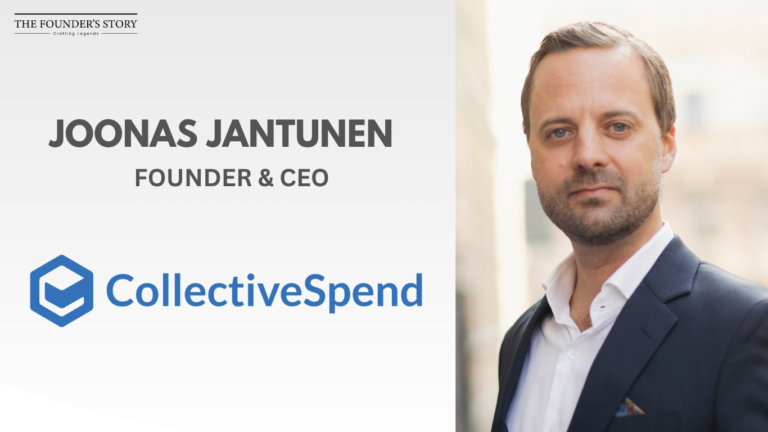
In today’s digital economy, procurement has successfully transitioned into a core strategic business function. Yet, “tail spend”—the high-volume, low-value everyday purchases—remains one of the industry’s most persistent and overlooked challenges. Recognizing this massive operational gap, procurement veteran Joonas Jantunen founded CollectiveSpend Technology to completely transform how enterprises handle non-strategic purchasing through AI, automation, and collaborative buying.
Today, CollectiveSpend helps global enterprises automate tail spend, improve policy compliance, increase spend visibility, and drive down bottom-line costs through its flagship METIS platform and managed Buying Desk Services. By pairing deep procurement expertise with intelligent technology, the company is redefining everyday corporate purchasing.
In this exclusive interview, Joonas shares his entrepreneurial journey, the inspiration behind CollectiveSpend, the shifting dynamics of the procurement landscape, and how artificial intelligence is reshaping enterprise purchasing.
TFS: Joonas, welcome, and thank you for joining us today. It is a pleasure to have you with us. Your entrepreneurial story and the growth of CollectiveSpend Technology have attracted considerable attention across the procurement industry. The company has successfully challenged conventional procurement practices by focusing on one of the most overlooked areas of enterprise spending—tail spend. Today, we look forward to learning more about your Founder journey, your vision for the future of procurement, and the innovations shaping CollectiveSpend Technology.
Joonas Jantunen: Thank you very much, it is a real pleasure to be here. Looking back, the journey has certainly been full of challenges, lessons, and unexpected opportunities. At the same time, it has been incredibly rewarding to see how major organizations are finally beginning to rethink procurement from the ground up. I am excited to share our story and discuss where I believe enterprise purchasing is heading in the coming years.
TFS: You’ve described CollectiveSpend as a response to the need for better procurement in the region. What gap in the market did you identify back in 2012 that led to its founding?
Joonas Jantunen: The journey actually began well before CollectiveSpend Technology officially existed. In 2012, I founded Truespend, a procurement consultancy, because I believed organizations deserved a far more strategic approach to procurement than what was commonly available in the market. At that point in my career, I faced a defining entrepreneurial crossroad: I had the opportunity to join a highly respected global organization in a secure, lucrative leadership role, or I could build something entirely my own from scratch. I chose the uncertain path, because I’ve always believed that meaningful innovation rarely comes from staying inside your comfort zone.
Initially, my startup focused on traditional procurement outsourcing for indirect, non-strategic categories. However, despite my confidence in the concept, the market simply wasn’t ready. Procurement outsourcing was still an unfamiliar model across much of the Middle East, and many organizations viewed it with hesitation.
Nevertheless, those early consulting years became invaluable. They allowed me to observe enterprise procurement operations deeply from the inside rather than relying on theoretical assumptions. One specific challenge appeared repeatedly across almost every single client engagement: organizations invested enormous effort and resources into managing high-value, strategic sourcing initiatives, yet they paid remarkably little attention to thousands of everyday, small-dollar purchases. These transactions appeared insignificant individually, but collectively they represented a massive chunk of enterprise expenditure, immense operational inefficiency, and completely lost negotiation opportunities. That realization fundamentally changed my direction. Instead of offering standard consultancy services, I envisioned building an intelligent technology platform designed explicitly to solve this recurring nightmare. Thus, CollectiveSpend was born in 2016 to transform tail spend into a controlled, intelligent, and value-generating process.
TFS: What do you believe is fundamentally broken in the way most companies handle tail spend today, and how does CollectiveSpend fix it?
Joonas Jantunen: The fundamental breakdown is that organizations continue trying to solve what is essentially a massive data, technology, and process challenge primarily through human effort. That approach is neither scalable nor sustainable. Procurement teams everywhere are under immense pressure to achieve more while operating with fewer resources. Therefore, every single minute a highly skilled procurement professional spends manually processing low-value purchasing requests is a minute taken away from high-impact strategic sourcing initiatives that generate real business value.
Consequently, organizations generally fall into one of two inefficient patterns. Either experienced buyers waste their valuable time handling routine, tactical purchasing requests, or those requests are bypassed entirely and handed to business users who naturally buy from familiar suppliers with zero negotiation or corporate oversight. Because of this, organizations lose visibility, weaken their supplier leverage, increase unauthorized maverick spending, and miss out on significant cost savings without even realizing it.
That is precisely where CollectiveSpend Technology creates a meaningful difference. Rather than replacing the human procurement team, we supercharge them through intelligent automation. Our platform empowers end-users to purchase what they need quickly and confidently, while ensuring they continuously operate within the specific procurement policies established by the organization. Simultaneously, the platform aggregates purchasing activity, cleans up spend visibility, and builds stronger negotiating power. We remove the unnecessary complexity, letting procurement professionals stay focused on strategic initiatives while everyday corporate purchasing becomes fast, compliant, and transparent.
TFS: Over the past decade, how has the procurement function evolved in the Middle East, and how has CollectiveSpend helped shape that change?
Joonas Jantunen: The transformation has been remarkable, though it is still an ongoing journey. When I first entered this market, procurement was frequently viewed as a reactive, back-office operational support function rather than a strategic contributor. In many organizations, procurement professionals were simply expected to process paperwork, issue purchase orders, and beat down vendors on pricing. They were rarely invited into broader executive conversations about corporate growth, risk management, or competitive advantage.
Fortunately, that perception has steadily shifted. Today, leading enterprises across the region recognize procurement as a powerhouse function capable of driving corporate profitability, managing supply chain risk, improving supplier collaboration, and supporting long-term organizational resilience. Consequently, procurement leaders now participate much earlier in strategic corporate decision-making than ever before.
At CollectiveSpend, we are proud to have actively contributed to that evolution. Every client engagement has provided an opportunity not only to implement technology but to physically demonstrate what modern procurement can achieve when freed from administrative burdens. Rather than encouraging teams to spend days resolving tactical firefighting issues, we help them redirect their expertise toward supplier relationship management, category strategies, and digital transformation. Moving an entire region from reactive purchasing toward intelligent spend management is incredibly rewarding.
TFS: Tail Spend is often viewed as too complex or insignificant to manage. How did the idea of a “Tail Spend Marketplace” come to life, and what makes it different from traditional procurement platforms?
Joonas Jantunen: The misconception surrounding tail spend has fascinated me for years. People dismiss it as insignificant because the individual transaction amounts are small, but when you aggregate thousands of those purchases over months or years, the financial impact to the bottom line is massive.
The idea for our Tail Spend Marketplace came directly from watching how traditional enterprise procurement software struggled with these everyday transactions. Most legacy source-to-pay platforms were designed around heavy, complex strategic sourcing projects involving extensive approvals, lengthy bidding wars, and sophisticated workflows. While those tools are fine for multi-million dollar contracts, they completely break down when trying to handle hundreds of urgent, low-value purchasing requests hitting the system every week.
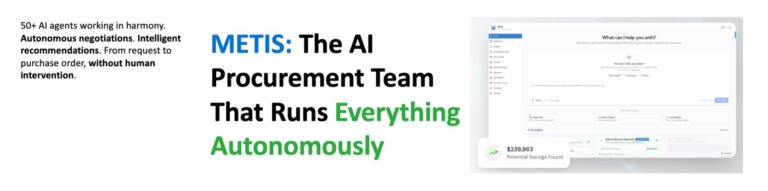
Therefore, we designed our flagship platform, METIS, with a completely different philosophy. Instead of expecting everyday business users to become procurement experts, we embedded the actual procurement expertise directly into the platform’s software. METIS effectively acts as an intelligent digital procurement advisor that guides users through their purchasing journey while automatically respecting organizational rules. What truly differentiates us, however, is our autonomous negotiation engine. METIS can engage suppliers independently within predefined governance parameters and evaluate multiple variables beyond price alone—such as delivery speed, commercial terms, and historical user preferences. Negotiations that traditionally required days of back-and-forth emails and phone calls can now close successfully within minutes.
TFS: Your platform promises self-service with oversight. How do you balance user autonomy with procurement governance and compliance?
Joonas Jantunen: Achieving that perfect balance was one of our primary design pillars from day one. Many organizations operate under the mistaken belief that they must choose between speed and governance—that if you want things done fast, you have to sacrifice control, and if you want total control, you have to tolerate bureaucratic slowdowns. I have never accepted that trade-off, because modern technology should easily deliver both simultaneously.
Within the CollectiveSpend ecosystem, procurement professionals establish the governance framework first. They define the policies, supplier preferences, approval thresholds, negotiation parameters, and compliance requirements within the software. Once those rules are locked in, METIS ensures every piece of purchasing activity remains strictly inside those boundaries without requiring a human procurement officer to manually supervise each individual transaction.
As a result, the end-user experiences genuine, friction-free autonomy. They can initiate purchasing requests, compare supplier options, receive negotiated offers, and complete transactions quickly through an intuitive interface without waiting for administrative interventions. Meanwhile, procurement maintains absolute visibility through comprehensive audit trails, automated reporting, and centralized oversight. I often describe governance as something that should operate quietly and powerfully in the background, rather than standing as a roadblock in front of employees. When compliance becomes seamless and invisible, business users stay productive, finance stays happy, and leadership gains complete trust in corporate spending.
TFS: Can you share a real-world example where the Tail Spend Marketplace delivered surprising results for a client?
Joonas Jantunen: Absolutely, and one specific engagement immediately comes to mind because it perfectly illustrates why organizations drastically underestimate the value hidden inside their tail spend. A large multinational organization approached us after recognizing that a massive portion of its everyday purchasing was happening completely outside formal procurement processes. Business users were independently selecting suppliers they already knew or discovering random vendors through quick online searches. Naturally, these purchases were rarely negotiated, seldom benchmarked, and almost never optimized for value.
Initially, the client believed CollectiveSpend would simply act as a digital workflow tool to smooth out their existing purchasing process. In other words, they expected a prettier administrative pipeline rather than a fundamentally different financial outcome. However, our objective was to prove that every single purchasing request is an opportunity to create measurable business value without introducing additional complexity for the user.
As their purchase requests began flowing into the platform, METIS immediately engaged with suppliers, supported where appropriate by our Buying Desk professionals. Within just a few minutes, suppliers responded with highly competitive, pre-negotiated proposals that strictly adhered to the client’s corporate policies. Purchases that would previously have been accepted at the very first quoted price suddenly became competitive opportunities to save money.
Furthermore, our marketplace model introduced them to our carefully curated network of pre-qualified suppliers whose commercial terms had already been optimized through the combined, aggregated purchasing volumes of multiple CollectiveSpend clients. This collaborative buying model created massive economies of scale that an individual organization could never achieve independently. The client realized measurable ROI almost immediately, but the most rewarding outcome was the total shift in perception—they realized that even routine, self-service purchasing could become a highly strategic value driver when backed by intelligent technology.
TFS: Procurement teams are often stretched thin. How do your Buying Desk Services help shift focus from tactical firefighting to strategic sourcing?
Joonas Jantunen: This challenge is genuinely universal. Regardless of the industry or geography, procurement teams are constantly being expected to support increasingly complex business environments while operating with incredibly limited resources. Every procurement leader faces the difficult task of deciding where their team’s human expertise creates the absolute greatest value. From my perspective, a highly skilled, strategically minded procurement professional should never spend the majority of their day chasing down routine, low-value quotes or processing minor purchasing requests.
That core philosophy is what drove the creation of our Buying Desk Services. Once our platform has helped structure a purchasing requirement and gathered the necessary data from the business user, the request can seamlessly transition to our specialized Buying Desk team. From that point forward, our procurement specialists manage the sourcing process from beginning to end, operating entirely within the client’s predefined policy framework.
Working hand-in-hand with METIS, our Buying Desk professionals identify the best suppliers, negotiate commercial terms, evaluate proposals, and present the requestor with a curated selection of optimized choices. Instead of navigating lengthy, distracting sourcing exercises themselves, business users simply review the pre-negotiated alternatives and select the one that meets their operational needs. This lifts the tactical firefighting burden off internal procurement teams, instantly regaining them the bandwidth to focus on heavy-hitting strategic initiatives like supplier relationship management, long-term risk mitigation, sustainability programs, and true value creation. It’s a partnership, not a replacement.
TFS: What kind of cost savings or ROI have your clients typically realized through spend aggregation and marketplace access?
Joonas Jantunen: The direct financial savings alone make a highly compelling business case. Across our diverse client base, organizations typically realize hard savings ranging anywhere from three to fifteen percent, and often even higher depending on the specific procurement category, the existing supplier landscape, and the overall maturity of their historical purchasing processes. However, those percentages only tell a part of the true ROI story.
One of the most massive, hidden costs in corporate procurement is supplier onboarding. Organizations frequently identify a highly competitive supplier for a relatively small, one-off purchase, only to discover that onboarding that new vendor into their legacy ERP system requires weeks or even months of administrative compliance checks. Consequently, business speed slows to a crawl, users get deeply frustrated, and procurement teams waste hours pushing paper instead of building strategy.
Our marketplace model completely rewrites that script. Clients establish a single commercial and legal relationship with CollectiveSpend Technology once, and we manage the entire complex supplier ecosystem behind the scenes. Organizations get immediate, fluid access to an extensive, pre-vetted supplier network without ever having to navigate lengthy onboarding procedures for every individual vendor. When you combine those massive operational time savings, the reduction in manual labor, and the direct purchasing discounts achieved through collective volume, the total ROI becomes visible almost immediately.
TFS: Beyond the numbers, what are some of the indirect benefits clients report after onboarding CollectiveSpend’s solutions?
Joonas Jantunen: That is an excellent question, because true procurement success should never be measured solely by purchase price savings. While financial performance is the baseline, the broader organizational and cultural impact often becomes the most valuable asset over time. We purposefully evaluate success from the perspective of every stakeholder involved rather than just staring at isolated procurement metrics.
For internal procurement teams, one of the greatest indirect benefits is the ability to dramatically increase their “spend under management” without needing to hire a single additional person. Previously chaotic, invisible, unmanaged purchasing activity is brought cleanly into the light, completely governed by the CollectiveSpend platform.
Meanwhile, corporate finance departments absolutely love the sudden clarity, data transparency, and tight budgetary control that comes from consolidated purchasing data. On the flip side of the coin, everyday business users consistently report a much faster, happier purchasing experience because they no longer face painful administrative delays. Instead of viewing procurement as an annoying bureaucratic barrier to getting their jobs done, they begin recognizing it as a true enabler of productivity. Ultimately, the entire organization becomes more collaborative, transparent, and data-driven, aligning seamlessly with modern corporate goals.
TFS: You’ve grown CollectiveSpend from a concept into a regional leader. What has been the most defining leadership lesson on that journey?
Joonas Jantunen: If I had to boil the entire entrepreneurial journey down into a single guiding principle, it would simply be this: never stop improving. It sounds remarkably straightforward, almost cliché, but it becomes exponentially harder and more critical as an organization grows. The single greatest danger for any Founder or leadership team is believing that yesterday’s success somehow guarantees tomorrow’s survival. In reality, markets evolve continuously, customer expectations pivot overnight, and technology advances at an unforgiving pace.
Throughout this journey, I have learned that intellectual curiosity is a leader’s most valuable asset. Every milestone achieved should encourage new questions rather than creating complacency. I constantly challenge myself and our teams to aggressively look at how we can improve our customer experience, strengthen our algorithms, simplify workflows, and deliver even more value than we did the day before.
Equally important is fostering an internal culture that actively welcomes “constructive discomfort.” True innovation rarely happens when everyone is perfectly comfortable with the way things have always been done. Progress comes from encouraging smart experimentation, being completely transparent about setbacks, and remaining humble enough to embrace a better idea, no matter who or where it comes from. Success is never a fixed destination; it’s a continuous, daily commitment to evolution.
TFS: How do you maintain a high-performance culture while serving clients across multiple sectors and geographies?
Joonas Jantunen: Rapid growth is incredibly exciting, but it also introduces serious structural complexities. Every entrepreneur eventually learns the hard way that scaling a business is not just about aggressively signing up new clients; it is about building an organizational engine that can perform flawlessly and consistently regardless of its physical size, geographic location, or market sector. Maintaining that high-performance edge requires intentional, proactive leadership rather than just relying on early startup momentum.
One foundational value I lean on heavily is total operational transparency. Challenges are an absolute certainty in any scaling tech startup—whether they are technical bugs, operational bottlenecks, or changing market conditions. What defines an excellent company is not whether problems occur, but how quickly, honestly, and collectively the team responds to them. We actively eliminate internal silos and encourage brutal honesty about setbacks, because acknowledging reality is always the prerequisite for fixing it.
Furthermore, we prepare for scale long before it arrives. As demand for METIS accelerates across multiple sectors, we heavily invest in our internal leadership capabilities, refine our workflows, and continuously upgrade our core platform infrastructure before the pressure of additional scale demands it. We also treat every unique client engagement as a learning lab, ensuring insights gained in one sector are shared across the whole company to make our collective intelligence stronger.
TFS: What are the qualities you look for when hiring procurement professionals into your flexible pool?
Joonas Jantunen: Because the procurement profession is evolving faster than at any other point in history, standard technical knowledge alone is no longer enough to cut it. While a rock-solid understanding of procurement mechanics, commercial law, and sourcing strategies remains a baseline requirement, I place an incredibly high premium on professionals who combine that domain expertise with deep cognitive adaptability, high emotional intelligence, and an eager appetite for technological change.
Flexibility is paramount. Because our clients span vast industries, corporate cultures, and business models, the professionals in our flexible pool must be entirely comfortable stepping into unfamiliar territory and immediately driving value. I also look for strong independent thinkers—people who don’t sit around waiting for a detailed manual, but who possess the confidence to solve problems creatively and question legacy processes.
Crucially, in the modern era, the ideal professional must understand how to dance with technology. Rather than fearing artificial intelligence or automation as a threat to their job security, the best talent actively leverages these tools to eliminate administrative drift, allowing them to focus their human energy on high-level strategic judgment, complex commercial negotiations, and building unbreakable supplier relationships.
TFS: With AI, automation, and e-marketplaces gaining traction, where do you see procurement, and tail spend management, heading in the next five years?
Joonas Jantunen: Trying to look five years into the future has become notoriously difficult because the pace of technological innovation is accelerating exponentially; things that used to take years to develop now manifest in a matter of months. However, the overarching trajectory for procurement is unmistakable: we are moving rapidly toward autonomous execution, particularly within tail spend management.
Right now, enterprises are comfortable letting intelligent systems automate routine administrative work like data entry or PO routing. Over the next five years, however, organizations will become entirely comfortable delegating highly sophisticated procurement processes to AI—including real-time supplier discovery, autonomous commercial negotiations, predictive sourcing recommendations, and dynamic spend optimization.
This shift will fundamentally and beautifully redefine procurement careers. Human buyers will transition away from transactional firefighting and instead step into roles focused entirely on strategic governance, ethical oversight, AI model training, and managing complex, high-stakes human relationships where emotional intelligence and nuanced judgment are completely irreplaceable. At CollectiveSpend, we are actively building for this future right now. AI will not replace procurement professionals, but procurement professionals who master AI will absolutely replace those who don’t.
TFS: Are there any plans to expand the platform’s capabilities beyond procurement, into supply chain visibility, ESG compliance, or supplier diversity?
Joonas Jantunen: Without a doubt. Our long-term product roadmap has always been strictly guided by a clear philosophy: build features that genuinely solve real, burning client problems rather than adding bells and whistles just because they happen to be trendy buzzwords in the media. Because of that, we listen incredibly closely to our customer advisory boards before writing a single line of new code.
The reality is that procurement naturally sits at the absolute epicenter of all supplier interactions, meaning the massive clean data streams flowing through the CollectiveSpend platform provide the perfect foundational rails for adjacent capabilities. We are seeing a massive surge in demand from enterprise clients who want their procurement tech to provide rich, actionable insights into supply chain provenance, ESG compliance metrics, carbon tracking, and supplier diversity statistics.
Enterprises no longer want their transaction data isolated from their corporate responsibility goals. Over time, these modules will become deeply integrated into METIS. We will continue to roll them out thoughtfully and purposefully, ensuring that every single update adds true, measurable value to help organizations make ethical, compliant, and highly informed spending decisions across their entire ecosystem.
TFS: If you had to summarize CollectiveSpend’s next chapter in one sentence, what would it be?
Joonas Jantunen: I would summarize it by saying this: our mission is to transform tail spend from procurement’s biggest operational blind spot into its most effortless competitive advantage.
That single sentence encapsulates everything our team fights for every day. We want global organizations to stop looking at tail spend as an irritating, unavoidable tax on doing business, and instead recognize it as a massive, unlocked vault of corporate value, efficiency, and governance. Technology has finally reached a point where enterprises no longer have to compromise or choose between speed, strict compliance, and aggressive cost savings. Through the power of intelligent automation, collective buying networks, and AI-driven sourcing, we are proving that every single purchasing decision can be made faster, smarter, and more strategically valuable. We aren’t just developing software; we are actively rewriting the playbook on how modern enterprises create value.
TFS: Joonas, Thank you for sharing your remarkable entrepreneurial journey and the inspiring story behind CollectiveSpend Technology. Throughout this conversation, it has been fascinating to learn how a challenge that many organizations once considered too small to address has evolved into one of procurement’s most significant opportunities for innovation. Your perspectives on leadership, artificial intelligence, procurement transformation, and customer-centric innovation offer valuable insights for business leaders, procurement professionals, entrepreneurs, and technology innovators alike.
Joonas Jantunen: Thank you so much, it has been an absolute pleasure sharing our story with you today. As any founder will tell you, entrepreneurship is never a solo sport that you complete entirely on your own. Every single client who trusted us early on, every colleague, and every partner in our ecosystem has played an active role in shaping what CollectiveSpend is today. Looking forward, I am incredibly optimistic about the future of the procurement industry, because modern technology is finally allowing us to elegantly solve operational headaches that once seemed completely impossible. We will continue to challenge conventional wisdom, push the boundaries of AI, and help companies find immense value where others only see chaotic complexity. I truly appreciate the opportunity to speak with you.
TFS: It has been an absolute pleasure speaking with you. We wish you and the entire CollectiveSpend Technology team continued success as you redefine the future of enterprise procurement. Thank you once again for joining us.
Joonas Jantunen: Thank you very much. I sincerely appreciate the opportunity, and I look forward to the exciting journey ahead!