
Procurement Needs a New Mindset: Founder Madhuri Govilkar on AI, TrustScore, and Strategic Leadership
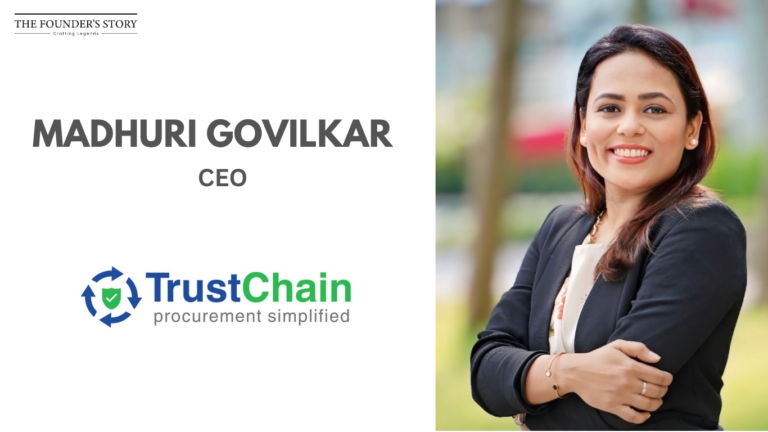
Procurement has become one of the most strategic business functions, influencing every supplier relationship, sourcing decision, and operational outcome. Yet, despite its growing importance, it often remains an underappreciated function within organizations.
Recognizing this gap, Founder Madhuri Govilkar launched TrustChain Global to transform procurement from a transactional process into a strategic driver of trust, risk management, and business intelligence. With over two decades of experience spanning telecommunications, procurement transformation, consulting, and enterprise SaaS across APAC and MENA, she witnessed organizations investing heavily in technology while continuing to make supplier decisions based on assumptions rather than verified evidence.
Through TrustScore and TrustTrain, TrustChain Global is helping organizations strengthen supplier verification, reduce risk, build procurement capabilities, and elevate procurement into the boardroom. In this exclusive interview with The Founder’s Story, Madhuri shares her entrepreneurial journey, leadership lessons, vision for AI-powered procurement, and why evidence-based trust—not technology alone—will shape the future of global supply chains.
TFS: Madhuri, welcome to The Founder’s Story. It is truly a pleasure to have you with us today. Your entrepreneurial journey spans telecommunications, procurement transformation, enterprise consulting, and now building TrustChain Global. More importantly, your work is helping organizations rethink procurement through the lens of trust, verification, and intelligent decision-making. We are excited to explore both your Founder story and your vision for the future of procurement.
Madhuri Govilkar: Thank you so much. I genuinely appreciate the opportunity to share my journey. Building TrustChain Global has been one of the most meaningful chapters of my career because it combines everything I have learned over the past two decades. I also hope our conversation encourages more professionals and aspiring entrepreneurs to see procurement as a strategic leadership function capable of creating enormous business value.
TFS: Procurement is not often the first industry people dream of entering. What was the defining moment that made you dedicate your career to transforming procurement?
Madhuri Govilkar: Interestingly, procurement was never part of my original career plan. I began my professional journey in telecommunications, where I spent several years managing product portfolios across diverse markets throughout APAC and MENA. Those experiences taught me how businesses launch products, serve customers, and compete effectively. However, as my responsibilities expanded, I gradually realized that every successful initiative depended on procurement decisions happening quietly behind the scenes. That realization fundamentally changed how I viewed business operations.
As I transitioned into procurement consulting and enterprise SaaS, I witnessed the same pattern repeatedly across hundreds of organizations. Procurement controlled billions of dollars in enterprise value, yet it rarely received the strategic attention given to sales, finance, or product management. Consequently, I became increasingly passionate about elevating the profession. Eventually, I founded TrustChain Global because I wanted procurement to become recognized as the intelligent business function that enables every other department to succeed through trust, evidence, and disciplined decision-making.
TFS: Looking back at your entrepreneurial journey, what is one challenge that tested your conviction the most, and what did it teach you about leadership?
Madhuri Govilkar: Surprisingly, the most difficult leadership lessons did not arrive during dramatic business crises. Instead, they emerged during quieter moments when I realized I had occasionally trusted relationships more than verified evidence. Like many entrepreneurs, I wanted to believe that strong intentions naturally translated into dependable partnerships. However, experience consistently demonstrated that sustainable business decisions require disciplined validation rather than assumptions. That lesson became one of the defining principles behind both my leadership philosophy and the creation of TrustChain Global.
Today, I believe leadership requires the courage to ask uncomfortable questions before problems become expensive mistakes. While empathy and relationships remain incredibly important, they should always be supported by diligence and objective verification. Therefore, TrustScore reflects a philosophy that extends far beyond supplier management. It encourages leaders to build trust through evidence instead of relying solely on familiarity. Ultimately, that shift has strengthened both my entrepreneurial journey and the culture we continue building at TrustChain Global.
TFS: If you could sit down with your younger self on the first day of your career, what advice would you give that would have accelerated your growth?
Madhuri Govilkar: I would tell my younger self something remarkably simple yet incredibly powerful. Stop trying so hard to impress everyone around you. Early in our careers, many professionals focus on earning approval from managers, customers, partners, and stakeholders. Although ambition certainly matters, constantly seeking external validation often distracts us from evaluating whether those opportunities truly align with our own values, strengths, and long-term aspirations.
Looking back, I would encourage myself to spend more time assessing organizational culture, leadership quality, and strategic fit before committing my energy. That mindset shift completely changes how people build meaningful careers. Interestingly, the same philosophy eventually inspired TrustScore. Before extending trust, verify the evidence. Before making commitments, evaluate alignment. Consequently, entrepreneurs, procurement leaders, and professionals alike make stronger decisions because they prioritize thoughtful judgment over immediate acceptance.
TFS: You describe procurement as the intersection of money, risk, and reputation. Which of these three do you believe organizations underestimate the most, and why?
Madhuri Govilkar: Without hesitation, I would say organizations consistently underestimate reputation because it closely reflects the quality of trust they have established throughout their supplier ecosystem. Most executive teams carefully monitor financial performance and increasingly invest in enterprise risk management. Nevertheless, supplier-related trust often remains invisible until a public crisis suddenly exposes weaknesses that have existed for years beneath the surface.
From my perspective, unmanaged supplier risk quietly accumulates long before reputational damage becomes visible. Therefore, procurement leaders must continuously verify suppliers instead of relying on periodic assessments or outdated compliance exercises. That philosophy strongly influenced the development of TrustScore, which combines supplier trust evaluation with continuous risk intelligence. Rather than reacting after reputational damage occurs, organizations can proactively identify vulnerabilities, strengthen supplier relationships, and protect long-term business resilience through ongoing verification.
TFS: What gap in the market convinced you that TrustChain Global needed to exist, despite the abundance of procurement consulting firms and technology providers?
Madhuri Govilkar: This question goes directly to the heart of our entrepreneurial story because it explains why TrustChain Global exists today. The global procurement market certainly offers many outstanding consulting firms and technology platforms. However, I repeatedly observed that most solutions were originally designed around Western regulatory environments, documentation practices, commercial expectations, and pricing structures. As a result, organizations across Asia and the Middle East frequently had to adapt themselves to technology that was never designed with their realities in mind.
Having worked extensively across India, Southeast Asia, Qatar, the Gulf region, and broader APAC markets, I experienced this disconnect firsthand throughout my career. Eventually, I decided that regional businesses deserved procurement infrastructure built specifically for their operating environments rather than treated as exceptions requiring customization. Consequently, we created TrustScore and TrustTrain with Asia and MENA as the starting point instead of the afterthought. My vision has always been clear. World-class procurement innovation should not need to be imported. It can be built within our region, shaped by our realities, and ultimately compete with the very best solutions anywhere in the world.
TFS: TrustChain operates across Asia and MENA, regions known for their diversity in business practices and cultures. What have been your biggest lessons in building a procurement business across such varied markets?
Madhuri Govilkar: One of the biggest lessons I have learned is that people often overestimate the differences between markets while underestimating the importance of universal business principles. Every country has its own regulatory framework, cultural expectations, communication style, and commercial practices. Nevertheless, trust, integrity, transparency, and accountability remain universal business values. Therefore, while our delivery model adapts to local expectations, our standards for supplier verification and procurement excellence never change.
Throughout my career, I have had the privilege of working across India, Qatar, Southeast Asia, Malaysia, the UAE, and several other APAC and MENA markets. Those experiences taught me that procurement success depends less on geography and more on consistency. Although organizations may negotiate differently or document transactions differently, every business ultimately wants reliable suppliers and predictable outcomes. Consequently, TrustChain Global focuses on maintaining rigorous verification standards while respecting regional business cultures. That balance enables us to build meaningful relationships without compromising the principles that define our company.
TFS: Many organizations are rushing to adopt AI. What are the biggest misconceptions leaders have about AI’s ability to solve procurement challenges?
Madhuri Govilkar: The biggest misconception is that artificial intelligence can compensate for poor procurement foundations. Many organizations become excited about AI because they expect it to deliver immediate insights, automated supplier evaluations, and intelligent sourcing recommendations. However, technology can only analyze the information it receives. Therefore, if supplier records are incomplete, outdated, or inaccurate, AI simply produces faster versions of incorrect conclusions rather than better business decisions.
I often encourage procurement leaders to view AI as an accelerator instead of a replacement for discipline. Before investing in sophisticated AI platforms, organizations should first improve data quality, strengthen governance, and standardize procurement processes. Once those fundamentals are in place, AI becomes an extraordinary strategic asset. Otherwise, businesses risk making confident decisions based on flawed information. At TrustChain Global, we consistently remind clients that trustworthy outcomes begin with trustworthy data. Technology should enhance procurement intelligence, not create the illusion of intelligence where none exists.
TFS: You often emphasize that AI cannot fix poor processes and bad data. What are the first three foundations companies should strengthen before investing heavily in AI-driven procurement solutions?
Madhuri Govilkar: The first priority should always be verified supplier information because procurement decisions are only as reliable as the evidence supporting them. Organizations frequently maintain supplier databases containing outdated certifications, inconsistent documentation, or incomplete business records. Therefore, before introducing AI into procurement workflows, companies must establish confidence in the accuracy and credibility of their supplier data. That principle ultimately became the foundation upon which TrustScore was built.
Secondly, organizations need standardized procurement processes that every team consistently follows. AI cannot learn effectively when different departments execute sourcing activities using completely different methods. Finally, businesses must invest in people through continuous capability development. Procurement professionals need to understand both technology and strategic decision-making if they are going to use AI responsibly. That vision inspired TrustTrain, which focuses on building procurement leaders capable of combining technological intelligence with sound professional judgment. Together, these three pillars create the foundation for sustainable AI adoption.
TFS: Do you see a future where procurement professionals spend more time managing AI than managing suppliers? How should procurement teams prepare for that shift?
Madhuri Govilkar: I actually believe the conversation should shift away from managing AI and focus instead on strengthening human judgment. Procurement professionals who thrive over the next decade will not succeed because they become technology operators. Instead, they will succeed because they know when to trust AI recommendations and when to challenge them using experience, commercial understanding, and supplier knowledge. That distinction is incredibly important because procurement ultimately remains a people-centered profession.
Rather than fearing AI, procurement teams should develop stronger analytical thinking, negotiation capabilities, relationship management skills, and ethical decision-making. Those competencies become even more valuable as automation increases. While AI will undoubtedly eliminate repetitive administrative work, it cannot replace strategic judgment developed through years of practical experience. Therefore, TrustTrain focuses on helping procurement professionals become confident decision-makers who use AI intelligently without surrendering responsibility for the outcomes their organizations depend upon.
TFS: What procurement task today do you believe will be almost entirely automated within the next five years?
Madhuri Govilkar: I believe the most significant automation will occur in first-level evidence gathering rather than strategic decision-making. Today, procurement professionals spend enormous amounts of time requesting supplier documentation, validating certifications, cross-checking information across multiple sources, identifying inconsistencies, and compiling reports for further review. These repetitive administrative activities consume valuable time that experienced procurement professionals could otherwise dedicate to supplier strategy, innovation, and risk management.
However, I do not believe supplier trust decisions should become fully autonomous. At TrustChain Global, we intentionally position TrustScore as a human-led AI solution because technology excels at collecting, organizing, and analyzing evidence, while experienced professionals remain responsible for validating conclusions and making final judgments. That balance protects organizations from what I often describe as “confidently incorrect decisions.” Automation should eliminate manual effort, not human accountability. Therefore, I expect procurement professionals to spend significantly less time gathering information and considerably more time applying strategic insight to complex business decisions.
TFS: Madhuri, one theme continues to emerge throughout our conversation. While artificial intelligence is undoubtedly transforming procurement, you consistently emphasize that technology delivers its greatest value only when supported by verified data, disciplined processes, and experienced professionals. That perspective offers a refreshing balance between innovation and responsibility.
In the next part of our Founder interview, we will discuss the future of supplier relationships, strategic procurement leadership, boardroom priorities, and how procurement organizations can evolve from transactional functions into enterprise-wide intelligence partners.
TFS: Supplier relationships have traditionally been built on negotiation and cost management. How do you see the definition of a strategic supplier evolving in the AI era?
Madhuri Govilkar: For decades, organizations largely defined strategic suppliers by their ability to deliver competitive pricing, favorable commercial terms, and dependable delivery performance. Although those factors will always remain important, they are no longer sufficient in an increasingly interconnected and data-driven business environment. Today, procurement leaders must evaluate suppliers through a much broader lens that includes transparency, resilience, cybersecurity, environmental responsibility, ethical labor practices, financial stability, and verified operational performance. Consequently, the meaning of a truly strategic supplier is evolving far beyond cost management.
Artificial intelligence will accelerate this transformation because organizations can now continuously monitor supplier performance instead of relying solely on annual reviews or periodic audits. However, AI must always work alongside evidence-based governance. At TrustChain Global, we believe strategic suppliers should consistently demonstrate credibility through verified data rather than historical relationships alone. TrustScore was created precisely to support this transition by helping organizations identify suppliers that continually earn trust through measurable performance. Ultimately, long-standing partnerships should remain valuable only when they continue meeting modern standards of accountability, transparency, and continuous improvement.
TFS: In your experience, what separates procurement organizations that consistently create value from those that remain focused solely on transactions?
Madhuri Govilkar: The most successful procurement organizations view themselves as strategic intelligence partners rather than purchasing departments. Instead of concentrating exclusively on sourcing activities, they continuously analyze supplier ecosystems, anticipate market disruptions, identify emerging business opportunities, and contribute valuable insights that influence executive decision-making. Consequently, procurement becomes deeply integrated into enterprise strategy rather than operating as an isolated transactional function responsible only for purchasing goods and services.
Having worked with well over a hundred enterprises throughout my career, I have observed that technology alone never determines procurement maturity. Instead, leadership mindset creates the greatest difference. Organizations that empower procurement professionals to challenge assumptions, participate in strategic planning, and contribute beyond cost savings consistently generate greater business value. Conversely, companies that measure procurement solely through negotiated savings often overlook the enormous intelligence sitting within their own supplier networks. Therefore, I believe procurement should be recognized as a competitive advantage capable of strengthening resilience, driving innovation, and enabling sustainable long-term growth.
TFS: If you were advising a CEO today, what procurement metric would you want discussed regularly in board meetings that currently receives too little attention?
Madhuri Govilkar: If I had the opportunity to advise every CEO, I would encourage boards to regularly review supplier trust exposure rather than focusing exclusively on procurement savings. Every leadership team should understand exactly how much of its supply chain could withstand public scrutiny if a significant disruption or reputational issue emerged tomorrow. That single discussion would fundamentally change how organizations approach supplier verification, governance, and enterprise risk management because it shifts attention from reactive problem-solving toward proactive resilience.
Equally important is the capability maturity of the procurement function itself. Boards often evaluate financial performance, operational efficiency, and digital transformation initiatives, yet they rarely ask whether procurement teams possess the skills, authority, and executive support necessary to act upon identified risks. Consequently, organizations sometimes recognize supplier vulnerabilities without empowering procurement leaders to address them effectively. At TrustChain Global, we believe these two metrics—supplier trust exposure and procurement capability—provide a far more accurate picture of organizational readiness than savings percentages alone.
TFS: Imagine it is 2035. What does a world-class procurement function look like, and what capabilities will procurement leaders need to succeed in that environment?
Madhuri Govilkar: By 2035, I believe procurement will operate within a continuously connected digital ecosystem where supplier intelligence updates in real time rather than through periodic audits or static compliance reviews. Organizations will no longer depend on annual verification exercises because technology will constantly monitor supplier risk, regulatory compliance, financial health, sustainability indicators, and operational performance. Consequently, procurement leaders will spend considerably less time collecting information and significantly more time interpreting strategic insights that support executive decision-making.
Despite these technological advancements, I firmly believe human judgment will become even more valuable. Future procurement leaders must develop critical thinking, commercial awareness, ethical leadership, adaptability, and the confidence to challenge AI-generated recommendations whenever necessary. Technology will undoubtedly become more sophisticated. However, responsible leadership will always require thoughtful evaluation, emotional intelligence, and disciplined decision-making. Just as physical fitness develops through consistent training, professional judgment also strengthens through continuous learning and deliberate practice. Those qualities will ultimately distinguish exceptional procurement leaders from merely competent technology users.
TFS: If TrustChain Global succeeds beyond your boldest expectations, what impact would you like it to have on the procurement profession across Asia and MENA?
Madhuri Govilkar: My vision extends far beyond building a successful company. I want TrustChain Global to help transform how procurement professionals are perceived across boardrooms throughout Asia and the Middle East. Procurement leaders already possess many of the capabilities required for executive leadership. They understand enterprise risk, financial stewardship, negotiation, operational resilience, stakeholder management, and long-term strategic planning. Nevertheless, organizations have historically underestimated the profession’s broader leadership potential. I hope our work helps change that perception permanently.
Through TrustScore and TrustTrain, we aim to equip procurement professionals with both advanced technology and continuous capability development. When organizations combine intelligent procurement infrastructure with skilled professionals, they create leaders capable of influencing enterprise strategy at the highest level. My greatest hope is that, within the next decade, seeing a Chief Procurement Officer become a Chief Executive Officer will feel completely natural rather than exceptional. If TrustChain Global contributes meaningfully to that transformation, I will consider our entrepreneurial journey an extraordinary success because we will have elevated an entire profession instead of simply building another startup.
TFS: Madhuri, your vision clearly reaches beyond procurement technology. Throughout your Founder story, you have consistently highlighted leadership, capability development, trust, and strategic influence as the true drivers of long-term transformation. It is inspiring to hear a Founder speak not only about building a successful startup but also about elevating an entire profession across Asia and MENA.
In the final part of our conversation, we will discuss the procurement practices you believe should be reimagined, the personal legacy you hope to create through TrustChain Global, and your inspiring vision for the next generation of procurement leaders.
TFS: What’s a commonly accepted procurement practice that you believe should be challenged or completely reimagined?
Madhuri Govilkar: If I could fundamentally challenge one long-standing procurement practice, it would be the traditional approach to Request for Proposals (RFPs). For decades, organizations have treated the RFP process as the starting point for learning about potential suppliers. However, I believe that mindset no longer reflects today’s business reality. Organizations already possess access to significantly more supplier intelligence than they did even a few years ago. Therefore, procurement should leverage continuous verification and supplier intelligence long before a sourcing event officially begins.
Rather than viewing supplier evaluation as a one-time exercise conducted every few years, procurement leaders should embrace continuous trust verification throughout the supplier lifecycle. Historical performance, financial stability, compliance records, cybersecurity maturity, sustainability commitments, and reputational signals should all be monitored continuously instead of reviewed only during contract renewals. Consequently, sourcing decisions become faster, more informed, and substantially less risky. At TrustChain Global, this philosophy directly shaped the development of TrustScore because we believe supplier trust should evolve through ongoing evidence rather than isolated procurement events.
TFS: As you look ahead, what personal legacy do you hope to leave behind through TrustChain Global, and how do you want your work to reshape the way procurement is understood and practiced globally?
Madhuri Govilkar: When people look back on my entrepreneurial journey, I hope they remember much more than the fact that I founded a procurement company. Instead, I hope they remember that I chose to leave an established leadership career to pursue a vision that many considered too ambitious. Building TrustChain Global required stepping away from certainty and embracing uncertainty because I genuinely believed procurement deserved stronger technology, stronger leadership, and greater strategic recognition. Every entrepreneur understands that building something meaningful requires courage, persistence, and an unwavering commitment to purpose.
Beyond technology, I want TrustChain Global to contribute to a more inclusive and respected procurement profession across Asia and MENA. I especially hope the next generation of women entering procurement will experience greater opportunities, stronger representation, and fewer barriers than previous generations encountered. Throughout my career, I have seen exceptionally talented women deliver extraordinary business outcomes, yet leadership representation still has considerable room for improvement. Therefore, creating genuine gender neutrality remains deeply important to me. If TrustScore and TrustTrain continue empowering procurement professionals long after my direct involvement, while also making procurement a respected pathway to executive leadership, I will consider that the legacy that truly matters.
Interviewer: Madhuri, thank you for sharing such thoughtful insights throughout this conversation. Your Founder story goes far beyond entrepreneurship or procurement transformation. It reflects a larger mission of redefining how organizations build trust, evaluate risk, develop leaders, and embrace innovation responsibly. Throughout our discussion, one message has remained remarkably consistent: technology should strengthen human judgment, never replace it.
Perhaps even more inspiring is your commitment to elevating procurement as a strategic business discipline capable of shaping enterprise success. Your vision for TrustChain Global demonstrates that innovation does not always require inventing entirely new industries. Sometimes, it begins by reimagining an existing profession through fresh thinking, stronger leadership, and a relentless focus on solving meaningful business challenges.
Before we conclude, is there one final message you would like to leave with aspiring entrepreneurs, procurement professionals, and future business leaders?
Madhuri Govilkar: Absolutely. I would encourage every professional, regardless of industry, to remain curious enough to challenge accepted practices. Innovation rarely begins with technology alone. More often, it begins with someone asking why a long-standing process continues to exist in its current form. That curiosity has guided every stage of my own career, from telecommunications to procurement transformation and eventually entrepreneurship.
For aspiring founders, I would simply say this: build something because you genuinely believe the problem deserves solving, not because the market tells you it is fashionable. Sustainable businesses are built on conviction, discipline, and continuous learning. Success rarely happens overnight, but consistent effort eventually compounds into meaningful impact.
For procurement professionals, never underestimate the strategic value your work creates. Procurement influences risk, resilience, sustainability, innovation, customer experience, and long-term business growth. Those responsibilities extend far beyond purchasing. Continue developing your expertise, embrace technology thoughtfully, strengthen your judgment, and confidently take your place at the leadership table. The future of procurement belongs to professionals who combine evidence with empathy, technology with integrity, and innovation with accountability.