
The Founder’s Story: Serena Prifti Shares the Startup Story Behind Chartsy’s Mission to Reduce Time-to-Insight
Every successful startup generates enormous amounts of data. However, data alone never creates growth. Instead, founders need timely insights that help them make confident decisions before small business problems become expensive mistakes. Yet, many entrepreneurs still spend hours exporting spreadsheets, building dashboards, or waiting for reports before they can understand what is happening inside their business.
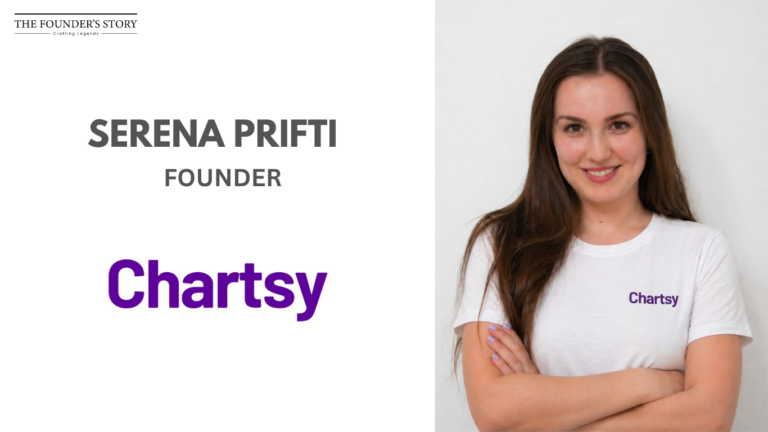
Recognizing this growing challenge, Founder Serena Prifti launched Chartsy, an AI-powered SaaS analytics platform designed to dramatically reduce the “time-to-insight” for startup founders and operators. Rather than forcing businesses to depend on data analysts or complex business intelligence tools, Chartsy enables users to ask questions in plain English, instantly generate meaningful charts, and monitor critical SaaS metrics such as Monthly Recurring Revenue (MRR), churn, customer health, pricing performance, and discount ROI.
With a strong software engineering background and years of experience working alongside SaaS companies, Serena built Chartsy with one guiding philosophy: analytics should feel effortless. Instead of overwhelming founders with dashboards and filters, the platform delivers the answers they need when they need them. Today, Chartsy continues to help startups spend less time building reports and more time building better businesses.
In this exclusive Founder interview, Serena shares the story behind Chartsy, discusses the challenges of building a global SaaS startup from Albania, explains her product philosophy, and reveals why faster insights—not more dashboards—will define the future of business intelligence.
TFS: Serena, welcome to The Founder’s Story. It is a pleasure to have you with us today. Your entrepreneurial journey and the vision behind Chartsy are inspiring founders across the SaaS ecosystem. We are excited to learn more about your startup story, your product philosophy, and the lessons you’ve gathered while building an analytics platform that helps businesses make smarter decisions every day.
Serena Prifti: Thank you so much. I’m delighted to be here. I always enjoy speaking with fellow founders because every conversation brings fresh perspectives. Building Chartsy has been an incredible learning experience, and I’m happy to share both the challenges and the milestones that have shaped our journey so far.
TFS: You built Chartsy to solve the “time-to-insight” problem — the idea that if it takes two hours to build a churn report, founders won’t do it often enough to catch leaks before they become floods. Was there a specific moment — a particular leak you missed, a spreadsheet that broke at 2 AM — that made you decide this had to exist?
Serena Prifti: Interestingly, there wasn’t one dramatic moment that convinced me to build Chartsy. Instead, the idea emerged gradually through repeated experiences while working with SaaS founders. Every dashboard I created inevitably generated another question. Once one report answered an issue, founders immediately wanted deeper insights into churn, MRR, customer behaviour, or pricing performance. Although the data already existed, finding every new answer required another dashboard, another SQL query, or another spreadsheet.
That pattern made me question why accessing business intelligence remained so complicated. Founders ask important questions every day, yet too often those questions remain unanswered because creating reports takes too much time. Therefore, I envisioned a platform where entrepreneurs could freely explore their own data, instantly generate charts, and build dashboards that naturally evolve alongside their business. That vision eventually became Chartsy.
TFS: Chartsy is built on the premise that founders shouldn’t need a data engineering degree to understand their own revenue. But you yourself are a software engineer with experience leading teams. How did your technical background shape the product, and where did you have to actively fight the urge to over-engineer it?
Serena Prifti: My engineering background certainly helped me build Chartsy, but perhaps the most valuable lesson I’ve learned is knowing when not to build something. Engineers naturally enjoy solving problems, and it’s easy to become excited by every new feature idea. Earlier in my career, I often rushed into development before validating whether an idea genuinely solved a customer problem.
Today, I follow a much more disciplined process. Whenever I think of a new feature, I document who it serves, why it matters, and how it improves the product. Then I deliberately step away from the idea for a few days. After that, I discuss it with users before writing any code. Those conversations usually reveal whether the feature addresses a genuine business challenge or simply satisfies my own curiosity. Consequently, Chartsy remains powerful behind the scenes while staying remarkably simple for founders to use.
TFS: You’re based in Tirana, Albania, building a global SaaS analytics tool. How has that influenced Chartsy’s DNA — from how you think about pricing and accessibility to how you approach building for a global customer base from a non-traditional tech hub?
Serena Prifti: Building Chartsy from Albania has never changed my vision for the product because I always intended to serve a global SaaS audience. From the very beginning, my focus remained on solving universal founder problems rather than creating software for a specific region. Great startups exist everywhere, so the product needed to work equally well regardless of geography.
However, building outside traditional technology hubs certainly presents practical challenges. For example, Stripe still doesn’t fully support businesses in Albania, despite being central to the SaaS ecosystem. Since Chartsy integrates with Stripe, overcoming those limitations required creative solutions. Although those experiences were sometimes frustrating, they strengthened my belief that entrepreneurs everywhere deserve equal access to world-class software. More importantly, they reinforced my commitment to building a platform shaped by customer needs rather than geographical boundaries.
TFS: Chartsy calculates MRR from actual invoice data rather than subscription plan prices, which is more conservative but more accurate. That’s a bold choice — it makes your numbers look smaller than Stripe’s native MRR in some cases. How do you convince founders that “more honest” metrics are worth the ego hit?
Serena Prifti: I always begin by explaining why those numbers differ because context matters. Chartsy calculates MRR using actual invoice data since invoices represent revenue that has genuinely been earned. While another platform may display a larger figure, I believe founders deserve to see reality rather than a number that simply feels more encouraging.
Ultimately, metrics exist to improve decisions, not to protect our emotions. If revenue is lower than expected, that insight creates an opportunity to investigate pricing, retention, or customer behaviour before problems become larger. Fortunately, most founders understand this very quickly. They would rather build a business on accurate information than optimistic assumptions because sustainable growth always begins with honest data.
TFS: Your platform supports both Stripe and Paddle in the same account. Most analytics tools pick one ecosystem and optimize for it. What made you decide to be payment-platform-agnostic, and what technical or philosophical challenges did that create?
Serena Prifti: From the beginning, I wanted Chartsy to focus on founders instead of payment providers. Entrepreneurs often evolve their businesses over time. They may operate one product on Stripe, another on Paddle, or even migrate between platforms as they grow. Therefore, I never believed analytics should become fragmented simply because payment infrastructure changes.
There was also a personal reason behind this decision because I use Paddle myself. I wasn’t building for an imaginary customer. Instead, I was solving a problem I experienced firsthand. Technically, bringing both ecosystems together required significant engineering because each platform structures invoices, subscriptions, and APIs differently. Nevertheless, founders should never have to understand those complexities. Chartsy handles the differences behind the scenes so users can focus entirely on understanding their business.
TFS: The “Blank Canvas” feature lets users ask questions in plain English and get instant charts. In an era where every SaaS tool is slapping “AI” on its homepage, how do you define what genuinely AI-assisted means for Chartsy versus what is just marketing gloss?
Serena Prifti: For me, AI should always solve a meaningful problem before it becomes a marketing headline. I never wanted to add artificial intelligence simply because it was fashionable. Instead, I introduced AI because it genuinely helps founders save time while discovering insights that previously required hours of manual work.
I often describe Chartsy as having an experienced analytics teammate available whenever you need one. Founders should be able to ask questions naturally, explore ideas, and immediately understand what is happening inside their business. If AI cannot simplify decisions, reveal valuable insights, or reduce unnecessary effort, then I don’t believe it adds meaningful value. Every AI feature inside Chartsy must earn its place by making business intelligence significantly easier and more useful.
TFS: You explicitly position Chartsy against the spreadsheet-and-CSV-export workflow that most early-stage SaaS companies default to. But spreadsheets are stubbornly persistent. What do you think most founders underestimate about the hidden cost of staying in Google Sheets for too long?
Serena Prifti: I don’t believe spreadsheets are the real problem because they remain incredibly useful in many situations. In fact, I still use them myself whenever they are the right tool for the job. However, the real challenge begins when founders spend more time maintaining spreadsheets than learning from the information inside them.
Every report demands fresh imports, updated formulas, error checks, and continuous maintenance. Then, every new business question often requires building another spreadsheet from scratch. Over time, those seemingly small tasks consume hours that could be invested in customers, product development, or growth. Therefore, the greatest cost isn’t the spreadsheet itself. Instead, it’s the opportunity cost of constantly managing data rather than making better business decisions.
TFS: If you could look at the anonymous aggregate data across all Chartsy accounts, what’s one counterintuitive pattern you’ve noticed about how SaaS businesses actually grow versus how founders think they grow?
Serena Prifti: I don’t think I’ve reached the stage where I can confidently identify one universal pattern across every Chartsy customer. However, that is something I genuinely look forward to exploring as the platform continues to expand. The opportunity to discover industry-wide insights is incredibly exciting.
What I consistently observe, though, is that founders naturally concentrate on acquiring new customers because customer acquisition feels like visible progress. Yet, many of the biggest business improvements come from retaining existing customers, reducing churn, and understanding why certain customer segments generate significantly greater lifetime value. Those metrics rarely make headlines, but they often create the strongest long-term growth. That belief continues to shape the way I build Chartsy.
TFS: Chartsy highlights four core metrics: MRR trends, plan performance, high-value customer health, and discount code ROI. If you had to convince a founder to obsess over just one of these above all others, which would it be — and why is it usually the one they ignore?
Serena Prifti: Without hesitation, I would choose high-value customer health. Monthly Recurring Revenue tells founders what has already happened. However, it rarely explains why those changes occurred. By the time revenue begins declining, valuable customers may already have disengaged or started considering alternatives.
Monitoring your highest-value customers gives you an opportunity to act before revenue suffers. You can identify reduced engagement, potential downgrades, or early churn signals while there is still time to strengthen those relationships. Conversely, healthy enterprise customers often indicate that the broader business is moving in the right direction. Although this metric requires deeper analysis than simply reading an MRR chart, it consistently provides earlier and more meaningful signals about future business performance.
TFS: Serena, one message has become increasingly clear throughout your Founder story. Sustainable SaaS growth rarely comes from collecting more data. Instead, it comes from understanding the right data early enough to act on it. That philosophy sits at the heart of everything Chartsy aims to deliver.
TFS: You talk about tracking “discount code ROI” to distinguish long-term loyalists from one-month churners. That’s a level of surgical insight most early-stage tools skip. Was this born from a specific customer story, or did you see a gap in how SaaS founders think about promotions?
Serena Prifti: This feature wasn’t inspired by one particular founder or customer. Instead, it grew from repeatedly seeing how startups evaluated promotions. Most businesses celebrate a campaign because it attracts new customers or generates a spike in revenue. While those numbers certainly matter, they only tell part of the story.
I became much more interested in what happened after the first purchase. Did those customers remain subscribed? Did they upgrade over time? More importantly, did they become loyal, high-value customers or simply leave after the first billing cycle? Those answers reveal whether a promotion truly creates sustainable growth. Therefore, I built Chartsy to help founders evaluate long-term customer value rather than short-term marketing success, enabling them to make far better promotional decisions in the future.
TFS: The BI and analytics space is crowded — from Stripe Sigma to dedicated tools like ChartMogul and Baremetrics. Chartsy’s edge seems to be speed and zero-friction setup. But as you grow, do you worry about feature creep pulling you toward becoming the complex BI tool you set out to replace?
Serena Prifti: I think about that constantly because simplicity requires discipline. However, I don’t believe complexity comes from offering more features. Instead, complexity appears when users must understand every technical detail before they can accomplish something meaningful.
Behind the scenes, Chartsy performs sophisticated data processing and analytics. Nevertheless, I never want founders to experience that complexity directly. Every feature should feel intuitive from the very first interaction. If users need lengthy onboarding, complicated configuration, or multiple tutorials before finding answers, then I’ve probably designed the feature incorrectly. As Chartsy evolves, my goal is to make the platform significantly more capable while ensuring the user experience becomes even simpler. That balance remains one of the company’s most important product principles.
TFS: BigCommerce merchants can now upgrade their Stripe integration directly from their dashboard. As platforms like Stripe, Paddle, and BigCommerce build more native analytics, what’s your thesis for why a third-party tool like Chartsy will still matter in five years?
Serena Prifti: I actually welcome the continued improvement of native analytics because founders benefit whenever software becomes better. However, payment providers naturally optimise analytics around their own ecosystems. My responsibility as the Founder of Chartsy is very different. I focus entirely on helping founders understand their overall business rather than one individual platform.
Entrepreneurs don’t wake up wondering what happened inside Stripe or Paddle. Instead, they ask broader questions. Why is growth slowing? Which pricing plan performs best? Which customers are most likely to churn? Those answers often require combining information from multiple systems instead of viewing one isolated dashboard. As startups grow, they rarely remain inside a single ecosystem forever. Consequently, I believe independent analytics platforms like Chartsy become even more valuable because they provide one unified view of the entire business, regardless of the underlying tools.
TFS: Serena, one of the most compelling aspects of your entrepreneurial journey is your unwavering focus on founders rather than software platforms. Throughout this conversation, you’ve consistently demonstrated that technology should simplify business decisions instead of creating additional complexity. That philosophy clearly differentiates Chartsy within today’s crowded SaaS analytics landscape.
TFS: You write that “the biggest barrier to growth isn’t a lack of data — it’s the time-to-insight.” If you could wave a wand and change one thing about how the entire SaaS industry thinks about data, what would it be?
Serena Prifti: I believe we’ve reached a point where collecting data is no longer the biggest challenge. Most SaaS businesses already have more information than they can realistically use. However, many companies still assume that adding more dashboards or tracking more metrics will automatically lead to better decisions. In reality, that isn’t how great businesses grow.
The real value lies in answering the right question at the right moment. If founders must spend hours building reports or waiting for someone to analyse their data, decision-making slows down and opportunities disappear. That’s exactly why I speak so often about “time-to-insight.” The faster entrepreneurs understand what’s happening, the faster they can improve products, retain customers, and grow sustainably. Therefore, I hope the industry shifts its focus from collecting more data to helping founders make better decisions with the data they already have.
TFS: Chartsy is very product-led in its marketing — detailed blog posts, transparent feature comparisons, demo videos. As a technical founder, how do you balance the time spent building the product versus explaining it, and has that balance shifted as you’ve grown?
Serena Prifti: During the early days of Chartsy, I spent almost every hour building the product. Like many first-time founders, I genuinely believed that creating something valuable would naturally attract customers. Over time, I realised that building a great product is only one part of building a successful company.
Today, I see product development and communication as two sides of the same journey. Writing blog posts, recording demos, sharing product updates, and speaking with founders all strengthen the product itself. Every conversation teaches me something new about customer needs, and those insights often shape future features. Consequently, I no longer think of marketing as separate from product development. Instead, it has become an essential feedback loop that continually improves both Chartsy and my understanding of the founders I serve.
TFS: Looking ahead: Chartsy currently serves founders, teams, and operators using Stripe, Paddle, and BigCommerce. What’s the next frontier — a new data source, a new type of customer, or a new way of interacting with data — that genuinely excites you about where Chartsy could go next?
Serena Prifti: What excites me most is making Chartsy an indispensable part of every founder’s daily workflow rather than simply another analytics platform. I want founders to spend less time searching for answers and more time acting on meaningful insights. That means expanding the number of data sources founders can connect while continuing to build smarter analytics that proactively identify opportunities and risks.
Ultimately, my vision extends far beyond reporting numbers. I want Chartsy to feel like a trusted teammate that is always available to answer questions, uncover trends, and support better business decisions. I believe there is still tremendous opportunity to rethink how entrepreneurs interact with their business data. That journey has only just begun, and I am genuinely excited about the innovations that lie ahead.
TFS: Serena, thank you for sharing your Founder story with such honesty and clarity. Your entrepreneurial journey demonstrates that innovation is not always about building more technology. Often, it is about removing complexity so founders can focus on what truly matters—building exceptional businesses. We truly appreciate your insights into SaaS analytics, product design, startup growth, and the future of AI-powered business intelligence. It has been an absolute pleasure having you with us on The Founder’s Story.
Serena Prifti: Thank you for inviting me. I genuinely enjoyed this conversation. Every discussion with fellow founders reminds me why I started Chartsy in the first place. Entrepreneurship is a continuous learning experience, and every challenge presents an opportunity to build something better. I hope our conversation encourages founders to become more curious about their businesses, trust their data, and make decisions with greater confidence. Most importantly, I hope Chartsy continues helping entrepreneurs spend less time searching for answers and more time creating products that make a meaningful impact.
TFS: As our conversation with Founder Serena Prifti comes to an end, one message resonates throughout her entrepreneurial journey: the future of SaaS analytics is not about generating more dashboards—it is about delivering faster, clearer, and more actionable insights. Through Chartsy, Serena is challenging long-standing assumptions about business intelligence by replacing complexity with simplicity and transforming data into decisions.
Her startup story also highlights an important lesson for every entrepreneur. Sustainable growth rarely comes from chasing vanity metrics or accumulating endless reports. Instead, it comes from understanding customers, recognising meaningful patterns, and acting before opportunities disappear. By combining thoughtful product design, practical AI, and a relentless focus on founder experience, Chartsy is building more than an analytics platform—it is redefining how modern SaaS companies interact with their business data.
We thank Serena Prifti for sharing her inspiring Founder story and wish her and the entire Chartsy team continued success as they shape the next generation of intelligent SaaS analytics.