
The Founder Story | Eva Cordioli: Portraits À Vélo Transforming Cycling Through Storytelling, Women’s Empowerment and Sustainable Mobility
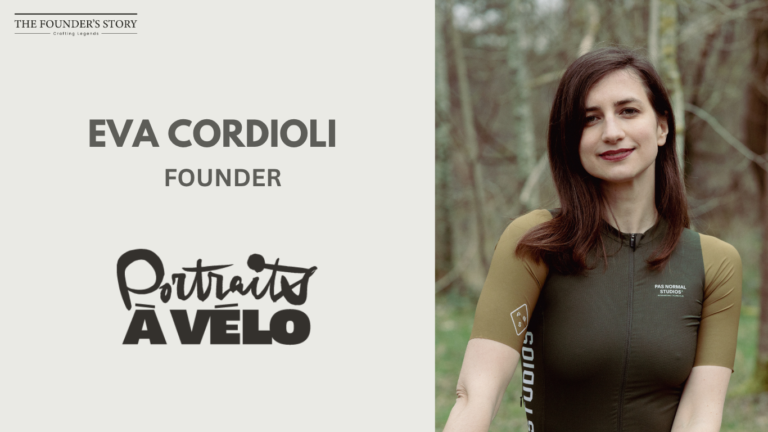
Every meaningful movement begins with a powerful story. While conversations around cycling often focus on infrastructure, technology, sustainability, and urban planning, the people behind the bicycles rarely receive the attention they deserve. Yet every cyclist has a unique journey shaped by courage, resilience, freedom, and transformation. Those personal stories often inspire far greater change than statistics alone.
Recognizing this opportunity, Founder and entrepreneur Eva Cordioli created Portraits À Vélo, a storytelling platform that amplifies the voices of women whose lives have been transformed through cycling. Rather than focusing solely on bicycles, the platform celebrates human experiences that redefine mobility, confidence, equality, and community. Through every conversation, Portraits À Vélo shows that cycling is far more than transportation. It is a pathway to independence, inclusion, and social progress.
Today, Portraits À Vélo has grown into a movement that celebrates authentic stories from women across diverse backgrounds, professions, cultures, and life stages. Every published story challenges stereotypes while inspiring more women to embrace cycling with confidence. As cities rethink urban mobility and sustainability, Eva’s work reminds us that meaningful innovation begins by understanding people before designing solutions.
In this exclusive conversation with The Founder Story, Eva Cordioli reflects on her entrepreneurial journey, the inspiration behind Portraits À Vélo, the power of authentic storytelling, and why representation remains essential for driving social change. She also shares valuable leadership lessons and her vision for the future of cycling, sustainable cities, and inclusive mobility.
Eva Cordioli is an entrepreneur, storyteller, and the Founder of Portraits À Vélo, a purpose-driven platform that celebrates women through authentic cycling stories. Working at the intersection of storytelling, sustainable mobility, community building, and social impact, she believes that stories create connection, and connection inspires action. Through thoughtful interviews, she has built a platform that empowers women to see themselves represented within cycling culture while proving that meaningful entrepreneurship is measured not only by business growth but also by the communities it inspires.
Founded by Eva, Portraits À Vélo explores themes of freedom, resilience, confidence, equality, sustainability, and urban mobility through authentic human stories. Every interview demonstrates how cycling transforms everyday life by creating opportunities for personal growth, social inclusion, and stronger communities. By placing people at the heart of every narrative, the platform encourages a more inclusive vision of mobility and reminds us that lasting change begins when people feel represented, inspired, and empowered.
TFS: Eva, welcome to The Founder Story. It is an absolute pleasure to have you with us today. Portraits À Vélo has become much more than a storytelling platform. It has evolved into a movement that celebrates women, cycling, and human resilience through authentic experiences. We are excited to learn more about your entrepreneurial journey, the inspiration behind your startup, and the remarkable stories that continue to shape your mission.
Eva Cordioli: Thank you so much for the warm welcome. I am truly delighted to be here. Every interview is another opportunity to celebrate the incredible women who have trusted me with their stories. Although Portraits À Vélo began as a personal idea, it has gradually become a community built around empathy, courage, and shared experiences. I look forward to discussing the entrepreneurial journey behind the platform, the lessons I have learned along the way, and why storytelling remains one of the most powerful tools for creating lasting social change.
TFS: What inspired you to create Portraits À Vélo, and what gap did you feel was missing in the conversation around cycling and mobility?
Eva Cordioli: The inspiration for Portraits À Vélo came from a simple yet powerful observation. Whenever cycling entered public conversations, the focus almost always remained on infrastructure, technology, performance, or policy. While those discussions are undoubtedly important, I felt something equally valuable was missing. We were rarely talking about the people whose lives had been transformed by cycling. Behind every bicycle is a personal story filled with courage, freedom, determination, and hope. As a Founder and entrepreneur, I believed those stories deserved greater visibility because they reveal the true social value of mobility.
I also noticed that countless women were using bicycles in extraordinary ways. Some relied on cycling for work, while others embraced it to care for their families, rediscover confidence, improve their health, or simply experience independence. However, despite their remarkable journeys, many of these voices remained invisible. Portraits À Vélo was created to bridge that gap through authentic storytelling. Today, every published story demonstrates that cycling is not simply about transportation. Instead, it represents opportunity, empowerment, inclusion, and personal transformation that can inspire countless others to begin their own journey.
TFS: Looking back, what has been the most defining moment in your entrepreneurial journey so far?
Eva Cordioli: Every entrepreneur experiences moments that redefine their purpose, and one particular realization completely transformed mine. Initially, I believed Portraits À Vélo would primarily resonate with cycling enthusiasts who appreciated personal stories about mobility. However, something much deeper began to emerge as more interviews were published. Women from completely different backgrounds started reaching out to share how the stories had impacted them personally. Some told me they finally felt represented, while others explained that reading these experiences gave them the confidence to begin cycling again after many years.
Those heartfelt conversations fundamentally changed my understanding of the platform’s purpose. I realized I was no longer creating content alone. Instead, I was helping build a supportive community where women could recognize themselves in someone else’s journey. That shift marked the defining moment of my entrepreneurial story. It reinforced my belief that authentic storytelling creates belonging, and belonging encourages action. As the Founder of Portraits À Vélo, I now see every interview not only as a story worth sharing but also as an opportunity to inspire confidence, connection, and meaningful social change.
TFS: Every founder has a personal mission behind their work. What is the deeper purpose that drives you to continue building this platform?
Eva Cordioli: At the heart of Portraits À Vélo lies a mission that extends far beyond bicycles. My deepest purpose is to help people discover their own potential through stories that celebrate courage, resilience, and possibility. I have always believed that mobility is closely connected with personal freedom. When someone gains the confidence to move independently, they often unlock opportunities in many other areas of life. That belief continues to guide every decision I make as a Founder and entrepreneur.
The bicycle itself is a remarkably simple invention, yet it can transform lives in profound ways. It provides independence, strengthens confidence, creates new friendships, improves wellbeing, and encourages greater participation within communities. Through Portraits À Vélo, I hope to amplify voices that have traditionally received little attention while demonstrating that every journey matters. If even one person discovers the confidence to ride, pursue a new opportunity, or believe in themselves because of a story they read, then the platform has achieved exactly what it was created to accomplish.
TFS: You have documented numerous cycling stories. What patterns or insights have emerged that surprised you the most?
Eva Cordioli: One of the greatest surprises has been discovering that cycling is rarely the final destination within someone’s story. Instead, it often becomes the catalyst for remarkable personal transformation. Many women initially begin cycling for practical reasons such as commuting, saving money, improving health, or supporting their families. Yet, as their journeys unfold, the bicycle gradually becomes a source of confidence, independence, leadership, and even professional growth. Those unexpected outcomes have consistently reinforced the purpose behind Portraits À Vélo.
Another fascinating pattern is the incredible diversity of experiences that ultimately share a common thread. Every woman’s journey is unique, yet each story reflects the power of mobility to expand possibilities. Some women become community leaders, while others advocate for safer streets, inspire younger generations, or rebuild their lives after personal challenges. These conversations continually remind me that cycling is never just about moving from one place to another. It is about discovering new opportunities, building resilience, strengthening communities, and creating lasting social impact through everyday experiences.
TFS: Has there been a particular interview or story that fundamentally changed your perspective on cycling, community, or human resilience?
Eva Cordioli: That is a difficult question because every conversation has left a lasting impression on me. Nevertheless, the stories that continue to stay with me are those of women who transformed adversity into strength. Some had faced serious illness, while others were rebuilding their lives after significant personal changes. A few had overcome cultural expectations or social barriers that discouraged them from cycling altogether. Although their circumstances differed, they all demonstrated remarkable determination by taking one small step forward at a time. As a Founder, those conversations reminded me that resilience is often built through consistent action rather than dramatic breakthroughs.
What moved me most was that none of these women described themselves as extraordinary. Instead, they simply spoke about making the next decision that felt possible. The bicycle became a companion throughout that journey rather than the destination itself. Consequently, I began viewing mobility in a much broader way. Cycling is closely connected to dignity, confidence, independence, and hope. Every interview reinforced the idea that communities become stronger when people are empowered to move freely and confidently. Those personal stories continue to influence both my entrepreneurial journey and the future direction of Portraits À Vélo.
TFS: In an era dominated by short-form content, why do you believe authentic storytelling remains a powerful tool for driving change?
Eva Cordioli: We live in a world where information travels faster than ever before. However, speed does not always create understanding. While short-form content is valuable for capturing attention, authentic storytelling creates emotional connection. People naturally remember stories because they recognize themselves within another person’s experience. Data can explain what is happening, but stories reveal why it matters. As an entrepreneur building a purpose-driven platform, I have learned that genuine human experiences often create far greater influence than numbers alone.
Moreover, authentic storytelling encourages empathy, and empathy frequently becomes the foundation for meaningful action. When someone reads about another woman’s fears, victories, or personal growth through cycling, they begin imagining similar possibilities for themselves. That emotional connection can inspire behavioural change more effectively than facts presented in isolation. As the Founder of Portraits À Vélo, I believe every published story has the potential to change perceptions, reduce stereotypes, and encourage more inclusive conversations around mobility. Therefore, storytelling remains one of the most effective tools for creating sustainable social impact.
TFS: Through your work, what barriers continue to prevent more women from embracing cycling as a lifestyle or mode of transportation?
Eva Cordioli: Safety continues to be the most significant barrier, and it influences almost every conversation I have with women. Many tell me they genuinely want to cycle more often. However, they hesitate because they do not feel protected while sharing roads with motor vehicles. Safe and connected infrastructure remains essential because confidence begins with feeling secure. Nevertheless, physical infrastructure represents only one part of a much larger challenge that cities and communities must address together.
Beyond safety, several cultural and social barriers continue limiting participation. Many women still experience harassment, limited representation, caregiving responsibilities, or outdated assumptions about who cycling is meant for. Those invisible obstacles can discourage participation just as much as unsafe streets. Consequently, increasing the number of women who cycle requires a holistic approach that combines better infrastructure with education, representation, supportive workplaces, inclusive communities, and positive media narratives. Portraits À Vélo contributes by making women’s experiences visible because representation encourages confidence, and confidence often becomes the first step toward lasting behavioural change.
TFS: What role do visibility and representation play in encouraging greater participation of women in cycling communities?
Eva Cordioli: Visibility has an extraordinary influence because people often believe something is possible only after they see someone similar achieving it. Representation expands imagination by showing that cycling belongs to everyone, regardless of age, profession, background, ethnicity, or life stage. When women see mothers, students, professionals, retirees, or community leaders confidently riding bicycles, they begin recognizing themselves within those stories. That simple recognition can remove psychological barriers long before someone ever sits on a bicycle.
As the Founder of Portraits À Vélo, I have witnessed this effect repeatedly through messages from readers around the world. Many women tell me they finally felt seen because someone else’s journey reflected their own experiences and aspirations. Those responses continually reinforce why storytelling matters. Representation challenges stereotypes without confrontation because it simply presents authentic reality. Over time, these individual stories collectively reshape public perception of cycling culture. Ultimately, greater visibility creates stronger communities where diversity becomes normal rather than exceptional, allowing more people to embrace cycling with confidence and pride.
TFS: If policymakers and city planners could hear one message from the women featured on your platform, what would it be?
Eva Cordioli: If I could bring every woman featured on Portraits À Vélo into the same room with policymakers and city planners, I believe they would all share one powerful message: design cities for people before designing them for vehicles. Throughout my interviews, women consistently explain that they are not asking for extraordinary facilities or luxury infrastructure. Instead, they simply want streets that feel safe, connected, accessible, and welcoming. They want to travel confidently with children, carry groceries, commute to work, or enjoy a ride without constantly worrying about their safety. As a Founder, I have learned that these requests are remarkably practical and deeply human.
What is particularly inspiring is that these conversations rarely focus on cycling alone. Instead, they reflect a broader vision of healthier, more inclusive communities where everyone can move freely regardless of age, gender, or ability. When cities invest in infrastructure that supports women, they simultaneously improve the daily lives of families, children, older adults, and people with disabilities. Therefore, better cycling infrastructure becomes an investment in social wellbeing rather than transportation alone. Portraits À Vélo continues to amplify these voices because lasting urban transformation begins by listening carefully to the people who experience cities every day.
TFS: How do you envision the relationship between cycling, sustainability, and urban mobility evolving over the next decade?
Eva Cordioli: I believe the coming decade will redefine how cities think about transportation. Cycling will gradually move from being viewed as an alternative option to becoming a central pillar of sustainable urban mobility. As communities continue addressing climate change, traffic congestion, rising energy costs, and public health challenges, bicycles offer an affordable, practical, and environmentally responsible solution. However, success will depend on integrating cycling into a much broader mobility ecosystem rather than treating it as an isolated mode of transport. As an entrepreneur, I see tremendous opportunities for innovation that place people at the centre of mobility planning.
The future belongs to multimodal transportation systems where bicycles, public transit, shared mobility, and pedestrian infrastructure work seamlessly together. Technology will undoubtedly support this evolution through smarter urban planning and improved connectivity. Nevertheless, cultural acceptance will remain equally important. People must view cycling as a normal part of everyday life rather than a niche activity. Portraits À Vélo contributes to that cultural shift by sharing authentic stories that make sustainable mobility feel relatable and achievable. Ultimately, the cities that embrace both infrastructure and human-centred storytelling will lead the next generation of urban transformation.
TFS: Which cities around the world are setting the benchmark for cycling culture, and what can others learn from them?
Eva Cordioli: Cities such as Copenhagen, Amsterdam, and Utrecht continue to set remarkable standards because they have successfully integrated cycling into everyday life rather than treating it as a specialised activity. In these cities, bicycles are simply another practical way of moving through the community. Children cycle to school, professionals commute to work, parents transport their families, and older adults remain active through safe infrastructure. That level of integration did not happen overnight. Instead, it reflects decades of consistent investment, thoughtful planning, and political commitment that prioritised people over automobiles.
At the same time, I find tremendous inspiration in cities like Paris, Bogotá, and several emerging urban centres that have demonstrated how quickly transformation can occur when there is strong leadership and a shared vision. Their progress proves that meaningful change does not always require generations of planning. Instead, determined leadership combined with community engagement can accelerate progress significantly. As the Founder of Portraits À Vélo, I believe every city has something valuable to learn from these examples. The most important lesson is that successful cycling culture begins with long-term commitment, inclusive planning, and genuine collaboration between governments, communities, and citizens.
TFS: Beyond infrastructure, what cultural shifts are necessary to make cycling a mainstream transportation choice?
Eva Cordioli: Infrastructure creates opportunity, but culture ultimately determines whether people choose to cycle. For many years, bicycles have often been associated with sport, recreation, or particular lifestyle groups. Although those associations are positive, they unintentionally limit public perception. We need to normalise cycling as an ordinary, convenient, and practical part of daily life that is accessible to everyone. When society stops viewing cyclists as a separate group, more people naturally begin considering bicycles for commuting, shopping, family activities, and everyday travel. That cultural evolution is just as important as building new cycling lanes.
Creating this shift requires collaboration across multiple sectors. Education can introduce children to safe cycling from an early age, while workplaces can encourage employees through supportive policies and facilities. Media also plays an important role by showcasing diverse cyclists rather than reinforcing outdated stereotypes. As a Founder and storyteller, I believe authentic representation accelerates cultural change because people identify with real experiences rather than idealised images. Portraits À Vélo exists to contribute to this transformation by celebrating women from different backgrounds whose stories demonstrate that cycling is not defined by identity, profession, or ability. Instead, it is simply a practical, empowering way to experience everyday life.
TFS: What leadership lessons have emerged from building a mission-driven platform that traditional business education rarely teaches?
Eva Cordioli: One of the most valuable leadership lessons I have learned is that trust creates a stronger foundation than rapid growth. Traditional business education often emphasizes metrics such as scale, revenue, market share, and expansion. While those indicators certainly matter, building a mission-driven platform has taught me that meaningful relationships are equally important. Every conversation I have with the women featured on Portraits À Vélo is built on mutual respect, active listening, and authenticity. As a Founder and entrepreneur, I have discovered that people willingly share their most personal experiences only when they genuinely feel heard and valued.
Another lesson is that leadership is not about having all the answers. Instead, it is about creating space for others to share their perspectives while remaining committed to a clear purpose. Throughout my entrepreneurial journey, I have learned that consistency builds credibility over time. Communities remember how you make them feel long after they forget individual achievements. Therefore, I always try to ensure that every story published reflects the values that inspired Portraits À Vélo from the beginning. When purpose guides every decision, sustainable impact naturally follows.
TFS: What is one assumption about entrepreneurship, mobility, or social impact that you have challenged through your own experience?
Eva Cordioli: One assumption I have consistently challenged is the belief that meaningful impact requires enormous financial resources or large organisations. Many people assume that social change begins only after significant investment, extensive infrastructure, or widespread recognition. However, my entrepreneurial experience has shown exactly the opposite. Lasting transformation often begins with one authentic conversation, one shared experience, and one person who feels inspired to act differently. As the Founder of Portraits À Vélo, I have repeatedly witnessed how a single story can influence someone’s confidence, reshape perceptions, or encourage them to begin cycling for the very first time.
This experience has fundamentally changed my understanding of entrepreneurship. Success is not always measured by dramatic milestones or overnight achievements. Instead, meaningful impact often grows quietly through consistent effort and genuine human connection. Every published interview contributes another piece to a much larger movement that encourages inclusion, sustainable mobility, and social equality. Looking back, I now believe that entrepreneurship is not simply about building businesses. It is equally about building communities, creating opportunities, and inspiring people to believe that even small actions can produce extraordinary long-term change.
TFS: If you could leave one lasting legacy through Portraits À Vélo, what would you hope future generations remember and build upon?
Eva Cordioli: If Portraits À Vélo leaves behind one lasting legacy, I hope it is a more inclusive and compassionate narrative about cycling. For too long, many people have struggled to see themselves reflected within traditional cycling culture. My aspiration is that future generations inherit a world where every individual, regardless of gender, age, profession, or background, feels that they naturally belong on a bicycle. As a Founder, I want the platform to demonstrate that mobility is not merely about transportation. Instead, it represents freedom, equality, confidence, opportunity, and meaningful human connection.
Beyond safer streets and better infrastructure, I hope future generations continue building cultures that celebrate diversity through everyday experiences. Stories have the remarkable ability to outlive the people who tell them. Therefore, I would be incredibly proud if the interviews published through Portraits À Vélo continue inspiring conversations long into the future. If someone chooses to ride because they recognised themselves in another woman’s journey, then the platform has fulfilled its purpose. Ultimately, I hope people remember Portraits À Vélo not simply as a storytelling project, but as a movement that helped make mobility more inclusive, more human, and more accessible for everyone.
TFS: Eva, thank you for sharing your remarkable entrepreneurial journey with such honesty and thoughtfulness. Throughout this conversation, one message has remained remarkably clear. Portraits À Vélo is much more than a storytelling platform. It is a movement that celebrates people before bicycles, courage before convenience, and community before infrastructure. Your work beautifully demonstrates that authentic stories have the power to reshape perceptions, influence public conversations, and inspire meaningful social change.
Your insights also remind us that sustainable mobility cannot be achieved through infrastructure alone. Instead, it requires empathy, representation, inclusive leadership, and a willingness to listen to the voices that are too often overlooked. Your entrepreneurial story is an inspiring example of how one Founder can transform a simple idea into a platform that empowers individuals while encouraging cities to become more inclusive and connected.
Eva Cordioli: Thank you very much. It has been a genuine pleasure to share the story behind Portraits À Vélo and the incredible women who continue to inspire this journey every single day. Every interview reminds me that meaningful change begins by listening to people with curiosity and respect. Although bicycles connect these stories, the real focus has always been the individuals whose lives have been transformed through mobility, resilience, and community.