
The Founder’s Story | Clarice Pinto: Building Pausetiv to Transform Menopause Care Through Evidence-Based Digital Health
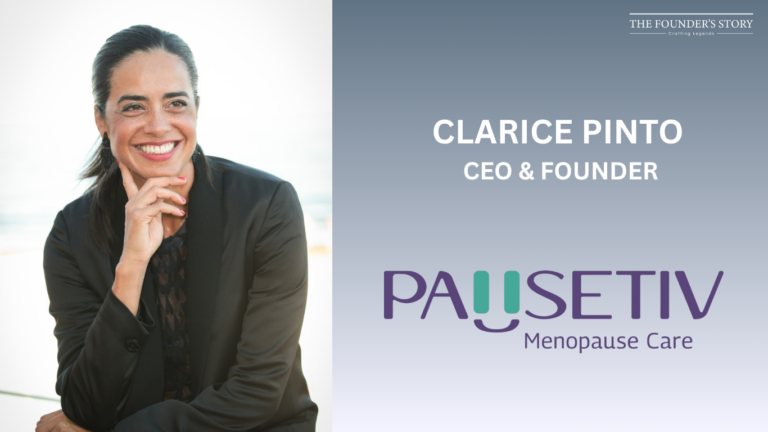
Women’s health has entered a new era of innovation. Yet menopause, despite affecting more than one billion women worldwide, continues to receive far less attention than it deserves. For decades, countless women have navigated perimenopause and menopause with limited medical guidance, fragmented care, and widespread misinformation. Many have accepted uncomfortable symptoms as an unavoidable part of ageing simply because accessible, evidence-based support was difficult to find.
Recognising this enormous healthcare gap, entrepreneur and Founder Clarice Pinto launched Pausetiv, an innovative health-tech startup dedicated to transforming menopause care through science, empathy, and technology. Built in Italy with a global vision, Pausetiv combines physician-led expertise, digital health innovation, and multidisciplinary care to provide women with personalised menopause support throughout one of life’s most significant transitions.
Rather than treating menopause as the closing chapter of a woman’s life, Pausetiv encourages women to view it as an opportunity for renewal, improved wellbeing, and informed healthcare decisions. Through its physician-led digital platform, clinically validated assessment tools, personalised treatment pathways, and holistic specialist network, the company is helping women regain confidence while giving menopause the clinical attention it has long deserved.
In this exclusive Founder interview with The Founder’s Story, Clarice Pinto shares the personal experiences that inspired her entrepreneurial journey, the challenges of building a regulated health-tech startup, the importance of evidence-based medicine, and her long-term vision for making menopause care accessible, compassionate, and clinically rigorous for every woman.
TFS: Clarice, welcome to The Founder’s Story. It is an absolute pleasure to have you with us today.
Clarice Pinto: Thank you so much. I’m genuinely delighted to be here. I always appreciate opportunities to discuss women’s health, entrepreneurship, and the mission behind Pausetiv.
TFS: Menopause has remained one of the least discussed healthcare topics despite affecting millions of women every year. However, your startup is changing that conversation through technology, science, and compassionate care. We are excited to learn more about your Founder story, your entrepreneurial journey, and how Pausetiv is helping women experience menopause differently.
Clarice Pinto: Thank you. That mission has become deeply personal for me, and I am grateful to share the journey.
TFS: What was the personal or professional moment that made you realize menopause care needed to be reinvented, and that you were the one to do it?
Clarice Pinto: Interestingly, there was never a single dramatic moment that convinced me to become a Founder in women’s healthcare. Instead, my entrepreneurial journey developed through a deeply personal experience that gradually exposed a much larger systemic problem. After spending more than twenty-five years building global brands and leading teams within large corporations, I entered perimenopause myself. Like countless women, I suddenly experienced physical and emotional changes that I simply could not explain. More surprisingly, I did not even know that perimenopause existed as a distinct stage before menopause.
As I searched for answers, I expected to find the same structured medical support available for other major health transitions. However, I quickly realised that this level of specialised care was extremely difficult to access in Italy. Although many healthcare professionals were committed to helping women, there was no integrated pathway that combined evidence-based medicine, personalised treatment, and specialists with deep menopause expertise. Consequently, many women were left navigating one of the longest phases of their lives with uncertainty rather than confidence.
That experience completely changed how I viewed women’s healthcare. Instead of accepting the gap, I began asking myself why such an important stage of life had been overlooked for so long. Eventually, I realised that the company I wished had existed for me simply did not exist. That insight became the foundation of Pausetiv. As an entrepreneur, I wanted to build a physician-led, clinically rigorous, and compassionate health-tech startup that empowers women with trustworthy care rather than leaving them to search for answers alone.
TFS: Pausetiv frames menopause as “a moment of restart” rather than decline. Where did that reframing come from, and why did it matter to build the brand around it?
Clarice Pinto: One of the biggest misconceptions surrounding menopause is that it represents an ending. Society has often portrayed this stage of life as a period of decline, loss, or reduced opportunity. However, science tells a very different story. Menopause is a biological transition that more than one billion women experience worldwide. Moreover, it can represent nearly forty percent of a woman’s life. Therefore, it deserves far greater attention, investment, and understanding than it currently receives.
When I began developing Pausetiv, I knew the brand needed to challenge this outdated narrative. Rather than offering comforting marketing language, I wanted the message to reflect clinical reality. Women who receive timely, evidence-based care often emerge from menopause with a deeper understanding of their health, clearer priorities, and renewed confidence about the next chapter of their lives. Therefore, describing menopause as a “moment of restart” is not simply inspirational branding. Instead, it represents a meaningful cultural correction supported by medical evidence and real patient outcomes.
As the Founder, I wanted every aspect of Pausetiv to reinforce this philosophy. Every consultation, assessment, treatment pathway, and conversation should remind women that menopause is not the end of their story. Instead, it can become the beginning of a healthier, more informed, and more empowered future when supported by the right clinical expertise.
TFS: How has the Italian health-tech and startup ecosystem shaped the way you approached building this company from Milan?
Clarice Pinto: Building a health-tech startup in Italy has been both challenging and incredibly valuable. Healthcare is naturally a highly regulated industry, so from the very beginning I understood that credibility could never be optional. Instead, it had to become one of Pausetiv’s strongest foundations. Consequently, every decision we made centred around clinical excellence, regulatory compliance, and flawless execution rather than simply moving quickly.
The Italian startup ecosystem also encourages entrepreneurs to demonstrate genuine scientific credibility before pursuing rapid growth. That environment shaped our Founder journey in very positive ways. Rather than focusing only on technology, we invested heavily in building physician-led protocols, multidisciplinary expertise, and healthcare processes that align with recognised medical standards. Every element of the platform was designed to support future certification requirements while maintaining the highest level of patient safety.
Although regulation can slow innovation, it also strengthens trust. For a healthcare startup like Pausetiv, trust is one of the most valuable assets we can build. Looking back, I believe Milan provided exactly the right environment because it encouraged us to create a company that combines innovation with clinical integrity instead of choosing one over the other.
TFS: Walk us through how the PauseTest works: how does a quiz-style questionnaire translate into a credible clinical starting point for a woman who isn’t even sure she’s in perimenopause yet?
Clarice Pinto: One of the most important things to understand is that PauseTest is not designed to diagnose menopause. Instead, it provides women with an evidence-based clinical starting point that helps them better understand what may be happening in their bodies. Too often, women dismiss symptoms or assume they are unrelated because they lack reliable information. Therefore, PauseTest helps bridge that gap through a structured and scientifically informed assessment.
The questionnaire collects information about symptoms, medical history, hormonal indicators, and lifestyle factors using scoring logic developed alongside our physicians and aligned with internationally recognised IMS and EMAS guidelines. Based on those responses, women receive a clearer picture of their current wellbeing together with guidance about the most appropriate next steps. Importantly, every result becomes part of a physician-led clinical pathway rather than replacing medical expertise. Technology helps women begin the conversation, while experienced specialists provide the personalised care that follows. That combination allows Pausetiv to deliver both accessibility and clinical confidence.
TFS: Pausetiv brings together gynecologists, endocrinologists, nutritionists and counselors under one pathway. How do you coordinate multidisciplinary care virtually without it feeling fragmented for the patient?
Clarice Pinto: One of the biggest challenges in women’s healthcare is that treatment often happens in silos. A woman may visit a gynecologist for one symptom, an endocrinologist for another, and perhaps a nutritionist or mental health professional later. Unfortunately, each specialist frequently works with only part of the picture. At Pausetiv, we wanted to completely rethink that experience. Instead of asking women to coordinate their own care, we created a unified pathway where every specialist works together around the patient’s individual health journey.
Our technology platform plays an important supporting role, but the clinical protocol is what truly connects everything. Every specialist has access to the same patient history, medical information, and evidence-based treatment framework. Consequently, women no longer need to repeat their story during every appointment or worry about receiving conflicting advice. Instead, each consultation builds naturally on the previous one, creating a continuous and coordinated experience.
Technology should never replace meaningful relationships between doctors and patients. Instead, it should strengthen communication between specialists while allowing every woman to feel seen, understood, and supported throughout her menopause journey. As the Founder of Pausetiv, that seamless experience has always been one of our highest priorities because great healthcare should feel connected rather than fragmented.
TFS: Menopause has historically been under-researched and under-treated by mainstream medicine. How do you make sure Pausetiv’s protocols stay genuinely evidence-based rather than just well-marketed?
Clarice Pinto: Evidence-based medicine is not simply one of our values; it is the foundation upon which Pausetiv was built. From the very beginning, I wanted this health-tech startup to earn trust through scientific credibility rather than marketing promises. Women deserve accurate medical guidance, especially during a life stage that has historically received far too little clinical attention. Therefore, every protocol we develop begins with internationally recognised scientific evidence rather than commercial trends.
Our multidisciplinary clinical framework follows the guidelines established by the International Menopause Society (IMS) and the European Menopause and Andropause Society (EMAS). Furthermore, our protocols undergo continuous review by an experienced scientific committee that includes practising gynecologists, endocrinologists, nutritionists, sports medicine experts, and mental health professionals. This collaborative approach ensures that every recommendation reflects current medical knowledge while remaining practical for real patients.
Healthcare continues to evolve, and scientific research progresses every year. Consequently, we believe our protocols should evolve alongside new evidence. Nothing becomes part of the patient journey unless it has clear clinical backing and has been carefully evaluated by specialists. As an entrepreneur, I firmly believe that trust grows through transparency, consistency, and scientific rigour. Marketing may introduce women to Pausetiv, but evidence-based care is what encourages them to stay.
TFS: Physicians on the platform can prescribe treatments like hormone replacement therapy. What did it take, clinically and regulatorily, to build that capability into a virtual model?
Clarice Pinto: Introducing personalised medical treatment within a virtual healthcare environment required far more than simply adding video consultations. Since Pausetiv operates as a physician-led telemedicine platform, we needed to ensure that every stage of the patient journey met the same clinical standards expected during an in-person consultation. That meant designing an end-to-end care pathway that combines technology, regulation, and medical excellence into one seamless experience.
The journey begins with detailed patient onboarding and comprehensive medical history collection. From there, physicians assess symptoms, recommend appropriate laboratory investigations where necessary, conduct online consultations, and ultimately develop personalised treatment plans. When clinically appropriate, this process also allows specialists to prescribe therapies, including hormone replacement therapy, while remaining fully compliant with Italian healthcare regulations.
Building this capability demanded significant collaboration between healthcare professionals, legal experts, technology teams, and regulatory specialists. Every workflow had to prioritise patient safety, clinical governance, and privacy. Although this required considerable effort, it ensured that virtual healthcare never compromised medical quality. Instead, women receive the same level of professionalism, clinical attention, and personalised care they would expect during a traditional face-to-face consultation, while benefiting from the convenience and accessibility of digital health.
TFS: Menopause care is a historically underfunded category that’s suddenly become a hot investment theme. How do you build a company for the women who need it, without just chasing the trend?
Clarice Pinto: Healthcare trends inevitably change, but the needs of women do not. That perspective has guided every decision we’ve made since founding Pausetiv. Today, more than 1.1 billion women worldwide are living through menopause. Yet fewer than one in four receive treatment for their symptoms, while menopause continues to attract only a small percentage of overall femtech investment. Those statistics remind us that the opportunity extends far beyond current market attention.
Although increased investor interest is encouraging, we never built Pausetiv because menopause became fashionable. We built it because millions of women were navigating one of the most significant phases of their lives without access to structured, evidence-based care. That problem existed long before the current spotlight on femtech, and unfortunately it will continue unless companies remain committed to solving it.
As the Founder, I constantly remind our team that every strategic decision begins with one simple question: Does this genuinely improve patient care? If the answer is yes, we move forward. If the answer is no, we reconsider. That patient-first mindset allows us to balance sustainable business growth with meaningful healthcare impact. Ultimately, our success will never be measured only by investment rounds or market valuation. It will also be measured by the number of women whose lives improve because they finally received the care they deserved.
TFS: Listening to your journey, it becomes clear that Pausetiv was never designed as just another digital health startup. Instead, it feels like a long-term commitment to changing how society approaches women’s health.
Clarice Pinto: Thank you. That has always been our vision. Technology gives us the opportunity to scale healthcare, but compassion, scientific integrity, and trust are what truly create lasting change. If we can help women feel informed, supported, and respected throughout menopause, then we are fulfilling the purpose behind Pausetiv.
TFS: You’ve expanded into workplace menopause inclusivity alongside direct-to-consumer care. How do those two sides of the business reinforce each other?
Clarice Pinto: From the very beginning, I believed menopause care should not exist only within healthcare settings. It should also become part of the workplace conversation because that is where many women experience the daily impact of untreated symptoms. Challenges such as brain fog, fatigue, sleep disruption, anxiety, and reduced concentration often affect professional performance. However, these issues frequently remain invisible because menopause is still surrounded by stigma. Therefore, supporting women at work is not only the right thing to do but also a smart business decision for employers.
When we partner with companies and insurers, we extend access to evidence-based care for women who might never actively seek specialised support on their own. At the same time, our direct-to-consumer platform continues to deepen our understanding of patients’ real experiences, needs, and outcomes. Those valuable insights help us design stronger workplace programmes that are grounded in clinical evidence rather than assumptions.
Both sides of Pausetiv strengthen one another. Our patient care continuously informs our corporate solutions, while our workplace partnerships help normalise conversations around menopause at scale. As a Founder, I see these two models as complementary rather than separate. Together, they allow us to improve women’s health while helping organisations build healthier, more inclusive, and more productive workplaces.
TFS: How much of your growth has been word-of-mouth from women like the ones in your testimonials, versus deliberate marketing?
Clarice Pinto: Coming from a marketing and brand-building background, I fully appreciate the importance of strategic communication. Marketing creates awareness, educates audiences, and introduces people to solutions they may never have discovered otherwise. However, in healthcare, trust cannot simply be advertised. It must be earned through genuine patient experiences. That is why word-of-mouth has become one of Pausetiv’s most valuable growth drivers.
Many women arrive at our platform after months, or even years, of uncertainty. Some have been told their symptoms are simply part of ageing. Others have struggled to find specialists who truly understand menopause. When they finally receive clear explanations, personalised treatment, and compassionate care, something remarkable happens. They naturally begin sharing their experience with sisters, friends, colleagues, and family members who may be facing similar challenges.
Although our marketing efforts continue to increase visibility, the strongest endorsement comes directly from women whose lives have improved through our care. Every testimonial represents far more than a positive review. It reflects renewed confidence, restored wellbeing, and trust that has been built through meaningful clinical support. As an entrepreneur, I believe no marketing campaign can ever replace the credibility that comes from authentic human experiences.
TFS: What’s been the hardest part of scaling a care model that depends on deeply human, empathetic specialist relationships?
Clarice Pinto: Interestingly, maintaining empathy has never been the hardest part of scaling Pausetiv. Our physicians and specialists genuinely care about every woman who enters our platform, and that commitment has remained constant as we have grown. The greater challenge has been convincing investors, corporate partners, and even parts of the healthcare ecosystem that menopause deserves serious attention as both a medical and business opportunity.
Unlike more established healthcare sectors, menopause care has relatively few historical benchmarks or comparable business models. Consequently, many stakeholders initially questioned whether this category could scale successfully. As a Founder, I found myself spending considerable time explaining not only our business model but also why menopause itself represents one of the largest unmet healthcare needs globally.
Building credibility therefore became just as important as building technology. We needed to demonstrate measurable patient outcomes, strong clinical governance, and sustainable commercial value before many people fully recognised the opportunity. Looking back, those conversations strengthened our company because they forced us to remain disciplined, evidence-driven, and relentlessly focused on delivering meaningful impact. Today, growing recognition of menopause care validates that persistence, but there is still significant work ahead.
TFS: What’s the biggest misconception you still run into, from patients, investors, or even doctors, about what menopause care should look like?
Clarice Pinto: Perhaps the most common misconception is the belief that menopause can be solved with one symptom, one consultation, or one treatment. In reality, menopause is one of the most complex health transitions a woman experiences. It affects hormonal balance, bone health, cardiovascular wellbeing, metabolism, cognitive function, mental health, sleep quality, and overall quality of life. Therefore, expecting one universal solution simply does not reflect clinical reality.
This misconception appears in different ways. Some patients believe they simply need one prescription. Some investors underestimate the complexity of comprehensive menopause care. Even within healthcare, there can sometimes be a tendency to focus on individual symptoms rather than viewing the woman as a whole person. That fragmented approach often explains why many women continue to feel misunderstood despite seeking medical advice.
At Pausetiv, we deliberately take a multidisciplinary approach because every woman experiences menopause differently. Personalised care means understanding medical history, lifestyle, symptoms, emotional wellbeing, and long-term health risks before recommending treatment. As the Founder, I strongly believe healthcare becomes far more effective when we stop treating menopause as a single event and instead recognise it as a long-term health journey that deserves integrated, evidence-based support.
TFS: Is there a moment with a patient that reminded you why Pausetiv exists?
Clarice Pinto: Honestly, those moments happen far more often than people might imagine. Although I lead the company as its Founder, I still make time to speak directly with our patients because those conversations keep me connected to the reason Pausetiv exists. Many women come to us feeling exhausted, frustrated, and uncertain. Quite often, they have spent months or even years searching for answers. Some have been told that their symptoms are simply part of ageing, while others have felt dismissed or misunderstood during previous medical consultations.
What stays with me is not a single story but a recurring pattern. I hear the relief in a woman’s voice when she finally realises that her symptoms are real, explainable, and treatable. That moment of validation often becomes the turning point in her journey. It reminds me that good healthcare is not only about diagnosis or treatment. It is also about making people feel heard, respected, and understood. Every time a patient tells us she finally feels hopeful again, it reinforces why we built Pausetiv in the first place. Those conversations continue to inspire both me and our entire team.
TFS: Was there a woman close to you whose experience shaped Pausetiv’s approach?
Clarice Pinto: Without question, my own experience with perimenopause became the strongest influence behind Pausetiv’s philosophy. Like many women, I entered this stage of life without understanding what was happening to my body. Even with years of professional experience leading international businesses, I found myself searching for reliable information and struggling to identify specialists who could guide me with confidence. That experience completely changed my perspective on women’s healthcare.
At the same time, I began noticing similar stories among friends, colleagues, and other women around me. Despite having different backgrounds and lifestyles, many shared the same feelings of confusion, isolation, and uncertainty. Their experiences confirmed that my own journey was far from unique. Instead, it reflected a widespread gap in healthcare that had existed for far too long.
Those experiences shaped every decision we made while building Pausetiv. We wanted our startup to combine scientific rigour with genuine empathy. Every consultation should feel respectful, personalised, and completely free from judgement. As the Founder, I believe women deserve healthcare that treats them as whole individuals rather than simply focusing on isolated symptoms. That belief continues to guide our mission every day.
TFS: What’s been the steepest personal learning curve for you, going from a marketing and general management background into building and running a health-tech startup?
Clarice Pinto: This entrepreneurial journey has probably been the greatest learning experience of my professional life. Throughout my corporate career, I developed expertise in brand building, business strategy, leadership, and consumer marketing. However, stepping into healthcare introduced an entirely new level of complexity. Every day presented new challenges involving clinical governance, medical regulation, telemedicine, certification, and scientific research. Consequently, I quickly realised that curiosity and continuous learning would become essential parts of my role as a Founder.
Rather than viewing my non-medical background as a limitation, I chose to see it as a strength. Years spent understanding consumers taught me how to listen carefully, identify unmet needs, and design experiences around people rather than processes. That perspective has become one of Pausetiv’s greatest advantages because our platform was designed from the patient’s point of view before anything else.
Healthcare absolutely requires scientific excellence, but it also requires empathy, accessibility, and trust. My previous experience helped me bridge those worlds. I continue learning every day, and I believe that willingness to learn has become one of the most valuable qualities any entrepreneur can bring to a fast-moving health-tech startup.
TFS: If you could hand every woman entering perimenopause one piece of advice, what would it be?
Clarice Pinto: If I could share one message with every woman entering perimenopause, it would be this: never ignore what your body is trying to tell you. Too many women minimise their symptoms because they believe they should simply tolerate them or because someone has told them that feeling unwell is a normal part of ageing. However, your experiences are real, your symptoms have biological causes, and evidence-based care is available.
The earlier you seek reliable information and professional support, the sooner you regain a sense of control over your health. Knowledge replaces uncertainty, and understanding replaces fear. Instead of feeling like menopause is happening to you, you begin managing it with confidence and informed decision-making.
I also encourage women to advocate for themselves. Ask questions, seek specialists who truly understand menopause, and never hesitate to request a second opinion if something does not feel right. Every woman deserves compassionate, personalised healthcare throughout this important stage of life. That belief sits at the heart of Pausetiv’s mission and continues to inspire everything we do.
TFS: Where do you want Pausetiv to be in five years, and what does “success” look like to you beyond the numbers?
Clarice Pinto: When I think about the future, I certainly hope Pausetiv continues to grow across Italy and expands into new international markets. However, commercial growth alone has never been my ultimate definition of success. My vision is much broader. I want Pausetiv to become the trusted standard of care for menopause, where women, employers, healthcare professionals, and insurers immediately think of us when they need evidence-based support.
More importantly, I hope we contribute to a lasting cultural transformation. I want future generations of women to experience menopause without shame, silence, or confusion. Instead, I want this life stage to be discussed as openly as pregnancy, mental health, or preventive healthcare. When society treats menopause with the same seriousness as every other major health transition, we will know meaningful progress has been made.
As the Founder, I also hope our entrepreneurial journey inspires other innovators to address overlooked areas of healthcare. There are still countless opportunities to improve patient outcomes through thoughtful technology, multidisciplinary collaboration, and compassionate care. If Pausetiv helps lead that change while improving millions of women’s lives, then I will consider our story a genuine success.
TFS: Clarice, thank you for sharing such an open, thoughtful, and inspiring Founder story. Throughout this conversation, one theme has consistently stood out. Pausetiv is not simply building a digital health platform. It is challenging decades of misconceptions while giving women access to the evidence-based, compassionate care they have always deserved. Your entrepreneurial journey demonstrates how innovation becomes truly meaningful when it solves real human problems.
Clarice Pinto: Thank you. It has been a genuine pleasure to share our story. Building Pausetiv has been one of the most rewarding experiences of my life because every woman we help reminds us why this work matters. I sincerely hope our conversation encourages more women to seek support, more healthcare professionals to continue advancing menopause care, and more entrepreneurs to tackle important challenges that have been overlooked for far too long.
TFS: We certainly believe it will. On behalf of everyone at The Founder’s Story, thank you for joining us and for sharing the vision behind Pausetiv. We wish you and your team every success as you continue transforming menopause care and improving the lives of women across Italy and beyond.