
The Founder’s Story | Aashima Gupta: Building Sourcing Acumen and Shaping the Future of AI-Powered Procurement
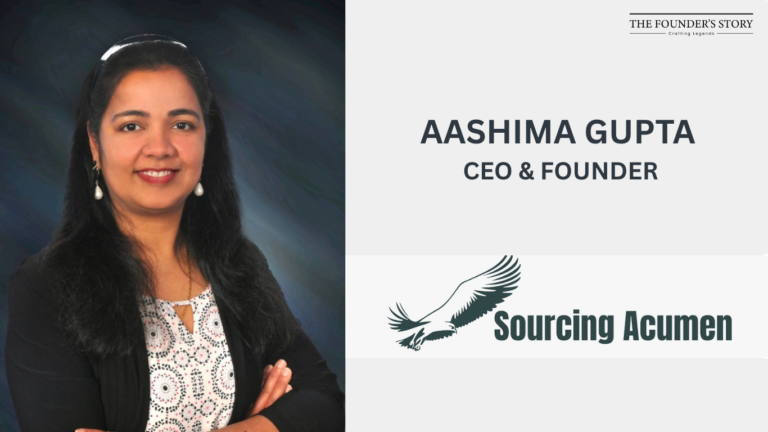
Procurement has evolved far beyond negotiating prices and issuing purchase orders. Today, it plays a strategic role in reducing risk, strengthening supplier relationships, accelerating innovation, and improving business resilience. Yet many organizations still depend on disconnected systems, spreadsheets, emails, and manual workflows that slow decision-making. Recognizing this challenge, Founder and entrepreneur Aashima Gupta launched Sourcing Acumen after more than fifteen years of leading procurement transformation initiatives, including digital procurement programs at McKinsey & Company. Her vision was to simplify strategic sourcing while enabling procurement professionals to make faster, smarter, and evidence-based decisions.
Today, Sourcing Acumen is transforming the entire Source-to-Contract lifecycle through a connected platform that unifies strategic sourcing, supplier management, contract management, intake workflows, advanced analytics, and Artificial Intelligence. The startup empowers procurement teams to spend less time on administration and more time creating measurable business value, reinforcing the belief that technology should elevate procurement into a strategic business partner rather than simply digitize existing processes.
In this exclusive conversation with The Founder’s Story, Aashima Gupta shares the experiences that shaped her entrepreneurial journey, the inspiration behind Sourcing Acumen, and her vision for the future of AI-powered procurement.
Aashima Gupta is a procurement technology entrepreneur, digital transformation leader, and Founder of Sourcing Acumen. Before launching the startup, she led large-scale procurement transformation programs for global enterprises, including at McKinsey & Company. Having supported more than 10,000 RFx and eAuction events, she developed deep expertise in strategic sourcing, supplier collaboration, and procurement innovation. Those experiences inspired her to build a modern procurement platform that combines AI, intelligent automation, and connected workflows to help organizations make better sourcing decisions and deliver long-term business value.
Designed for modern procurement teams, Sourcing Acumen provides an intuitive Source-to-Contract platform that simplifies procurement operations while strengthening governance, supplier collaboration, and evidence-based decision-making. By eliminating fragmented procurement systems and connecting every stage of the procurement lifecycle, the company enables organizations to accelerate transformation and position procurement as a strategic driver of business growth.
TFS: Aashima, welcome to The Founder’s Story. It is truly a pleasure to have you with us today. Your entrepreneurial journey reflects years of experience, innovation, and leadership in procurement technology. We are excited to learn more about the story behind Sourcing Acumen, your vision for the future of procurement, and the lessons you’ve gathered while building an AI-driven startup that is transforming strategic sourcing.
Aashima Gupta: Thank you so much. I’m delighted to be here. I appreciate the opportunity to share my founder story and the journey behind Sourcing Acumen. Procurement is undergoing an exciting transformation, and I’m looking forward to discussing how technology, data, and artificial intelligence can help organizations make smarter decisions while creating greater business value.
TFS: You have spent over 15 years transforming procurement through digital solutions, including leading digital procurement initiatives at McKinsey & Company. What experiences shaped your decision to move from advising organizations to building your own procurement technology platform?
Aashima Gupta: Throughout my career, I had the privilege of working with organizations across numerous industries on procurement transformation initiatives. Although every organization had different objectives, I consistently noticed one common pattern. Procurement teams were still managing critical sourcing activities through spreadsheets, emails, disconnected systems, and highly manual processes. Consequently, valuable time was spent coordinating information instead of making strategic decisions.
As I worked more closely with procurement leaders, I realized the challenge was much bigger than process improvement alone. Organizations needed technology that could intelligently connect data, suppliers, workflows, and business objectives. Existing solutions often digitized paperwork, yet they rarely simplified decision-making or improved collaboration across the procurement lifecycle. That realization gradually shaped my entrepreneurial thinking.
Eventually, I believed the industry deserved a platform designed from the ground up around procurement professionals rather than software limitations. That belief became the foundation of Sourcing Acumen. We built the platform to combine deep procurement expertise with modern technology, advanced analytics, and artificial intelligence. Our goal has always been simple. We want procurement teams to spend less time managing administration and significantly more time creating measurable business value. For me, that mission continues to define both my founder journey and our startup’s long-term vision.
TFS: When you look back at executing more than 10,000 RFx and eAuction events, what recurring challenges did you observe across organizations that made you believe the procurement technology landscape needed a fundamental change?
Aashima Gupta: Having participated in more than 10,000 RFx and eAuction events, I observed remarkably similar challenges across organizations of every size and industry. First, procurement professionals invested enormous amounts of time gathering supplier information, comparing bids, validating responses, and consolidating data from multiple sources. Consequently, administrative work frequently overshadowed strategic thinking and supplier engagement.
Another recurring challenge involved transparency. Important sourcing decisions were often supported by fragmented information spread across spreadsheets, emails, and disconnected applications. As a result, stakeholders struggled to align quickly, evaluate trade-offs confidently, or maintain a clear audit trail throughout the sourcing process. This fragmentation also slowed decision-making and increased operational risk.
Perhaps the biggest opportunity involved supplier competition. Many organizations limited participation simply because evaluating additional suppliers required significant manual effort. Therefore, they unintentionally reduced innovation, competitive pricing, and long-term value creation. These experiences convinced me that procurement technology needed to evolve beyond workflow automation. The future required intelligent platforms capable of combining organizational data, supplier intelligence, analytics, and AI to help procurement professionals make faster, evidence-based decisions with greater confidence.
TFS: Many procurement professionals talk about the gap between strategy and execution. From your experience, why does this gap still exist, and what inspired Sourcing Acumen’s approach to solving it?
Aashima Gupta: In my experience, procurement organizations rarely struggle with defining strategy. Most leaders clearly understand their objectives. They want to reduce costs, strengthen supplier relationships, improve resilience, increase competition, support sustainability, and manage risk effectively. However, consistently executing those priorities across hundreds or even thousands of procurement decisions remains considerably more challenging.
Daily operations introduce competing priorities, limited resources, changing business requirements, and increasing supplier complexity. Consequently, procurement teams often find themselves balancing operational demands while trying to maintain strategic alignment. Even the strongest procurement strategy can lose momentum when execution depends on fragmented systems and manual coordination.
This challenge inspired the philosophy behind Sourcing Acumen. We believe procurement technology should help organizations close the gap between planning and execution rather than widen it. By integrating workflows, supplier intelligence, organizational data, analytics, and artificial intelligence into one connected platform, procurement professionals can move quickly without sacrificing decision quality. Ultimately, our startup exists to empower procurement teams to execute strategy consistently, scale intelligently, and create sustainable business value through every sourcing decision.
TFS: Building a procurement technology company requires balancing deep procurement expertise with product innovation. How did your industry experience influence the product philosophy behind Sourcing Acumen?
Aashima Gupta: One of the most important lessons from my professional journey is that technology should simplify complexity rather than introduce additional layers of it. Procurement professionals already manage supplier relationships, negotiations, contracts, compliance, and business expectations every day. Therefore, software should remove friction instead of creating new operational challenges.
When we began building Sourcing Acumen, every product decision started with a simple question. Would this feature help procurement professionals make better decisions while saving meaningful time? That principle became the foundation of our product philosophy. Instead of forcing users to adapt to software limitations, we designed the platform around real procurement workflows and practical business needs.
At the same time, we wanted enterprise-grade capabilities to remain intuitive from the very first day. Powerful functionality should never require unnecessary complexity. By combining deep procurement expertise with thoughtful product innovation, we created a platform that feels approachable for new users while remaining sophisticated enough for global enterprises. As our startup continues to grow, that customer-first philosophy remains central to every innovation we introduce.
TFS: Procurement has evolved from a cost-saving function into a strategic business partner. What role do you believe modern Source-to-Contract platforms will play in helping procurement achieve this transformation?
Aashima Gupta: The expectations placed on procurement have changed dramatically over the past decade. Today, procurement leaders are expected to deliver much more than cost savings. They help organizations manage supplier risk, strengthen supply chain resilience, accelerate innovation, improve compliance, and support sustainable business growth. Consequently, procurement must become involved much earlier in business decisions instead of entering the process after requirements have already been defined.
I believe the future begins with creating what I call a single front door for procurement. Every procurement request should start from one intelligent entry point. When organizations centralize intake, procurement gains greater visibility into upcoming demand, stakeholder objectives, supplier opportunities, and organizational priorities. As a result, procurement professionals can influence decisions before sourcing activities begin rather than reacting afterward.
Modern Source-to-Contract platforms also connect every stage of the procurement lifecycle into one seamless experience. Strategic sourcing, supplier management, contract management, analytics, workflow automation, and artificial intelligence should work together instead of existing as isolated capabilities. That connected ecosystem enables procurement teams to make informed decisions faster while maintaining governance and transparency. Ultimately, technology transforms procurement from a transactional function into a trusted strategic advisor that contributes directly to long-term business success.
TFS: Many organizations implement procurement technology but struggle to achieve adoption and value realization. What are the biggest mistakes companies make when digitizing their procurement processes?
Aashima Gupta: One of the biggest misconceptions is believing that purchasing technology automatically creates transformation. While selecting the right platform is certainly important, successful transformation depends just as much on people, processes, and organizational culture. Without those elements, even the most advanced technology cannot deliver sustainable value.
Organizations sometimes focus heavily on software implementation while overlooking change management. Employees may receive new tools, yet they often lack clear guidance on how those tools fit into their daily responsibilities. Consequently, adoption slows because users continue relying on familiar spreadsheets, emails, or manual workarounds instead of embracing new digital workflows.
Successful organizations approach transformation differently. They involve stakeholders from the beginning, define clear procurement processes, establish ownership, and communicate the purpose behind every change. Equally important, they ensure technology reflects how teams actually work rather than forcing unnecessary process changes. When procurement professionals experience tangible benefits such as faster sourcing, improved collaboration, and reduced administrative effort, adoption grows naturally. Technology becomes an enabler instead of another system employees feel obligated to use.
TFS: Sourcing Acumen brings sourcing, supplier management, contract management, and intake workflows into one connected experience. Why is eliminating fragmented procurement systems so important for organizations today?
Aashima Gupta: Procurement decisions never happen in isolation. Every sourcing event influences supplier relationships, contract negotiations, compliance obligations, purchasing activities, financial governance, and overall business performance. Therefore, when information becomes fragmented across multiple systems, organizations lose valuable visibility throughout the procurement lifecycle.
Disconnected technology creates more than operational inefficiency. It also increases integration complexity, introduces inconsistent data, and makes it difficult for stakeholders to access a single source of truth. Procurement teams often spend unnecessary time reconciling information instead of analyzing supplier performance or supporting strategic business decisions. Consequently, organizations become slower, less agile, and more vulnerable to risk.
That reality shaped the vision behind Sourcing Acumen. We wanted every procurement activity to exist within one connected platform where sourcing events, supplier intelligence, contracts, approvals, workflows, and analytics continuously support one another. When information flows seamlessly across every stage of procurement, organizations improve governance, strengthen compliance, reduce operational risk, and make faster evidence-based decisions. A connected procurement ecosystem ultimately enables procurement professionals to focus on creating strategic business value instead of managing disconnected technology.
TFS: From your experience working with global organizations, what separates procurement teams that achieve world-class outcomes from those that continue operating reactively?
Aashima Gupta: The biggest difference is that world-class procurement teams position themselves as business partners rather than transactional service providers. They engage stakeholders early, understand organizational priorities, and actively contribute to strategic discussions before purchasing decisions are finalized. Consequently, procurement becomes an advisor that helps shape business outcomes instead of simply approving requests.
These organizations also invest heavily in collaboration, transparency, and data-driven decision-making. Rather than waiting for sourcing requests to arrive, procurement professionals proactively identify opportunities, evaluate supplier markets, and recommend solutions that align with broader business objectives. This mindset allows procurement to create value beyond traditional cost reduction.
Technology plays an equally important role in supporting this transformation. When employees have a simple and intuitive way to engage procurement, collaboration improves naturally across departments. Intelligent platforms reduce administrative work while providing procurement teams with greater visibility, stronger analytics, and actionable insights. As a result, procurement professionals spend more time influencing business strategy, strengthening supplier relationships, managing organizational risk, and driving innovation. Those capabilities consistently distinguish world-class procurement organizations from teams that remain reactive and operationally focused.
TFS: Sourcing Acumen is built on a modern scalable architecture. What technology principles were most important when designing the platform, and how did you ensure it could adapt to different organizational maturity levels?
Aashima Gupta: From the very beginning, we wanted Sourcing Acumen to adapt to organizations rather than expecting organizations to adapt to technology. That philosophy influenced every architectural and product decision we made. Procurement teams differ significantly in their maturity, governance models, sourcing complexity, and operational priorities. Therefore, flexibility, scalability, and usability became the three core principles guiding our platform’s development.
We also recognized that digital transformation is a continuous journey instead of a one-time implementation. Some organizations are modernizing manual procurement processes for the first time, while others are integrating advanced analytics, artificial intelligence, and global supplier ecosystems. Consequently, the platform needed to support both scenarios without introducing unnecessary complexity or limiting future growth.
Equally important, we wanted enterprise-grade capabilities to remain intuitive for everyday users. Powerful technology should simplify procurement rather than overwhelm it. By designing modular workflows, configurable processes, and scalable architecture, we created a platform that grows alongside each organization. Whether supporting emerging businesses or large global enterprises, our startup continues to focus on delivering technology that remains simple, intelligent, and adaptable throughout every stage of procurement transformation.
TFS: Your platform combines strategic sourcing capabilities with tactical PR/PO workflows. How important is it for procurement technology to support both complex negotiations and everyday procurement activities in one ecosystem?
Aashima Gupta: Procurement creates value at both the strategic and operational levels. Strategic sourcing enables organizations to negotiate better commercial terms, identify the right suppliers, establish strong contractual relationships, and build long-term procurement strategies. However, those strategic decisions only generate measurable business value when employees consistently follow them during everyday purchasing activities.
Unfortunately, many organizations experience what we often describe as value leakage. Procurement teams negotiate excellent supplier agreements, yet employees continue purchasing outside approved contracts, preferred suppliers, or negotiated pricing structures. Consequently, organizations lose many of the savings and efficiencies created during strategic sourcing.
That is precisely why we built Sourcing Acumen as a connected Source-to-Contract ecosystem. Strategic sourcing, supplier management, contract management, purchase requisitions, purchase orders, and operational workflows should continuously reinforce one another instead of functioning independently. When procurement decisions seamlessly flow into daily purchasing behavior, organizations strengthen compliance, improve governance, increase supplier collaboration, and consistently realize the value negotiated during sourcing. Technology should bridge strategy and execution while ensuring procurement delivers lasting business outcomes.
TFS: Advanced bid analytics, scenario modelling, and multi-round bidding are key capabilities of the platform. How do these tools change the way procurement professionals negotiate with suppliers compared to traditional approaches?
Aashima Gupta: Traditionally, procurement professionals invested significant time preparing for negotiations rather than actually negotiating. They collected supplier information, compared responses manually, validated assumptions, built evaluation models, and analyzed countless spreadsheets before meaningful discussions could even begin. Consequently, preparation often consumed more effort than strategic decision-making itself.
Modern capabilities such as advanced bid analytics, scenario modelling, multi-round bidding, and artificial intelligence fundamentally change that equation. Instead of manually evaluating limited options, procurement teams can rapidly analyze multiple supplier scenarios, understand commercial trade-offs, simulate negotiation outcomes, and identify opportunities that may otherwise remain hidden. These capabilities enable procurement professionals to approach negotiations with greater confidence and far richer insights.
Importantly, I do not see technology replacing procurement expertise. Rather, technology amplifies human judgment. Procurement professionals continue making strategic decisions, building supplier relationships, and negotiating commercial outcomes. However, intelligent platforms provide the data, analytics, and recommendations needed to support those decisions with far greater accuracy. Ultimately, procurement professionals spend less time processing information and more time creating strategic value for their organizations.
TFS: Supplier benchmarks and organizational benchmarks are at the core of Sourcing Acumen. How can data benchmarking change procurement decisions from experience-based decisions to evidence-based decisions?
Aashima Gupta: Experience will always remain valuable in procurement because strong commercial judgment develops over many years. However, experience becomes even more powerful when supported by objective evidence. That is exactly where benchmarking creates significant value for procurement organizations.
Supplier benchmarks and organizational benchmarks provide procurement professionals with meaningful context that extends beyond individual sourcing events. They reveal pricing competitiveness, supplier performance, historical procurement outcomes, negotiation effectiveness, and broader market trends. Consequently, procurement leaders can evaluate sourcing decisions using measurable evidence rather than relying solely on instinct or past experience.
At Sourcing Acumen, we believe data should strengthen every procurement decision throughout the Source-to-Contract lifecycle. Benchmarking helps organizations reduce bias, improve consistency, identify opportunities for continuous improvement, and build stronger supplier strategies over time. It also creates greater confidence among business stakeholders because decisions become transparent, measurable, and easier to justify. Ultimately, evidence-based procurement enables organizations to negotiate more effectively, improve governance, and consistently deliver better business outcomes while supporting long-term strategic growth.
TFS: With AI becoming a major discussion in procurement technology, where do you see artificial intelligence creating the biggest impact across the Source-to-Contract lifecycle?
Aashima Gupta: Artificial Intelligence is fundamentally changing how procurement professionals interact with technology and make business decisions. Until recently, procurement teams spent considerable time gathering information, coordinating with stakeholders, evaluating supplier responses, reviewing contracts, and navigating multiple systems. Consequently, valuable expertise was often consumed by administrative activities instead of strategic work.
I believe AI will introduce intelligence into every stage of the Source-to-Contract lifecycle. From developing sourcing strategies and identifying qualified suppliers to evaluating bids, modelling negotiation scenarios, assessing contractual risks, and surfacing organizational knowledge, AI will help procurement professionals make faster and more informed decisions. Instead of searching through systems for information, users will increasingly receive intelligent recommendations exactly when they need them.
However, I see AI as an augmentation of human expertise rather than a replacement for it. Procurement professionals will continue to provide commercial judgment, build supplier relationships, and guide business strategy. AI simply reduces repetitive work while improving decision quality. As a result, procurement teams can focus more on innovation, collaboration, supplier development, and long-term business value. That shift represents one of the most exciting opportunities shaping the future of procurement technology.
TFS: Procurement leaders are under pressure to deliver savings, resilience, sustainability, and innovation simultaneously. How do you see technology helping procurement balance these competing priorities?
Aashima Gupta: Procurement has become significantly more complex because success is no longer measured by savings alone. Every sourcing decision now influences supplier resilience, operational continuity, environmental sustainability, innovation, compliance, and long-term business performance. Consequently, procurement leaders must evaluate multiple priorities simultaneously instead of optimizing for only one objective.
Technology enables procurement teams to understand these trade-offs more clearly. For example, the lowest-cost supplier may not provide the greatest resilience during supply chain disruptions. Similarly, the most innovative supplier may introduce different operational or commercial risks. Intelligent procurement platforms help organizations evaluate these variables together rather than independently, allowing leaders to make decisions that align with broader business objectives.
At Sourcing Acumen, we believe technology should empower better decision-making instead of simply automating existing processes. Data, analytics, supplier intelligence, and artificial intelligence provide procurement professionals with greater visibility into every sourcing scenario. Consequently, organizations gain the confidence to make balanced decisions even when no perfect solution exists. Ultimately, procurement creates greater strategic value when technology supports informed judgment rather than replacing it.
TFS: Looking ahead five years, what do you believe the procurement function will look like, and what advice would you give to procurement leaders preparing their teams for this future?
Aashima Gupta: I believe procurement will evolve from being primarily process-driven into becoming an intelligence-driven business function. Artificial Intelligence will move well beyond providing recommendations and begin executing many routine procurement activities autonomously. We are already seeing the early emergence of Agentic AI, and I expect these capabilities to expand rapidly over the coming years.
Future AI systems will conduct market research, prepare sourcing events, evaluate supplier responses, monitor contracts, identify risks, and coordinate operational workflows with minimal human intervention. Consequently, procurement professionals will spend significantly less time managing administrative processes and substantially more time shaping business strategy, strengthening supplier partnerships, and influencing executive decision-making.
My advice to procurement leaders is simple. Invest equally in technology and people. Organizations should certainly embrace AI, automation, and intelligent platforms. However, they must also develop strategic thinking, commercial judgment, collaboration, and relationship management within their teams. The future belongs to organizations that successfully combine human expertise with AI-driven execution. Technology will continue to evolve, yet trusted leadership and sound decision-making will remain the defining strengths of world-class procurement organizations.
TFS: If you could change one misconception business leaders still have about procurement, what would it be — and what message would you like them to understand about the future of this function?
Aashima Gupta: If I could change one perception, it would be the belief that procurement slows businesses down. In reality, the strongest procurement organizations accelerate better decision-making. They help businesses avoid unnecessary risks, strengthen supplier relationships, uncover new opportunities, negotiate greater value, and improve long-term organizational resilience. When procurement becomes involved early, it enables faster and more confident business outcomes rather than delaying them.
Modern procurement is no longer an administrative approval function. Instead, it has become a strategic capability that directly influences growth, innovation, operational excellence, and competitive advantage. Technology plays an important role in supporting this evolution because it removes repetitive administrative work while providing procurement professionals with greater visibility, intelligence, and actionable insights.
I genuinely believe the future of procurement has never been more exciting. As Artificial Intelligence continues eliminating manual activities, procurement professionals will focus increasingly on strategy, innovation, supplier collaboration, and measurable business impact. Organizations that recognize procurement as a strategic partner instead of a cost center will be significantly better positioned to compete in an increasingly dynamic global marketplace.
TFS: Aashima, thank you for sharing such thoughtful perspectives and for taking us through your remarkable founder journey. Your story highlights how deep industry expertise, combined with a passion for innovation, can transform an entire business function. It has been inspiring to learn how Sourcing Acumen is helping organizations rethink procurement through intelligence, connected technology, and Artificial Intelligence. We truly appreciate your time and wish you and your team continued success as you shape the future of strategic procurement.
Aashima Gupta: Thank you. It has been a genuine pleasure speaking with The Founder’s Story. Every entrepreneurial journey begins with identifying a meaningful problem and having the courage to solve it differently. Building Sourcing Acumen has been an incredibly rewarding experience because we are helping procurement teams create measurable business value while embracing innovation with confidence.
I believe the future belongs to organizations that combine talented people with intelligent technology. Procurement has an extraordinary opportunity to become one of the most influential strategic functions within every business. If our startup can contribute to that transformation by making procurement simpler, smarter, and more connected, then we will have achieved the vision that inspired us to begin this journey. Thank you once again for providing the opportunity to share our story.