The Vision Behind IHG Investment: A Founder Interview with Althaf Ali
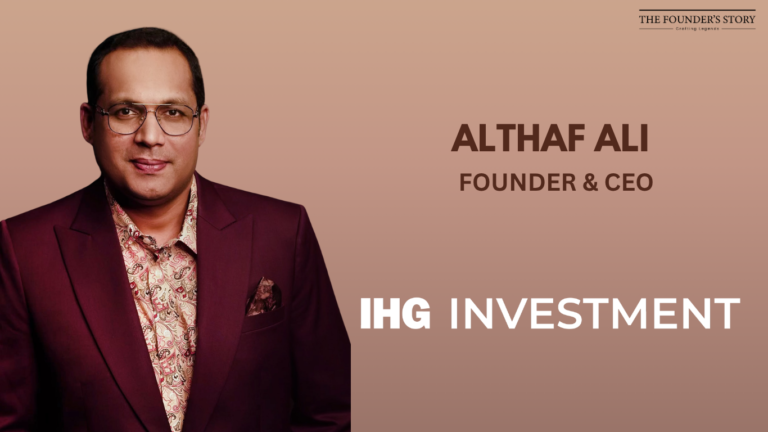
TFS: Althaf, it is a pleasure to welcome you today. Your founder story has inspired many entrepreneurs across the Middle East and beyond. Thank you for joining us.
Althaf Ali: Thank you so much. I truly appreciate the opportunity. Every entrepreneurial journey carries lessons, failures, breakthroughs, and moments of transformation. Therefore, conversations like this become meaningful because they allow founders to share experiences that may inspire the next generation of entrepreneurs and startup leaders.
TFS: Before we begin, congratulations on building IHG Industry LLC and the broader Inspired Holding Group into such a respected business ecosystem. Your ventures have become synonymous with lighting innovation, architectural excellence, and integrated spatial solutions across the region.
Althaf Ali: Thank you. That means a lot because this journey was never built overnight. Every company within the group emerged from identifying a market gap and then solving it with conviction, consistency, and long-term thinking.
TFS: Looking back at your entrepreneurial journey, what was the most counterintuitive decision that ultimately defined your success?
Althaf Ali: The most counterintuitive decision in my entrepreneurial story was refusing to pursue a conventional job after arriving in Dubai in 2003. At that time, I came on a visit visa, and naturally, almost everyone around me advised me to secure a stable salary first. Their advice came from a place of care and practicality. However, my mindset was already shaped very differently because entrepreneurship had entered my life very early.
I became an entrepreneur at the age of seventeen. In fact, while many students were still figuring out their career direction, I had already founded my first business during school. Later, throughout my college years, I managed four separate businesses across three districts in Kerala. Therefore, my relationship with risk was fundamentally different from most people around me.
For me, stability never represented safety. Instead, it represented limitation. I always believed growth happens when accountability becomes unavoidable. Consequently, instead of accepting a fixed salary job, I chose to work with advertising companies on a profit-sharing model. Many people considered that decision reckless because there was no guaranteed income. Nevertheless, that pressure forced me to create genuine value every single day.
That period shaped my entrepreneurial instincts permanently. I learned how to build trust quickly, negotiate effectively, solve problems creatively, and deliver measurable outcomes under pressure. Most importantly, I learned that removing comfort often accelerates personal and professional growth. Without that decision, Metroplus Advertising would never have been born in 2005, and eventually, the larger Inspired Holding Group would not exist today.
TFS: What structural gap in the Middle East market did you identify early that others failed to recognize?
Althaf Ali: When I first entered the Middle East market, I immediately noticed a major structural fragmentation across the lighting, signage, and electrical industries. Clients had to coordinate with multiple vendors simultaneously. One company handled signage. Another supplied lighting. A different supplier managed electrical systems. Yet another consultancy handled design recommendations.
This fragmented approach created inefficiency, delays, communication gaps, and inconsistent project outcomes. However, more importantly, it created frustration for clients. I realized very early that customers were not looking for more vendors. Instead, they were searching for simplicity, reliability, and integration.
That realization became the foundation of several ventures within our group. When we launched LED World LLC in 2009, we intentionally designed it as the first truly comprehensive lighting destination in the region. Clients could access commercial lighting, decorative lighting, outdoor systems, residential products, retail concepts, and electrical solutions under one roof. Additionally, we introduced in-house lighting consultancy and live demonstration studios, which were still extremely rare at the time.
Another bold move involved launching the first online lighting store in the MENA region. Back then, many people believed customers would never buy lighting products digitally because they needed physical interaction with the products. However, I believed the market would eventually shift toward convenience, accessibility, and digital exploration.
Dubai rewards speed, vision, and bold execution. Therefore, the businesses that simplify complexity for customers gain long-term loyalty. That philosophy became central to our startup growth strategy.
TFS: How has your definition of “value creation” evolved as you scaled across multiple industries?
Althaf Ali: In the early stages of my entrepreneurial journey, value creation had a very operational meaning. It meant delivering quality products on time, meeting client expectations, and offering fair commercial value. At that stage, success was measured primarily through execution efficiency.
However, as our businesses matured and expanded into larger industries, my understanding of value creation evolved dramatically. I began to understand that true value is emotional, experiential, and transformational. Clients do not simply purchase products. They purchase outcomes, perceptions, emotions, and identities.
For example, when we delivered lighting solutions for Dubai International Airport Terminal 3 and Concourse D, we were not merely installing luminaires. We were shaping how millions of travelers emotionally experience those environments. Similarly, when working on royal palaces belonging to the Al Makhtoum and Al Nahyan families, the objective extended far beyond illumination. The lighting had to communicate prestige, elegance, sophistication, and cultural identity simultaneously.
Today, across all IHG companies, value creation means solving problems clients may not even recognize yet. We constantly ask ourselves how hospitality spaces will evolve by 2030, how luxury retail environments will feel emotionally, and how lighting can influence wellness, productivity, and human behavior.
Therefore, our startup philosophy shifted from product delivery toward experience architecture. That transition fundamentally transformed the way we design, innovate, manufacture, and serve clients across every venture.
TFS: If you were to rebuild your business portfolio today, what would you deliberately do differently — and why?
Althaf Ali: If I were rebuilding this entrepreneurial ecosystem today, I would intentionally invest much earlier in systems, operational infrastructure, leadership development, and technology integration. In the early years, our businesses grew extremely fast commercially because we were highly effective at winning projects and delivering results. However, operational systems often struggled to keep pace with that expansion.
At the beginning of a founder journey, entrepreneurs naturally focus heavily on revenue generation, client acquisition, and survival. Nevertheless, sustainable scale requires something deeper. It requires processes, structure, culture, training systems, and leadership pipelines that can support long-term expansion without compromising quality.
I would also formalize our talent development strategy much earlier. Today, our organization includes over 275 professionals from India, Europe, the Philippines, Africa, and several other regions. The diversity, creativity, and commitment within this team represent one of our greatest competitive strengths. However, building culture intentionally from day one would have accelerated our organizational maturity significantly faster.
Another important lesson involves storytelling. Entrepreneurs often underestimate the power of telling their own founder story. We dedicated enormous energy toward products, clients, manufacturing, and operations, which was absolutely necessary. However, the Inspired Holding Group brand itself also deserved stronger visibility much earlier. Narrative creates trust, and trust creates long-term business equity.
TFS: Across your ventures, how do you architect businesses that are both individually strong yet collectively synergistic?
Althaf Ali: Building synergistic businesses requires strategic clarity from the very beginning. Every company within the Inspired Holding Group operates with its own identity, management structure, market positioning, and operational focus. That independence is extremely important because each industry demands specialized expertise.
For example, IHG Industry functions as our manufacturing backbone. LED World operates as our flagship lighting destination. Metroplus focuses on signage, façades, and digital solutions. Lumibright represents our proprietary architectural lighting brand. Prastara specializes in bespoke interiors, while De Luxe and Desroch focus on premium décor and lifestyle experiences.
Individually, each venture is designed to function as a standalone business powerhouse. However, collectively, they create something far more valuable. They share supplier relationships, procurement strength, operational infrastructure, after-sales capabilities, client trust, and brand equity. Consequently, the entire ecosystem becomes stronger than the sum of its parts.
A hospitality client may initially approach us for architectural lighting. However, because our ecosystem is integrated, that same client can seamlessly access bespoke interiors, premium décor, signage systems, and custom manufacturing solutions through a single trusted relationship. That interconnected experience creates enormous long-term loyalty and differentiation.
TFS: In a market often driven by price competition, how have you positioned your companies to compete on intellectual and experiential value instead?
Althaf Ali: I strongly believe price competition becomes dominant only when businesses fail to differentiate themselves meaningfully. From the beginning, I deliberately chose not to build companies that compete purely on cost. Instead, we focused on expertise, experience, education, and emotional impact.
Our showrooms were never designed to function like ordinary retail stores. For instance, when clients walk into LED World on Sheikh Zayed Road, they enter an immersive experience center rather than a conventional product display environment. They can physically experience lighting layers, color temperatures, brightness variations, ambience transitions, and spatial moods in real time.
That experiential approach changes the conversation completely. Instead of asking, “What is the cheapest option?” clients begin asking, “What creates the best experience?” That shift is extremely powerful.
Additionally, our consultants operate as lighting designers and advisors rather than traditional salespeople. We invest heavily in educating architects, interior designers, developers, and hospitality operators. Consequently, clients begin trusting our intellectual guidance before any commercial discussion even begins.
Once a business becomes a trusted advisor rather than a transactional supplier, pricing becomes secondary to confidence, reliability, and expertise. That positioning has allowed us to sustain premium value across highly competitive markets.
TFS: What is the most defensible competitive advantage you’ve built — one that cannot be easily replicated?
Althaf Ali: Our most defensible competitive advantage is institutional trust built consistently over more than two decades. Any competitor can open a showroom or launch a lighting brand. However, replicating decades of landmark project experience, client relationships, operational credibility, and execution history is extraordinarily difficult.
Over the years, we have contributed to projects involving Dubai International Airport, EMAAR developments, Jumeirah Group properties, DEWA facilities, royal palaces, luxury hospitality destinations, and major commercial developments across the region. Every successful project strengthens our reputation further and creates compounding trust.
In sectors like luxury hospitality, government infrastructure, and premium real estate, clients rarely take risks with unproven suppliers. They prioritize consistency, reliability, responsiveness, and long-term partnership capability. Therefore, our portfolio itself became a strategic moat.
Another major advantage involves vertical integration. Through our manufacturing facilities in Dubai, Sharjah, India, and China, combined with over 230 OEM and ODM partnerships across 13 countries, we maintain enormous flexibility. We can develop bespoke solutions while still remaining commercially competitive. Very few regional players possess both that manufacturing depth and market breadth simultaneously.
TFS: How do you strike a balance between representing global brands and cultivating your own long-term brand equity?
Althaf Ali: Representing global brands provides credibility, trust, and market access. When internationally respected manufacturers choose to work with you, it immediately signals operational reliability and professional capability to the market. However, depending entirely on external brands also creates strategic vulnerability.
Therefore, from the beginning, I believed strongly that our entrepreneurial ecosystem must develop its own intellectual property and proprietary capabilities alongside distribution partnerships. That philosophy eventually led to the creation of Lumibright, our own architectural lighting brand, which is now distributed internationally.
Similarly, launching IHG Industry as a manufacturing entity created long-term strategic independence. Manufacturing allows us to control product quality, innovation cycles, customization capabilities, and branding direction more effectively. Additionally, it enables us to offer white-label and private-label solutions to international clients.
The balance is important. We continue valuing strong relationships with global brands because collaboration creates growth. However, sustainable long-term value emerges when an entrepreneur simultaneously builds proprietary strengths that cannot be externally controlled.
TFS: Lighting today intersects with design, technology, and sustainability — where do you see the next disruptive convergence happening?
Althaf Ali: The next major disruption will emerge at the intersection of human biology, artificial intelligence, smart architecture, and adaptive lighting systems. Historically, lighting focused primarily on visibility and aesthetics. Today, however, science increasingly proves that light directly influences human health, sleep quality, mood, concentration, energy levels, and emotional wellbeing.
The future involves intelligent lighting systems capable of adapting dynamically to individual human needs. Imagine hotel rooms that automatically adjust color temperatures after long-haul travel to accelerate recovery. Imagine hospitals where lighting synchronizes with patient care protocols to improve healing environments. Imagine office spaces that optimize employee productivity and mental wellness through circadian lighting integration.
Artificial intelligence will accelerate this transformation dramatically because lighting systems will increasingly respond to occupancy data, biometrics, environmental conditions, and behavioral patterns in real time.
At IHG, we already recognize this convergence as a defining future opportunity. Therefore, our smart lighting collections and architectural innovations are increasingly designed around human-centric experiences rather than purely decorative functions.
TFS: What emerging trend in smart or architectural lighting do you believe is currently underestimated by the industry?
Althaf Ali: I believe magnetic modular lighting remains significantly underestimated despite its enormous long-term potential. Traditionally, architectural lighting systems were largely static. Once installed, modifying layouts became time-consuming, expensive, and operationally disruptive.
Magnetic modular systems completely redefine that paradigm. Products like our Lumibright Magneto Series allow lighting configurations to evolve dynamically without compromising design quality. Retail environments can instantly adapt lighting layouts when collections change. Hospitality venues can transform ambience rapidly for events, private functions, or seasonal experiences.
That flexibility aligns perfectly with modern architectural trends because spaces themselves are becoming increasingly adaptive and multifunctional. Businesses now expect environments to evolve continuously rather than remain fixed for years.
Many traditional industry players remain hesitant because modular systems disrupt conventional project specification models. Nevertheless, end-user demand for adaptability continues accelerating rapidly. I genuinely believe magnetic modular lighting will become a dominant specification choice for premium interiors within the next five to seven years.
TFS: How do you filter global innovations to determine what is truly relevant for regional adoption?
Althaf Ali: We evaluate global innovations through three very specific strategic filters. The first involves environmental compatibility. The Middle East presents unique climate conditions, including extreme heat, humidity, dust exposure, and intense solar impact. Therefore, products that perform perfectly in Europe or North America may not necessarily function effectively here long term.
The second filter involves cultural and commercial alignment. Gulf markets possess very distinct aesthetic preferences, luxury expectations, and spatial philosophies. Hospitality, retail, and residential environments across the region prioritize prestige, emotional experience, and visual sophistication differently compared to many Western markets.
The third filter involves scalability and commercial viability. An innovation may appear technologically impressive. However, if it cannot achieve meaningful adoption at commercially practical pricing, its market impact remains limited.
Our manufacturing ecosystem and global sourcing network across 13 countries provide enormous flexibility in this area. We can often adapt international innovations into regionally optimized, commercially viable solutions much faster than competitors. That supply chain intelligence itself became a strategic advantage for our startup ecosystem.
TFS: In your view, what separates companies that “follow trends” from those that define them?
Althaf Ali: The defining difference is conviction. Trend followers wait for validation. Trend definers act before validation exists. Naturally, that approach requires courage because innovation almost always attracts skepticism during its early stages.
When we launched the first online lighting platform in the MENA region in 2009, many people questioned whether customers would embrace digital purchasing for lighting products. However, I believed consumer behavior would inevitably shift toward digital exploration and convenience. Therefore, we committed early despite uncertainty.
By the time the market fully evolved, we already possessed operational experience, customer trust, digital infrastructure, and market recognition. Consequently, we became established leaders rather than reactive followers.
Another important distinction involves intellectual curiosity. Businesses that define trends constantly study industries beyond their own. Some of our most valuable insights emerged not from lighting competitors but from observing developments in hospitality, healthcare, automotive technology, wellness science, and consumer behavior.
Innovation rarely originates from within isolated industries. Instead, it often emerges where multiple industries intersect. Entrepreneurs who study those intersections gain enormous strategic advantage.
TFS: With ventures spanning lighting, advertising, and décor, how do you envision the future of integrated spatial experiences?
Althaf Ali: I believe the future belongs to fully integrated environmental design. The traditional separation between lighting, signage, furniture, digital display systems, décor, branding, and bespoke interiors will gradually disappear. Instead, every physical space will function as a unified emotional experience.
When people enter world-class hotels, luxury retail environments, museums, or premium commercial spaces, they rarely evaluate individual components separately. They respond emotionally to the overall atmosphere. The lighting, architecture, textures, signage, digital elements, and décor all work together subconsciously to create meaning.
That convergence creates a major opportunity for companies capable of delivering holistic spatial identities rather than fragmented products. Fortunately, our entrepreneurial structure positions us uniquely for this transformation because multiple IHG ventures already operate across these interconnected disciplines simultaneously.
Our long-term vision involves evolving from product suppliers into complete experience architects. We want to help clients create environments that communicate identity, emotion, aspiration, and narrative cohesively.
TFS: Do you see a shift toward clients demanding end-to-end environment solutions rather than fragmented services?
Althaf Ali: Absolutely. In fact, that transition is accelerating very rapidly across hospitality, luxury retail, commercial real estate, and premium residential sectors. Clients increasingly prefer working with strategic partners capable of handling complete environmental solutions from concept to execution.
Managing multiple disconnected vendors creates communication challenges, inconsistent quality standards, delayed timelines, and accountability gaps. Modern clients want simplicity, efficiency, and reliability. Therefore, they increasingly seek integrated ecosystems capable of handling design, specification, manufacturing, installation, and maintenance seamlessly.
That exact market evolution influenced how we structured Inspired Holding Group. Today, when we work on hospitality projects, clients can access lighting through LED World and Lumibright, signage through Metroplus, premium décor through Desroch and De Luxe, bespoke interiors through Prastara, and manufacturing support through IHG Industry simultaneously.
The client benefits enormously because they interact with one coordinated ecosystem rather than several disconnected suppliers. Consequently, project quality, efficiency, consistency, and accountability improve dramatically.
TFS: How important is narrative and storytelling when designing physical spaces through lighting and visual elements?
Althaf Ali: Storytelling is not simply an element of great spatial design. It is the foundation. Before visitors consciously analyze architecture or décor, lighting already influences their emotions, comfort levels, energy, and psychological response.
Light communicates emotionally at a subconscious level. It can create warmth, intimacy, prestige, tranquility, excitement, or inspiration almost instantly. Therefore, every successful space tells a story through light, texture, visual rhythm, and environmental choreography.
At IHG, we approach every project narratively. We ask emotional questions before technical questions. What should guests feel when entering the reception area? How should the ambience evolve from daytime to evening? How should corridors transition guests emotionally from public energy toward private comfort?
Those questions transform projects from technical installations into experiential journeys. Consequently, our most successful collaborations usually occur when clients involve us from the conceptual stage rather than after design decisions are finalized. Early collaboration allows us to shape emotional storytelling holistically.
TFS: What internal system or process has had the most transformative impact on scaling your operations efficiently?
Althaf Ali: The most transformative operational shift occurred in 2016 when we consolidated all group companies under the Inspired Holding Group umbrella using a unified operational and management structure.
Before consolidation, each business functioned independently. While that independence encouraged creativity and entrepreneurial flexibility, it also created inefficiencies across procurement, HR, finance, client servicing, and operational coordination.
Once we established shared services infrastructure, everything changed. Centralized procurement improved purchasing efficiency. Unified HR systems strengthened talent management. Group-level finance created stronger governance. Standardized quality systems improved consistency across projects.
Most importantly, integration enabled cross-selling opportunities and seamless project collaboration between companies. Clients could now access multiple services through one coordinated ecosystem.
That transformation reinforced an important lesson for every entrepreneur. Growth alone is not enough. Sustainable scale requires systems. Great people without systems eventually reach operational limits. However, great systems enable talented teams to deliver extraordinary outcomes consistently across large organizations.
TFS: As complexity grows, how do you ensure agility is not compromised within your organisations?
Althaf Ali: Maintaining agility inside growing organizations requires clarity regarding what should remain centralized and what should remain decentralized. Not every decision belongs at the top. Excessive centralization slows innovation, responsiveness, and entrepreneurial thinking.
Within our ecosystem, strategy, governance, culture, and quality standards remain centralized because they protect long-term coherence and brand integrity. However, operational decisions, client interactions, and market responsiveness remain decentralized within individual companies.
This balance allows each venture to respond quickly to changing market conditions while still maintaining alignment with the group’s larger vision.
Our Group Operations Director, Safar, plays an extremely important role in maintaining this balance. He acts as the bridge between strategic direction and operational execution. His coordination across divisions allows the organization to remain aligned without becoming bureaucratic.
Additionally, we deliberately cultivate entrepreneurial thinking internally. We encourage leaders to think like founders rather than employees. That mindset creates accountability, ownership, innovation, and speed. Ultimately, culture itself becomes the strongest agility mechanism within growing organizations.
TFS: What has been your most significant operational miscalculation — and what strategic lesson did it teach you?
Althaf Ali: One of our biggest operational miscalculations occurred during our rapid showroom expansion phase between 2015 and 2017. During that period, we expanded to five showrooms within two years. Commercially, the growth appeared highly successful. However, operationally, the organization was not fully prepared for the complexity that accompanied such rapid physical scaling.
Inventory management became significantly more challenging. Maintaining consistent customer experience across locations required stronger systems. Team coordination became increasingly stretched. Quality control also demanded much tighter operational discipline.
Eventually, we realized we needed to pause expansion temporarily and strengthen the infrastructure underneath the growth. We invested heavily in operational systems, brought in specialized consultants, redesigned standard operating procedures, and strengthened organizational processes before continuing further expansion.
That experience taught me a lesson every entrepreneur should understand deeply. Growth and scale are not the same thing. Growth means adding revenue or physical footprint. Scale means building systems capable of sustaining that growth efficiently without compromising quality, culture, or operational consistency.
Since then, we never expand without first ensuring the operational foundation is fully prepared.
TFS: As a multi-venture founder, how do you determine where your direct involvement creates the highest leverage?
Althaf Ali: Over time, my role as a founder evolved significantly. In the beginning, like most entrepreneurs, I was involved in nearly everything. However, as organizations mature, founders must transition from operators into strategic architects.
Today, I evaluate involvement through one simple question: which decisions are irreversible or strategically defining? Those are the areas where my direct attention creates the greatest leverage.
For example, major partnerships, long-term strategic positioning, organizational culture, and transformative business decisions require direct founder involvement because their consequences extend across years or decades.
Operational execution, client servicing, and day-to-day coordination belong to our leadership teams. Empowerment becomes essential at scale. Therefore, my role increasingly focuses on vision, strategic relationships, organizational culture, and long-term direction.
Culture deserves special emphasis because it multiplies throughout the organization continuously. A founder’s culture influences every employee interaction, every client experience, every project decision, and every operational standard. Consequently, investing in culture often creates more long-term leverage than any single business transaction.
TFS: What enduring principle governs your leadership decisions, especially in moments of uncertainty?
Althaf Ali: The principle that governs my leadership philosophy is simple: “Be inspired to inspire.” That statement is not merely a corporate tagline. It genuinely guides every important decision I make as a founder and entrepreneur.
During uncertain moments, I ask myself one question consistently: which decision will I remain proud of ten years from now? Business environments constantly create opportunities for shortcuts, compromises, and short-term thinking. However, long-term trust can only emerge through integrity, consistency, and transparency.
Another deeply personal principle for me is the belief that “light is life.” Although lighting is our industry, it also represents a leadership philosophy. Light reveals clarity. It removes confusion. It creates direction and visibility. Similarly, leadership should illuminate situations honestly rather than adding fear or uncertainty.
In difficult moments, teams need clarity, perspective, honesty, and inspiration more than anything else. Therefore, I try to lead with transparency and optimism simultaneously.
Ultimately, I hope the legacy of IHG and my entrepreneurial story will not simply be about buildings, lighting systems, or business expansion. Instead, I hope it will be remembered as an organization that inspired people, elevated experiences, and created lasting positive impact across industries and communities.
TFS: Althaf, this has been an incredibly insightful conversation. Your founder story reflects not only entrepreneurial courage but also a remarkable ability to anticipate where industries are heading before the market fully recognizes the opportunity.
Althaf Ali: Thank you sincerely. Entrepreneurship is ultimately a continuous learning journey. Every challenge teaches humility, every failure teaches resilience, and every success increases responsibility. I still believe we are only at the beginning of what is possible for integrated spatial experiences, smart lighting, manufacturing innovation, and human-centric design across the region.
TFS: It was truly inspiring hearing your perspective on leadership, innovation, storytelling, and long-term value creation. Thank you once again for sharing your journey with us.
Althaf Ali: Thank you. I genuinely appreciate the opportunity. If this conversation inspires even one young entrepreneur to think bigger, act boldly, and build with integrity, then it has served a meaningful purpose.