
Founder Georgina Kyriakoudes on Building Aria Health and Giving Patients a Voice in Clinical Research
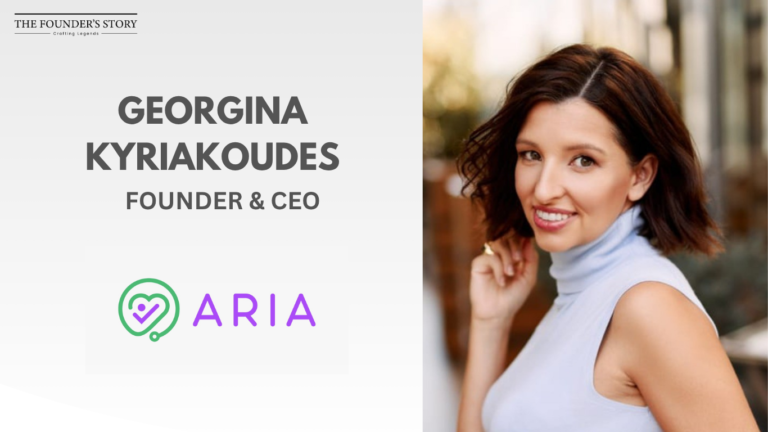
In healthcare, a few moments change lives forever. For entrepreneur and healthcare innovator Georgina Kyriakoudes, one such moment became the foundation of a mission-driven startup that is now helping reshape the future of clinical research and patient engagement. As the Co-Founder and CEO of Aria Health, Georgina has dedicated her entrepreneurial journey to solving one of healthcare’s most persistent challenges: ensuring that patients have greater control over their health data and a meaningful role in the research that ultimately shapes their care.
Aria Health is a healthcare technology company that combines patient engagement, automation, and clinical research technology into one integrated platform. The company helps researchers and healthcare organizations recruit participants faster, collect high-quality real-world evidence, and create more inclusive and patient-centric studies. By dramatically reducing the time required to move from study design to participant enrollment, Aria Health is proving that innovation and trust can coexist in healthcare.
At the heart of the company’s story lies a simple but powerful belief: healthcare works better when patients are not passive subjects but active partners.
We sat down with Founder and CEO Georgina Kyriakoudes to discuss her entrepreneurial journey, the inspiration behind Aria Health, the future of clinical research, and why patient voices deserve a central place in healthcare innovation.
TFS: Georgina, it is a pleasure to have you with us today. Your startup is tackling some of the biggest challenges in healthcare and clinical research. Thank you for joining us.
Georgina Kyriakoudes: Thank you so much for having me. I am delighted to be here and to share the story behind Aria Health and our vision for the future of healthcare research.
TFS: Your journey into healthcare innovation was sparked by a deeply personal experience. How did that moment influence your decision to pursue a career focused on transforming clinical research and patient care?
Georgina Kyriakoudes: The story behind Aria Health began with an experience that was deeply personal and incredibly frightening. My co-founder and close friend, Fady, nearly lost his wife after an ectopic pregnancy went undiagnosed. She had previously given birth at another hospital, yet none of her medical history was accessible during this emergency.
As she waited for hours in severe distress, she was unknowingly bleeding internally. By pure chance, a doctor who personally knew her happened to walk past, immediately recognized the seriousness of the situation, and rushed her into emergency surgery.
That experience stayed with both of us.
At the same time, I was completing my master’s degree in blockchain and exploring where emerging technologies could create meaningful value beyond financial services. Fady and I spent countless hours discussing industries that suffered from fragmented information and poor data accessibility.
Healthcare continually came back into our conversations. We realized that access to health information is not simply an administrative challenge. In many cases, it can literally determine whether someone receives life-saving care on time.
That moment fundamentally changed our perspective. It made us ask an important question: Why should patients have so little visibility and control over their own health information?
The answer to that question eventually became Aria Health. From the very beginning, our mission has been to create a healthcare ecosystem where patients can access, own, and contribute to their health data more effectively. More importantly, we wanted to create a system where patients become active participants in shaping healthcare outcomes rather than passive recipients of care.
As an entrepreneur, there are moments that define your purpose. For me, this was one of those moments.
TFS: Prior to founding Aria Health, you worked closely with healthcare organizations and stakeholders. What systemic challenges did you observe that convinced you there was a need for a fundamentally different approach to clinical research?
Georgina Kyriakoudes: Before starting Aria Health, I worked at PwC in London, where I audited large pharmaceutical organizations and health data companies. That experience gave me a front-row seat to the enormous complexity involved in bringing new treatments to market.
I developed tremendous respect for the scientific rigor and financial investment required in drug development. However, the realization that clinical research needed to change came later.
After launching Aria Health, we began examining how health data moves throughout the research ecosystem. What we discovered was surprising and, in many ways, concerning. Patient data was often being shared and analyzed without patients having meaningful visibility into how their information was being used.
Even when data was anonymized appropriately, something important was often lost during the process. The connection between the data and the individual behind it disappeared. Researchers could understand what happened to patients from a clinical perspective, but they often lacked insight into why it happened.
Did the patient struggle with side effects? Did they discontinue treatment because of lifestyle factors? How did other conditions influence outcomes?
These questions frequently remained unanswered. At the same time, researchers were spending significant amounts of money and time recruiting participants and keeping them engaged throughout studies. We realized these problems were interconnected.
If patients were given more ownership and treated as active contributors rather than passive subjects, many of these challenges could be addressed simultaneously. That insight became one of the foundational principles behind our startup.
TFS: What was the original vision behind Aria Health, and how has that vision evolved as the company has grown?
Georgina Kyriakoudes: The original vision behind Aria Health has always been about one thing: giving patients a voice. In fact, our company’s name reflects this philosophy.
The word “Aria” refers to a solo voice that stands out within an orchestra. We saw healthcare as an orchestra made up of clinicians, researchers, pharmaceutical companies, regulators, technology providers, and healthcare institutions. Within that orchestra, we believed the patient’s voice should be one of the loudest and most influential. Initially, our focus centered on giving people more control over their medical records and their personal health information.
We believed that individuals should have a greater say in how their data is accessed, shared, and utilized. As our company grew and our understanding of healthcare research deepened, our vision expanded. We realized that giving patients a voice extends far beyond data ownership. It also means creating opportunities for patients to actively participate in research, contribute their experiences, and help shape the future of healthcare innovation.
Although our approach has evolved significantly, our mission remains remarkably consistent. Everything we build at Aria Health ultimately comes back to ensuring that patients are seen, heard, and valued.
TFS: Aria’s ability to reduce the timeline from study design to participant enrollment from months to just 48 hours is a significant achievement. What key innovations have enabled this transformation?
Georgina Kyriakoudes: The single biggest factor behind this achievement is automation. Traditional clinical research often relies on disconnected systems, paper-based processes, manual workflows, and lengthy administrative coordination. As a result, even simple studies can take months to launch. At Aria Health, we decided to rethink the entire process.
We created a single platform that brings together study configuration, participant recruitment, eligibility screening, consent management, communication, and data collection. Researchers no longer need to navigate multiple systems or coordinate numerous manual processes.
Instead, they can design studies quickly, automate participant journeys, and begin recruitment almost immediately. However, technology alone is not enough. We have also invested heavily in user experience. When participation becomes intuitive, mobile-first, and easy to understand, people are far more willing to engage.
Higher engagement leads to faster recruitment and better-quality data. The result is a platform that dramatically accelerates research while maintaining scientific integrity and participant trust.
TFS: Traditional clinical research is often criticized for being slow, costly, and administratively complex. Which of these challenges did you prioritize solving first, and why?
Georgina Kyriakoudes: Interestingly, we did not begin our startup journey by trying to solve the traditional bottlenecks in research. Instead, we asked a different question.
What would clinical research look like if it were designed around participants rather than systems?
Our focus was on creating an experience that was transparent, engaging, and fair for the people contributing their time, experiences, and data. As we explored that question, something became clear. Many of the delays, costs, and inefficiencies in research exist because studies are often designed around institutional requirements rather than participant needs.
Researchers spend significant effort recruiting participants, rebuilding fragmented datasets, and trying to maintain engagement. However, when participants become informed and willing partners, many of these challenges begin to disappear naturally.
Participant engagement improves. Data becomes richer. Retention increases. Research moves faster.
We discovered that putting participants first was not simply the right thing to do from an ethical perspective. It was also a highly effective way to improve research outcomes.
TFS: Aria combines technology, automation, and patient engagement into a single platform. How do you ensure that technological innovation remains aligned with the needs of both researchers and participants?
Georgina Kyriakoudes: We do not see researchers and participants as having competing interests. In reality, many of the challenges researchers face exist because participant needs have not been adequately addressed.
Everything we build starts with the participant experience.
Is the study easy to understand? Is participation convenient? Is there transparency around data usage? Are we respecting people’s time? If the answer to these questions is yes, engagement improves significantly.
When participants feel valued and respected, they contribute better-quality information and remain involved for longer periods. That benefits everyone. Researchers gain richer insights and stronger datasets. Participants gain a more meaningful and rewarding experience. Technology and automation simply help facilitate that alignment. We never innovate for the sake of innovation. We innovate to remove friction and create value.
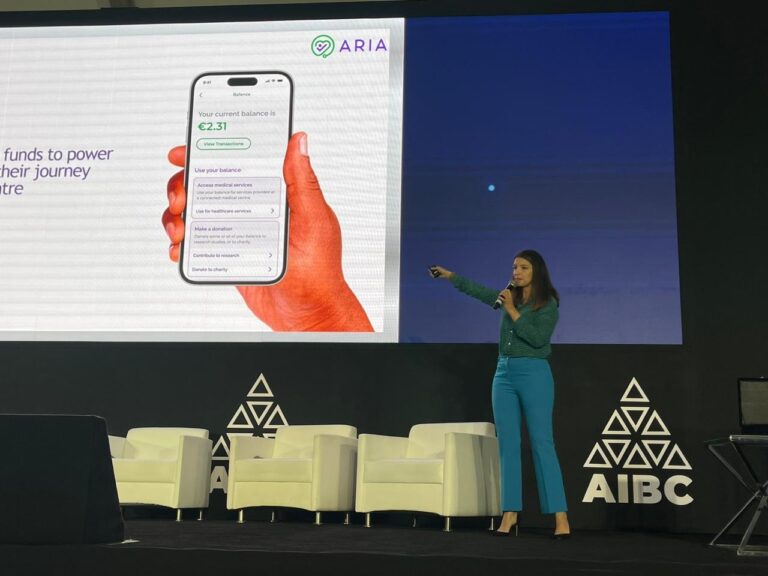
TFS: Every entrepreneurial journey comes with obstacles. What has been one of the most significant challenges you have faced as a founder, and what did you learn from it?
Georgina Kyriakoudes: One of the most significant challenges has been understanding the pace at which healthcare operates. Healthcare organizations move carefully because every decision can affect patient outcomes, privacy, and regulatory compliance. Coming from a technology background, I initially underestimated how much time is required to build trust and navigate complex stakeholder environments.
This experience taught me patience. It taught me resilience. Most importantly, it taught me the value of listening. Healthcare innovation is not simply about building great technology. It is about earning confidence from patients, clinicians, researchers, and institutions. I have also learned that different areas of healthcare move at different speeds.
Certain sectors, such as consumer health and real-world evidence generation, often require high-quality insights much faster. The opportunity for startups like ours is to help accelerate research while preserving trust and scientific integrity. The challenge is not choosing between speed and trust. The challenge is delivering both.
TFS: Was there a particular milestone, partnership, or success story that validated Aria’s value proposition and reinforced your confidence in the company’s mission?
Georgina Kyriakoudes: I would not point to one defining milestone. Rather, our confidence has been built through many meaningful moments. Over the years, we have integrated with the hospital systems of Ygia Polyclinic, American Medical Center, and the German Oncology Center.
We have collaborated with researchers from Stanford University and the University of Cyprus. We have partnered with multinational healthcare organizations and leading health technology brands. We have also received investment and support from organizations such as Outlier Ventures and Animoca Brands. Every partnership reinforced that the challenges we were addressing were real and important.
However, the most meaningful validation has always come from participants themselves. Watching individuals actively engage with research, share their experiences, and contribute valuable real-world data makes our mission tangible. Those moments remind us why we started this journey.
TFS: Operating within a highly regulated industry requires balancing innovation with compliance. How does Aria navigate regulatory requirements while continuing to push the boundaries of clinical research?
Georgina Kyriakoudes: We view compliance as an enabler rather than a barrier. Trust is the foundation of healthcare. Without trust, innovation cannot succeed. That is why we build privacy, consent management, governance, and security into the platform from the very beginning. We do not treat compliance as an afterthought. Instead, it forms part of our design philosophy.
By embedding these principles into everything we do, we create an environment where researchers and participants know that their information is being handled responsibly and ethically. This approach gives us the confidence to innovate while maintaining the standards that healthcare rightly demands.
TFS: As both Co-Founder and CEO, how would you describe your leadership philosophy, and how has it evolved throughout your entrepreneurial journey?
Georgina Kyriakoudes: I see leadership as creating clarity. My role is to help people understand where we are going, bring the right people together, and provide them with the tools they need to succeed. I do not need to have all the answers. In fact, I expect the specialists around me to know more than I do in their respective fields.
Great leadership requires trust. It requires empowering talented people and giving them the autonomy to find the best path forward. At the same time, startups rarely have specialists for every challenge. As a founder, there are moments when you simply have to figure things out. Over time, I have developed a very strong “we can solve this” mentality. If there is a gap that nobody else can fill, ultimately that responsibility belongs to me.
TFS: Real-World Evidence is becoming increasingly important in healthcare decision-making. How do you see RWE shaping the future of clinical trials, drug development, and patient outcomes?
Georgina Kyriakoudes: Real-World Evidence is helping bridge the gap between controlled clinical environments and the realities of everyday life. Healthcare is becoming increasingly personalized and patient-centered. As a result, decision-makers need insights that reflect real experiences, behaviors, and outcomes.
Real-World Evidence provides precisely that perspective. I believe we will see much greater integration between clinical trials and real-world data collection. This will create a continuous understanding of patient journeys and treatment effectiveness. Ultimately, better information leads to better decisions. Better decisions lead to better outcomes.
TFS: Patient-centricity is a key theme in modern healthcare. In your view, what does a truly patient-centered clinical research ecosystem look like?
Georgina Kyriakoudes: A truly patient-centered ecosystem treats participants as partners rather than subjects. Patients should understand how their data is being used. They should have visibility into the research they contribute to. Participation should be simple and accessible regardless of geography, mobility, or background.
Most importantly, participants should see the impact of their contributions. People are far more willing to participate when they understand that their experiences are helping improve healthcare for future generations. That is the future we are trying to build.
TFS: What advice would you offer to entrepreneurs seeking to build innovative solutions in highly regulated sectors such as healthcare and life sciences?
Georgina Kyriakoudes: Spend as much time understanding the environment as you do understanding the problem. Healthcare is an incredibly complex ecosystem. Even the best technology will struggle if it cannot integrate into existing workflows or address the realities faced by clinicians and patients. You must ask difficult questions.
Who will pay for the solution? How will it fit into existing systems? Will the benefits justify change?
Healthcare is not resistant to innovation. Healthcare professionals simply prioritize patient safety and clinical outcomes above everything else. The entrepreneurs who succeed understand this reality and build solutions that work with the system while gradually improving it.
TFS: Looking ahead, what are the most exciting opportunities and trends that you believe will redefine clinical research over the next decade?
Georgina Kyriakoudes: I believe we are entering an exciting era of remote and hybrid research models. Digital technologies, wearables, remote monitoring, and at-home testing are transforming what is possible. These technologies make research far more accessible and inclusive. They reduce barriers that have historically prevented many people from participating in studies. At the same time, they enable researchers to collect richer and more longitudinal data. This deeper understanding of health over time will play a major role in advancing personalized and preventative healthcare. The future of research will be more connected, more representative, and significantly more patient-centric.
TFS: If you could leave one lasting legacy through Aria Health, what impact would you hope the company has on patients, healthcare professionals, and the broader research community?
Georgina Kyriakoudes: I hope Aria helps create a future where participation in research becomes a normal and valued part of healthcare. Research should never feel distant, inaccessible, or reserved for a select few.
For patients, I hope we create a world where people have a voice and play an active role in shaping the future of medicine.
For researchers and healthcare professionals, I hope we provide richer insights and stronger engagement with the communities they serve.
Ultimately, I would like Aria’s legacy to be transforming research from something that is done to patients into something that is done with them. If we can make research more human, more inclusive, and more connected to everyday life, then I believe we will have achieved something truly meaningful.
TFS: Georgina, your story is a powerful reminder that some of the most meaningful innovations emerge from deeply personal experiences. Thank you for sharing your entrepreneurial journey and your vision for a more patient-centered future.
Georgina Kyriakoudes: Thank you. It has been a pleasure. I truly believe the future of healthcare depends on bringing patients closer to the research process and ensuring their voices are heard. If Aria Health can help make that happen, then we will have made a meaningful contribution to healthcare.
TFS: We look forward to watching the next chapter of the Aria Health story unfold. Thank you once again for your time.
Georgina Kyriakoudes: Thank you. It has been wonderful speaking with you.