
From AV Integrator to Collaboration Pioneer: The Founder's Story of Girish Narayanan and Granteq’s Regional Rise
In the fast-evolving world of collaboration technology and audiovisual innovation, few founder stories reflect sustained growth, strategic clarity, and regional impact quite like that of Girish Narayanan. As an entrepreneur who began his journey with a focused AV integration startup, he has successfully transformed Granteq into a trusted regional leader spanning the Middle East and India. Today, the company stands at the intersection of technology integration, experience design, and digital transformation, enabling organizations to communicate, collaborate, and innovate at scale.
Founded in 2004, Granteq started with a clear purpose—delivering reliable AV solutions. However, over the years, the startup has evolved into a sophisticated enterprise that designs and implements intelligent collaboration ecosystems. With a strong presence across the UAE, Saudi Arabia, and India, the company continues to redefine how businesses approach communication and user experience. In this in-depth founder interview, Girish Narayanan shares insights into his entrepreneurial journey, strategic decisions, and vision for the future of the AV industry.
TFS: Girish, it’s a pleasure to have you with us today. Your founder story and the growth of Granteq have been remarkable. To begin, could you walk us through the early journey of your startup?
Girish Narayanan: Thank you, it’s great to be here. When I started this startup journey, the focus was very simple—do the basics right and earn trust consistently. At that stage, Granteq operated as an AV integrator, and our primary goal was to deliver projects reliably, one at a time. However, over time, I realized that simply installing systems would not create long-term value.
Therefore, a pivotal shift happened when we redefined how we saw ourselves. Instead of thinking like a company that installs equipment, we began thinking like a company that enables communication, decision-making, and meaningful experiences. As a result, this shift influenced every aspect of the business, including hiring, training, partnerships, and project execution.
Moreover, we invested early in processes, capabilities, and regional scalability. This ensured that as we grew, we remained consistent. Consequently, this strategic clarity allowed us to expand beyond the UAE into Saudi Arabia, India, and other regional markets, while also taking on more complex and business-critical projects.
TFS: Granteq started as an AV integrator in 2004—what pivotal strategic decisions transformed it into a regional leader in collaboration technology?
Girish Narayanan: When I reflect on that phase, I believe the most critical decision was shifting our mindset. Initially, we focused on execution excellence. However, as the startup matured, we realized that clients were not just buying technology—they were investing in outcomes.
Therefore, we moved towards a solution-oriented approach. We began designing environments that improve collaboration, enhance communication, and create immersive experiences. At the same time, we strengthened our internal capabilities by building a highly skilled team and standardizing processes across regions.
In addition, we prioritized long-term partnerships over short-term gains. This helped us build credibility and trust in multiple markets. As a result, Granteq gradually transitioned from a project-based integrator to a strategic partner for enterprises. That transformation ultimately positioned us as a regional leader in collaboration technology.
TFS: How do you see the AV industry evolving over the next five years—are you positioning Granteq more as a technology integrator, experience designer, or digital transformation partner?
Girish Narayanan: The AV industry is clearly evolving beyond hardware. Today, clients are no longer interested in standalone systems. Instead, they want environments that reflect their culture, improve productivity, and adapt to changing needs.
Therefore, I would say that Granteq now operates at the intersection of integration, experience design, and digital transformation. While integration remains a core capability, our role has expanded significantly. We are helping clients visualize how technology fits into real human environments.
Moreover, this evolution requires a deeper level of thinking. It is not just about installing solutions; it is about enabling better collaboration, learning, and engagement. As a result, we are positioning ourselves as a partner who can guide clients through this transformation journey, rather than just executing technical deployments.
TFS: With hybrid work now permanent, how is Granteq redefining the “meeting room” concept for global enterprises?
Girish Narayanan: The concept of a meeting room has fundamentally changed. Today, it is no longer just a physical space. Instead, it has become a dynamic collaboration environment that connects people across locations and time zones.
Therefore, the focus has shifted from functionality to experience. We design spaces that are intuitive, reliable, and inclusive for both in-room and remote participants. In addition, we ensure consistency across multiple locations, which is critical for global enterprises.
As a result, we are moving from room-based technology to collaboration-led design. This means that every element—from audio clarity to user interface—must support seamless participation. Ultimately, the goal is to create environments where collaboration feels natural and effortless.
TFS: Granteq has a strong footprint across the Middle East and India—what are the next growth markets, and what’s your entry strategy?
Girish Narayanan: Our growth strategy has always been deliberate. We do not enter markets simply for expansion. Instead, we evaluate whether we can build sustainable value through demand, delivery capability, and long-term relationships.
Currently, Saudi Arabia remains a key market, while India continues to be a strong strategic base. Additionally, we have executed projects in markets like Jordan and Egypt, which provide valuable regional insights.
However, our approach is cautious. We prefer to grow steadily and maintain consistency rather than expand rapidly and compromise quality. As a result, our entry strategy focuses on building trust first and scaling responsibly over time.
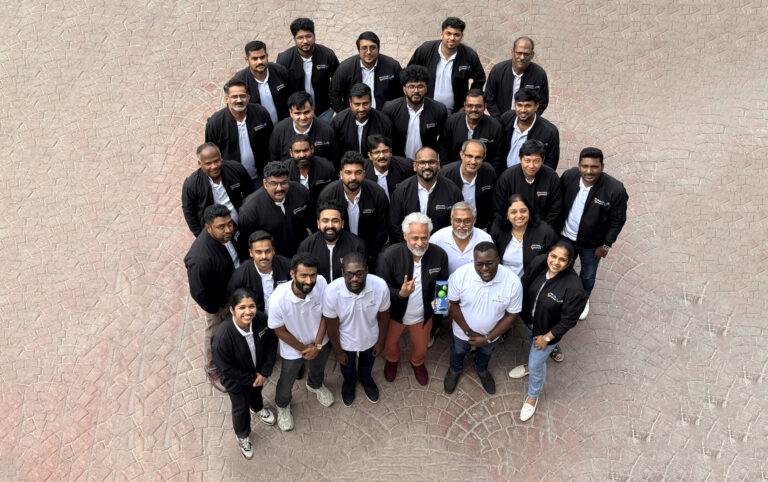
TFS: How do you balance global partnerships with building strong local execution capabilities?
Girish Narayanan: Global partnerships play a crucial role in our growth. Associations such as PSNI, AVIXA, and CEDIA provide access to global standards, industry insights, and best practices.
However, execution always happens locally. Therefore, we focus heavily on building strong on-ground teams that can deliver consistently. These global alliances do not replace local capabilities; instead, they strengthen them.
As a result, we are able to combine global thinking with regional execution. This balance allows us to deliver high-quality outcomes while maintaining accountability and trust with our clients.
TFS: What percentage of your growth today is driven by repeat clients vs new market expansion—and how do you sustain that loyalty?
Girish Narayanan: A significant portion of our growth comes from repeat clients. In fact, this is one of the strongest indicators of trust in our business. Clients return because they value consistency, transparency, and long-term commitment.
Moreover, we do not treat projects as one-time engagements. Instead, we focus on building ongoing relationships. This means staying involved even after project completion and continuously supporting the client’s evolving needs.
At the same time, we pursue new markets strategically. However, sustainable growth comes from trust. Therefore, we prioritize delivering value consistently, which naturally leads to repeat business and cross-selling opportunities.
TFS: From telepresence to immersive AV and AI-enabled environments—what emerging technologies are you most aggressively investing in right now?
Girish Narayanan: We focus on technologies that create real impact. Currently, AI is playing a transformative role in collaboration environments. For example, AI-driven transcription and multilingual capabilities are improving efficiency in global meetings.
In addition, we are investing in immersive environments and intelligent collaboration ecosystems. These technologies enhance user experience and enable better engagement across different use cases.
Furthermore, projects like GEMS School of Research and Innovation and the DHL Innovation Center demonstrate how technology can support long-term adaptability. Therefore, our focus is not on novelty but on relevance and practical application.
TFS: In projects like smart hospitality and multi-zone AV experiences, how do you shift from “installation” to “experience engineering”?
Girish Narayanan: The shift begins with asking the right questions. Instead of focusing on equipment, we focus on the intended experience. This changes the entire approach to design and implementation.
In sectors like hospitality and education, technology must integrate seamlessly into the environment. Therefore, we study how users interact with the space before designing solutions.
As a result, installation becomes just one part of the process. Experience engineering, on the other hand, ensures that technology enhances the overall environment and delivers meaningful outcomes.
TFS: How do you ensure your team stays ahead in such a fast-evolving tech landscape?
Girish Narayanan: Continuous learning is essential in our industry. Therefore, we invest heavily in training, certifications, and real-world project exposure. This ensures that our team remains adaptable and skilled.
Moreover, we encourage engagement with manufacturers and global platforms. This helps our team stay updated with the latest advancements.
Interestingly, our efforts have been recognized globally. For instance, Granteq team members have been featured in the Inavate 40 Under 40 list for two consecutive years. This reflects our commitment to building talent and fostering innovation within the organization.
TFS: Your expansion into telemedicine is interesting—what triggered that move, and how big do you see healthcare becoming for Granteq?
Girish Narayanan: Healthcare became a priority when we recognized the impact of communication technology in that sector. Unlike other industries, reliability and clarity in healthcare can directly influence outcomes.
Therefore, telemedicine and connected care environments presented a meaningful opportunity. These solutions enable remote diagnostics and improve access to healthcare services.
Looking ahead, I see healthcare becoming a significant vertical for Granteq. With increasing demand for connected care in regions like India and the Middle East, this sector offers both growth and purpose.
TFS: Which vertical currently offers the highest margin vs highest growth potential?
Girish Narayanan: Each vertical presents unique opportunities. Corporate environments remain strong due to ongoing collaboration needs. However, education and healthcare are experiencing deeper transformation.
At the same time, hospitality and retail are becoming more experience-driven. Therefore, the real focus should not just be on margins but on long-term value and scalability.
For instance, projects like GEMS SRI highlight how education is evolving into an innovation-driven space. As a result, these sectors offer significant growth potential for the future.
TFS: Granteq recently achieved PSNI Global Quality Assurance Certification—how does this impact your delivery standards?
Girish Narayanan: This certification validates our processes. While clients often see the final output, the real quality lies in planning, coordination, and execution.
Therefore, this achievement reinforces our commitment to high standards. It also enhances client confidence by demonstrating accountability and consistency.
Internally, it pushes us to continuously improve. As a result, we aim to not only meet industry standards but also help define them in the region.
TFS: In large AV integration projects, what are the most underestimated risks clients don’t see?
Girish Narayanan: There are several hidden complexities in large projects. Coordination between stakeholders is often underestimated. Similarly, site readiness and design changes can create challenges.
In addition, interoperability and user adoption require careful planning. These factors can significantly impact the final outcome.
However, our role is to manage these complexities behind the scenes. When a project feels seamless to the client, it usually means that these challenges have been handled effectively.
TFS: Your business relies heavily on strategic alliances—how do you choose the right partners?
Girish Narayanan: We evaluate partnerships based on long-term value. This includes reliability, innovation, and alignment with our quality standards.
Moreover, we avoid chasing trends. Instead, we focus on partners who can deliver consistent performance in real-world environments.
As a result, these partnerships strengthen our ability to provide reliable solutions and stay ahead of industry developments.
TFS: Looking back, what has been the toughest phase in scaling Granteq—and what leadership shift did you make?
Girish Narayanan: The most challenging phase was transitioning from a founder-led model to an organizational structure. In the early days, I was involved in every detail.
However, as the startup grew, I had to shift from doing everything myself to enabling others. This required building strong teams and trusting them.
Therefore, leadership became less about control and more about empowerment. Today, the focus is on creating a culture that can sustain growth and drive innovation independently.
TFS: Girish, this has been an incredibly insightful conversation. Your founder journey and the evolution of Granteq offer valuable lessons for entrepreneurs and industry leaders alike.
Girish Narayanan: Thank you. It has been a pleasure sharing this journey. Ultimately, building a company is about learning continuously, adapting to change, and staying committed to delivering value.
TFS: We truly appreciate your time and insights. We wish you and Granteq continued success as you shape the future of collaboration technology.
Girish Narayanan: Thank you. I look forward to what lies ahead for both the company and the industry.