
The Founder’s Story | Laia Palà on Building NIDDO, the FamTech Startup Transforming Family Life
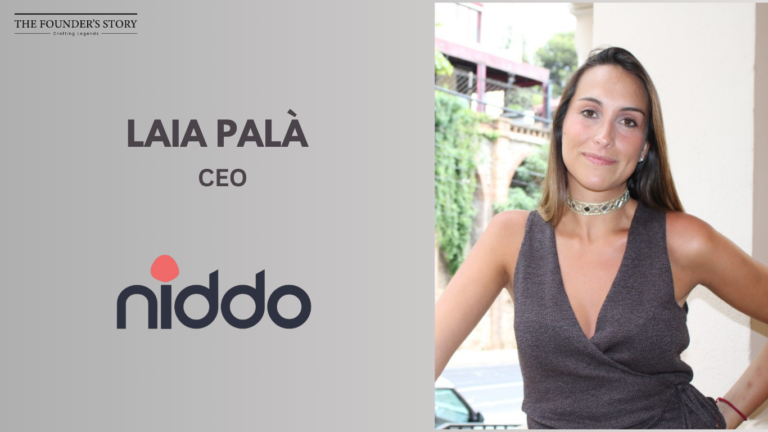
Family life has become increasingly complex, especially as parents balance careers, relationships, childcare, and responsibilities for ageing relatives. Yet, technology has not always kept pace with these realities. While workplaces benefit from tools such as project management platforms and collaboration software, families often rely on scattered calendars, messaging apps, and informal arrangements.
Recognising this gap, entrepreneur and Founder Laia Palà created NIDDO, a FamTech startup designed to simplify family organisation and reduce the invisible mental load that many families carry. The company brings together family coordination, communication, planning, and professional support within a more neutral and practical digital environment.
Laia’s Founder story began with research rather than assumptions. She spoke with more than 200 professionals connected to family care and dozens of families to understand their everyday challenges. That research revealed a deeper problem: families needed more than another productivity app. They needed infrastructure designed specifically for modern family life.
In this exclusive interview with The Founder’s Story, Laia Palà shares the story behind NIDDO, the research that shaped the startup, the role of AI in family organisation, and her vision for a future where technology reduces mental load without replacing human decisions.
TFS: Laia, welcome to The Founder’s Story. It is wonderful to have you with us. NIDDO sits at an interesting intersection of technology, family life, and social impact. Before we explore your entrepreneurial journey, thank you for joining us.
Laia Palà: Thank you. I am very happy to be here and to share the NIDDO story. From the beginning, this has been much more than a technology project for me. We started by listening to families and professionals, and that research completely shaped the company. Therefore, our goal has always been practical: make family organisation easier, reduce unnecessary mental load, and create a neutral space where people can coordinate more calmly.
TFS: That combination of research, empathy, and technology makes NIDDO particularly interesting. So, let’s begin with the problem that started your Founder journey.
TFS: NIDDO was born from a deeply human challenge rather than a technological opportunity. What was the defining moment that convinced you this problem deserved a startup instead of just another productivity app?
Laia Palà: NIDDO started as my final MBA project, but it became a company because of the research. I spoke with more than 200 professionals connected to the family sector, including lawyers, psychologists, educators, and mediators. In addition, I spoke with dozens of families and mapped their real challenges. Surprisingly, people from very different backgrounds described the same gap.
The problem became clearest when families reorganised their lives after separation, a new child, or a blended-family transition. At those moments, everything becomes harder, yet there was no tool designed specifically for that reality. Instead, families were forcing workplace tools into their personal lives.
Therefore, when more than 200 professionals independently described the same unmet need, it stopped being an intuition. It became a genuine market opportunity. That research ultimately transformed an MBA project into the NIDDO startup.
TFS: Building technology for families means entering one of the most emotional spaces in people’s lives. How do you balance innovation with empathy when designing every feature?
Laia Palà: For us, empathy has never been a presentation slide. Instead, it has shaped concrete product decisions from the beginning. First, NIDDO had to work equally well for fathers and mothers. Many family apps implicitly target mothers, and that can unintentionally reinforce the very mental load they want to reduce.
Second, we introduced AI early because users found manual data entry tedious. Asking an already overwhelmed parent to complete forms adds another burden. Therefore, NIDDO lets people create information through voice or a simple sentence.
Finally, we designed the platform for different family structures. It can support blended families, single parents, separated parents, and couples living together. Ultimately, technology should remove effort rather than create more work. For us, that is where innovation and empathy meet: the product becomes easier to use because we understand the person using it.
TFS: Many startups chase convenience, but NIDDO is also pursuing social impact. How do you measure success when your product’s biggest achievement might be preventing conflict rather than generating clicks?
Laia Palà: We are still young, so we learn a lot directly from our users. What we hear most often is that NIDDO creates peace of mind. People do not necessarily tell us how many times they open the app. Instead, they tell us that they argue less or that they no longer carry everything in their heads.
Therefore, I do not believe traditional engagement metrics tell the complete story for a product like NIDDO. If success meant keeping people inside the app longer, we could accidentally create more complexity rather than remove it.
A successful outcome might actually mean a family needs NIDDO less because its organisation has improved. Right now, we measure this through conversations and testimonials. However, our next challenge is developing metrics around mental load reduction and conflicts avoided. Those measures would reflect the real social impact of our startup far better than vanity metrics.
TFS: Before launching NIDDO, you spoke with hundreds of parents and professionals. What insight surprised you the most and completely changed your original assumptions?
Laia Palà: We initially thought we were building a shared custody calendar for separated parents. However, the research revealed that the deeper issue was mental load. This invisible work involves anticipating, deciding, remembering, and coordinating everything that keeps family life running.
That discovery changed the entire direction of NIDDO. We realised that mental load affects far more families than separated parents. It can affect couples, blended families, and anyone managing complex responsibilities.
Research has also highlighted how unevenly this cognitive work can be distributed. Therefore, we wanted NIDDO to address the practical problem without turning the product into another source of conflict. One insight became especially important: regardless of the relationship between adults, parents generally want to prioritise their children. NIDDO does not need to convince people of that. Instead, it creates a neutral structure that makes that intention easier to put into practice.
TFS: If AI becomes the invisible assistant for modern families, where should it stop? What ethical boundaries have you intentionally drawn for NIDDO’s AI capabilities?
Laia Palà: Our boundaries are very clear because trust matters enormously in family technology. NIDDO’s AI does not provide parenting advice, judge how someone should raise a child, or deal with medical decisions. Instead, its role is to make the platform easier to use.
For example, a parent can say, “appointment on Saturday at 12,” and the AI can place that information into the calendar. We also use AI to help reduce tension in communication between separated parents. If someone writes an offensive message, the system can detect problematic language and suggest a calmer version.
Therefore, the AI should lower the temperature rather than raise it. It can help adults communicate more constructively, but it should never become an authority that judges either parent. Our philosophy is simple: AI should manage logistics while important parenting decisions remain with the adults.
TFS: The family technology (FamTech) space is still relatively young. What opportunities do you see that most entrepreneurs and investors are overlooking today?
Laia Palà: FamTech is still young, but I believe it represents productivity applied to an area that technology has largely overlooked. The workplace has tools such as Slack, Notion, and Asana. Meanwhile, family life often relies on shared calendars and WhatsApp groups.
That gap represents a significant opportunity because family organisation can be highly complex. Moreover, the opportunity extends beyond childcare. Around one in five NIDDO users also use the platform to coordinate care for dependent elderly relatives.
This creates an important opportunity around the so-called sandwich generation. These people often care for children while also supporting ageing parents. Therefore, FamTech should not focus only on parents with young children. It should address the broader challenge of organising care in every direction.
I believe entrepreneurs and investors who look at FamTech through that wider lens will see a much larger opportunity than simply building another parenting app.
TFS: You’ve built a platform that connects parents, mediators, lawyers, psychologists, and other professionals. How difficult is it to create a product that serves such diverse stakeholders without losing focus?
Laia Palà: Our rule for staying focused is simple: the family is our client. Professionals such as lawyers, psychologists, educators, and mediators may recommend NIDDO. They may also use the platform to document information or support their own family-organisation methodologies.
However, we never want professional requirements to complicate the family experience. Therefore, we only build features when they create genuine value for the family first. The benefits for professionals then become a natural consequence of doing that core job well.
This distinction helps us maintain clarity as the startup grows. We are not trying to become everyone’s product. Instead, we understand who the primary client is and who can become an important channel or partner.
Ultimately, serving different stakeholders becomes manageable when the product has a clear purpose. For NIDDO, that purpose remains helping families organise life with less friction and less mental load.
TFS: Entrepreneurship is often about solving visible problems. NIDDO tackles something less obvious, the mental load carried by families. Why do you think this issue has remained underserved for so long?
Laia Palà: Mental load has remained underserved because it is both invisible and structural. Historically, much of this responsibility has fallen on women, yet invisible work is difficult to measure. Consequently, it is also harder to fund, address, and design solutions around.
However, the conversation is changing. European policy increasingly recognises the importance of work-life balance and care responsibilities. That is an important step because cultural change and legislation can create the foundation for progress.
NIDDO does not claim to solve the root causes of unequal family responsibilities. Instead, we add a practical layer that helps families manage everyday life while culture and policy continue to evolve.
I also believe honesty matters. An app that admits it cannot fix every underlying problem can earn more trust than one promising to solve everything. Therefore, our role is focused and practical: help families organise better, communicate more clearly, and reduce some of the daily burden they carry.
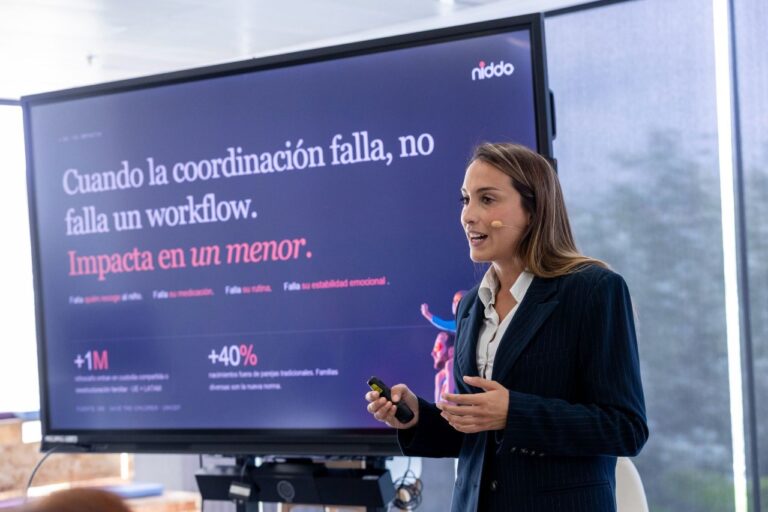
TFS: As a founder, what has been your toughest leadership lesson while transforming a sensitive social issue into a scalable technology business?
Laia Palà: One of the hardest lessons has been monetisation. Initially, we allowed people to use too much of the product for free because we believed that was the most empathetic approach. However, we eventually realised that giving too much away can dilute the product’s value and weaken the business.
Today, we approach monetisation more confidently. If NIDDO solves a meaningful problem, then people should be willing to pay for that value. In fact, being transparent about pricing can be more respectful because it recognises the value of the solution.
The challenge becomes even more delicate when the product addresses sensitive family situations. We must balance our mission with financial sustainability. Moreover, NIDDO is already being used across more than 30 countries and 40 languages, so every market teaches us something new.
As a Founder, I have learned to hold two priorities together: protect the mission while building a sustainable company.
TFS: Trust is everything when dealing with children’s information and family communication. How do you build confidence among users who are sharing some of the most personal aspects of their lives?
Laia Palà: For me, one principle is non-negotiable: we do not monetise family data. A family’s information belongs to that family. That position guides how we think about trust, privacy, and the future of NIDDO.
In FamTech, asking people to trust you while simultaneously selling sensitive information would create a fundamental conflict. Therefore, we deliberately chose a different path, even though other models might generate revenue faster.
As NIDDO grows, we may explore carefully selected partnerships with family-focused brands. However, those collaborations would remain within non-sensitive areas and follow applicable data protection requirements.
Ultimately, trust cannot come from a promise on a website alone. Instead, it comes from decisions a company makes when nobody is watching. Sometimes, protecting users means turning down an opportunity that could generate revenue. For NIDDO, that trade-off is worthwhile because long-term trust is far more valuable.
TFS: If you could redesign one outdated aspect of family life or co-parenting using technology, what would it be and why?
Laia Palà: I would redesign communication because that is where families often become stuck. Many arguments begin with misunderstandings, assumptions, or unclear expectations. Yet, today, much family communication happens through scattered WhatsApp messages and fragmented conversations.
I am also clear about what NIDDO should not become. Therapists, mediators, and other specialists already help people communicate more effectively. That is not our role. Instead, NIDDO creates the neutral space where better communication can happen.
The platform gives families an organised environment where important information can be recorded and where professional advice can be applied more easily. Therefore, I do not want NIDDO to become the therapist. I want it to become the room where difficult conversations become more manageable.
Ultimately, technology should create structure around family communication without replacing human relationships. That is the role we want NIDDO to play.
TFS: NIDDO is expanding beyond Spain and looking toward international markets. How do cultural differences influence the way families organize, communicate, and co-parent?
Laia Palà: The mental load is universal, and we see that across the more than 40 languages connected to NIDDO. However, cultural and legal frameworks can differ dramatically. Consequently, the way families organise after separation can look very different from one country to another.
For example, shared custody has become increasingly common in Spain, while other countries follow very different models. Family structures and legal recognition can also vary significantly. Therefore, the same family situation can be resolved quickly in one country but become a lengthy legal process in another.
For families, these differences are not simply legal details. They can determine whether everyday life feels calm or remains dominated by conflict. Our approach is to start with what is universal: parents want to prioritise their children, while families are often overwhelmed by logistics.
Then, we adapt NIDDO to the cultural and legal realities of each market as we expand internationally.
TFS: Founders often speak about product-market fit. In your experience, how important is founder-problem fit, and how has your own journey shaped the company you are building?
Laia Palà: For me, Founder-problem fit is almost everything because my understanding of NIDDO began with experiencing the problem closely. During a separation within my environment, I started asking practical questions about how many people faced similar challenges and how large the opportunity could be.
However, the bigger insight came later. I realised this was not simply a separated-parent problem. Instead, it was part of a much broader reality involving busy lives, complex family logistics, and overwhelming responsibilities.
That widened our perspective. We moved from thinking about an app for separated parents to building a system for families that need better organisation. This shift became central to our business thesis.
It also helped us build a network of professional referrers across Spain and increasingly across Europe. Therefore, my own experience did not simply inspire the startup. It helped me recognise a broader problem that technology could address in a practical and scalable way.
TFS: Imagine it’s 2035. What does the ideal ‘digital family ecosystem’ look like, and what role do you hope NIDDO will play in creating it?
Laia Palà: By 2035, I imagine NIDDO as an invisible layer connecting the digital assistants families already use at home, on their phones, and in their cars. Instead of waiting for someone to remember every responsibility, the system could anticipate family logistics and coordinate them automatically.
Imagine a Tuesday afternoon when the system already knows that a child needs materials for school tomorrow. It could organise the purchase, identify a clash between work and school schedules, alert another family member, and notify the relevant people if a parent becomes unavailable.
However, there is one boundary I want to protect. AI should manage logistics, not parenting. It can anticipate, coordinate, and organise, but important decisions must remain with adults.
Therefore, my ideal future is not one where technology makes family decisions. Instead, it is one where technology gives parents back the time and mental space to be present with the people who matter most.
TFS: Finally, if every entrepreneur could be remembered for solving just one meaningful problem in the world, what would you want Laia Palà’s legacy to be?
Laia Palà: If I had to choose one legacy, I would say I want NIDDO to protect two kinds of mental health. First, I want to protect children’s wellbeing by helping reduce the impact that adult conflict and family logistics can have on them.
Second, I want to support the mental health of parents who are trying to do everything well while carrying an enormous amount of responsibility. Many parents are giving everything they have while still feeling that they are falling behind.
Therefore, if twenty years from now a mother or father stops me and says, “Because of NIDDO, I stopped feeling like I had to carry everything alone, and my children never noticed the chaos,” I would consider that a successful Founder story.
TFS: Laia, that is a powerful note on which to close. Thank you for sharing not only the NIDDO story, but also the human thinking behind the technology.
Laia Palà: Thank you. For me, NIDDO has always been about making family life a little lighter. Technology is simply the means to achieve that.
TFS: And perhaps that captures the heart of your entrepreneurial journey: technology should not add another task to an already busy family. Instead, it should quietly remove some of the weight. Thank you, Laia, and we wish you and the NIDDO team continued success as you build the future of FamTech.