
The Founder’s Story | Mini Madhavan is Helping Businesses Across the Middle East Navigate Digital Transformation
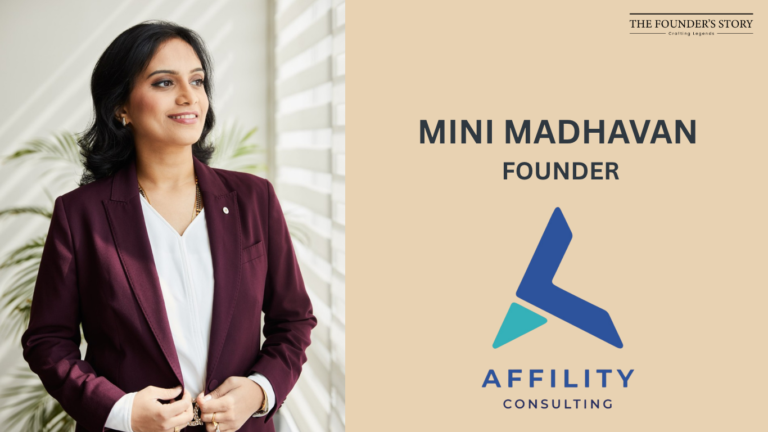
Digital transformation is no longer simply about choosing the right software. Instead, successful business transformation requires organisations to understand their processes, prepare their people, and make technology decisions that support long-term growth. Yet, many businesses still approach transformation by selecting technology first and addressing business needs later.
Recognising this gap, entrepreneur and Founder Mini Madhavan established Affility Consulting in 2017 as an independent business and technology advisory firm. With a strong background in finance, technology, consulting, and business transformation, Mini built Affility around a simple philosophy: technology should serve the business, rather than the other way around.
Affility Consulting helps organisations improve business processes, evaluate ERP and technology options, manage organisational change, and make objective transformation decisions. Moreover, the company focuses on becoming a trusted partner rather than simply delivering recommendations.
In this exclusive Founder interview with The Founder’s Story, Mini Madhavan shares the story behind Affility Consulting, the challenges of building an independent advisory firm, the importance of change management, and her vision for transforming businesses across the Middle East.
TFS: Mini, welcome to The Founder’s Story. It is a pleasure to have you with us today. Your journey combines finance, technology, consulting, and entrepreneurship, while Affility Consulting has developed a distinctive position within the business transformation space. Before we explore your Founder story, thank you for joining us.
Mini Madhavan: Thank you for having me. I am delighted to share the Affility Consulting story. Building the company has been an exciting journey, but it has also been a continuous learning experience. Over the years, I have seen how businesses can invest significantly in technology yet struggle to achieve the expected results. Therefore, our work has always focused on helping organisations make better decisions before they commit to major transformation programmes.
TFS: That makes the Affility story particularly relevant today. Let us begin with the original problem that inspired you to become an entrepreneur and build the company.
TFS: Affility Consulting was founded with a vision of enabling business excellence. What gap in the consulting industry did you identify in 2017 that inspired you to build the company?
Mini Madhavan: There were three major gaps that we noticed when we started Affility Consulting. First, businesses often selected ERP systems or technology based on brand familiarity, recommendations, or instinct. However, they rarely reviewed, improved, or documented their processes before choosing technology. Consequently, implementations could become expensive and sometimes even resulted in businesses returning to legacy systems.
Second, we noticed a significant lack of change management. Even when an ERP implementation succeeded technically, employees often continued using familiar manual processes. Therefore, organisations struggled to realise the full value of their technology investment.
Finally, there was limited independent advisory. In the UAE, businesses traditionally approached software vendors directly. As a result, technology decisions could become influenced by vendor priorities. We created Affility Consulting to provide independent, unbiased advice based on each client’s processes, requirements, and long-term business objectives.
TFS: The name ‘Affility’ is distinctive. Is there a story or philosophy behind the name, and how does it reflect the company’s values and approach to consulting?
Mini Madhavan: The name Affility comes from two words: Affiliation and Agility. Together, they represent two important principles that shape our consulting approach.
Affiliation reflects how we build relationships with our clients. We do not view ourselves as external consultants who simply provide recommendations and leave. Instead, we become trusted partners who work alongside leadership teams. This approach allows us to understand their challenges more deeply and support better business and technology decisions.
Agility, meanwhile, reflects the way we approach consulting. Every organisation is different, so there cannot be a single solution for every business. Therefore, we adapt our approach to each client’s industry, business model, processes, and challenges.
Ultimately, the Affility story is about partnership and flexibility. We combine close collaboration with practical, business-focused advice that helps organisations move forward with confidence.
TFS: Many organizations invest heavily in technology but struggle to realize its full value. In your experience, what is the biggest misconception businesses have about digital transformation?
Mini Madhavan: The biggest misconception is that digital transformation simply means implementing an ERP system or adopting new technology. Many businesses assume that once a system goes live, their transformation journey is complete. However, that is only one part of the process.
Successful digital transformation starts with understanding how the business operates today. Next, organisations need to identify opportunities to improve those processes before selecting suitable technology. Just as importantly, they must prepare employees for new ways of working and provide the right support during implementation.
Therefore, technology should enable transformation rather than define it. Even the most advanced ERP platform will struggle to deliver value if the underlying processes are inefficient or employees are not ready for change.
At Affility Consulting, we believe transformation happens when processes, technology, and people work together. That combination ultimately creates sustainable business improvement.
TFS: Affility positions itself as an independent ERP advisor rather than an implementation partner. Why is independence so important, and how does it change the outcomes for your clients?
Mini Madhavan: Independence matters because it allows us to focus entirely on what is best for the client. Our involvement begins even before an organisation selects its software or implementation partner. Therefore, our recommendations come from the client’s business processes, requirements, budget, and long-term objectives rather than from a particular vendor’s product.
This approach also changes the conversation with leadership teams. Instead of asking which software should we buy, we first ask what business problems are we trying to solve. Then, we evaluate which technology can genuinely support those objectives.
As a result, clients can reduce the risk of selecting unsuitable technology. They can also minimise expensive changes later during implementation. Most importantly, leadership teams gain confidence that their advisor is working in their best interest.
That independence remains central to the Affility Consulting story and is one of the principles that differentiates our entrepreneurial journey.
TFS: If you could spend just one day inside a company’s operations before recommending any transformation, what are the first three things you would observe?
Mini Madhavan: The first thing I would observe is the company culture and the alignment between management and employees. Cooperation from both sides is essential because transformation affects the way people work. Without that alignment, resistance and delays can quickly become major challenges.
Second, I would assess the organisation’s readiness to adopt technology. I would want to understand whether management and employees are genuinely open to new ways of working. Technology adoption requires more than purchasing software. It requires people to embrace change and understand its value.
Third, I would examine management’s appetite for transformation. This includes expectations, available budget, willingness to invest in change, and the overall scale and complexity of the organisation.
Together, these three areas provide an early picture of transformation readiness. They also help us determine whether the organisation needs technology immediately or should first strengthen its processes and people.
TFS: Business transformation often succeeds or fails because of people rather than technology. Can you share a project where managing change made a bigger difference than the technology itself?
Mini Madhavan: One project that stands out involved a client that had used the same legacy system for many years. During our business process review workshops, we realised that process owners had become extremely comfortable with their existing ways of working. Consequently, they found it difficult to imagine how a modern ERP could support different approaches.
Instead of simply documenting existing processes, we organised additional workshops to challenge established practices. We also introduced alternative ways of working and encouraged the team to think beyond their current system. Gradually, these conversations helped employees reconsider their processes and become more receptive to the transformation ahead.
Therefore, change management became just as important as the technology itself. Without preparing people for the transition, even an excellent ERP implementation could have struggled.
That experience reinforced an important lesson for me: technology can enable transformation, but people ultimately make transformation successful.
TFS: You’ve advised organizations across different sectors. Which industry has surprised you the most in terms of its willingness—or reluctance—to embrace transformation, and why?
Mini Madhavan: The construction industry has probably surprised me the most because of its reluctance to embrace transformation. Construction businesses manage many moving parts, including projects, subcontractors, suppliers, variations, budgets, and costs. Therefore, strong visibility and effective controls are extremely important.
There are many areas where better processes and technology could help construction companies reduce inefficiencies and make faster, more informed decisions. However, we still see many organisations relying heavily on manual processes and spreadsheets.
Part of this challenge comes from the limited availability of industry-specific solutions. However, there is also a natural hesitation to change established ways of working. Teams often continue with processes they have followed for many years because those processes feel familiar.
Nevertheless, I believe the opportunity is significant. With the right combination of process improvement, technology, and change management, construction companies can achieve meaningful operational improvements.
TFS: Many SMEs believe digital transformation is only for large enterprises with significant budgets. What would you say to founders who feel they are ‘too small’ to transform?
Mini Madhavan: I would tell founders that being an SME does not mean being too small for digital transformation. In fact, smaller businesses can often benefit significantly because even simple improvements can create a meaningful impact.
For example, if an affordable technology solution removes repetitive manual tasks, employees can spend more time on strategic decisions and customer relationships. That is digital transformation too. It does not always require a large ERP programme or a significant technology budget.
Today, SMEs have access to many affordable workflow platforms, SaaS solutions, automation tools, and cloud applications. Therefore, the key challenge is not always affordability. Instead, it is choosing the right solution for the business.
At Affility Consulting, we encourage entrepreneurs to start with the problem. Identify what consumes unnecessary time, create a practical solution, measure the result, and then scale. Transformation can begin small while still creating significant business value.
TFS: Every entrepreneur has moments of uncertainty. Was there a defining challenge in Affility’s journey that fundamentally changed how you lead the business today?
Mini Madhavan: One defining challenge was realising that the market was not immediately familiar with the concept of independent technology advisory. When we started Affility Consulting, I assumed businesses would naturally understand the value of having an independent advisor before making major technology decisions.
However, I quickly discovered that we first needed to educate the market. We had to explain why independent advice matters and how it can reduce technology and implementation risks.
As a Chartered Accountant with a strong technical and consulting background, I was comfortable delivering the expertise. However, I had limited exposure to marketing and positioning. Therefore, this became an entirely new learning chapter for me as an entrepreneur.
That experience changed how I lead Affility today. I learned that expertise alone does not build a successful business. You also need clear positioning, strong communication, market understanding, and trust. Ultimately, entrepreneurship requires continuous learning beyond your original area of expertise.
TFS: Consulting is built on trust. How do you earn the confidence of leadership teams when your recommendations challenge long-standing practices or require difficult decisions?
Mini Madhavan: I would not describe it as a conscious effort to earn confidence. From the beginning of every project, we make our role clear. We are not there to tell leadership teams what they want to hear. Instead, we are there to help them make the right decisions for their organisation.
That clarity establishes the foundation for trust. Leadership teams typically want an advisor who brings experience, independence, and objectivity. More importantly, they need someone who can challenge existing practices when necessary.
Therefore, we focus on facts, processes, business objectives, and practical outcomes. If our assessment indicates that a long-standing practice needs to change, we explain why and provide a clear path forward.
I believe trust develops when clients see consistency between what we say and what we do. Over time, that credibility becomes one of the strongest assets an independent consulting firm can build.
TFS: Looking back over your career, what advice would today’s Mini Madhavan give to the younger version of yourself before starting your entrepreneurial journey?
Mini Madhavan: I would tell my younger self to gain greater clarity about who you are selling to and exactly what you are selling. When we started Affility Consulting, I was highly focused on having the right expertise and delivering value. However, I gradually realised that building a business requires much more than expertise.
You need to understand your target audience clearly. You also need to understand their challenges and communicate your value in a way that resonates with them. Otherwise, even a strong solution can struggle to reach the people who need it.
Therefore, my advice would be to combine expertise with positioning and communication. Know your customer, understand their problem, and explain your solution clearly.
Entrepreneurship has taught me that being good at what you do is only the beginning. You also need to make sure the right people understand why your expertise matters to them.
TFS: What legacy do you hope Affility Consulting will leave in the Middle East’s business ecosystem over the next decade?
Mini Madhavan: Over the next decade, I hope Affility Consulting becomes synonymous with business transformation across the Middle East. I want organisations to immediately think of Affility when they need an independent partner to guide their transformation journey.
However, our vision goes beyond building a successful consulting company. We want to contribute to a stronger transformation culture across the region. Businesses should approach technology decisions with greater clarity, better process understanding, and a stronger focus on people.
Therefore, I hope the Affility story becomes one of trust, independence, and measurable business value. We want clients to know that transformation does not have to mean adopting technology simply because it is available.
Instead, it should mean making thoughtful decisions that improve operations and support sustainable growth. If we can help organisations make those decisions consistently, then I believe we will leave a meaningful legacy in the Middle East business ecosystem.
TFS: As we conclude, if you could leave business leaders and aspiring entrepreneurs with one powerful lesson you’ve learned from building Affility Consulting and helping organizations transform, what would it be?
Mini Madhavan: The biggest lesson I have learned is to always remain open to learning and embrace failure as part of the journey. Building Affility Consulting has shown me that every challenge can teach you something valuable.
Sometimes a challenge teaches you what you need to improve. At other times, it redirects you towards a better opportunity or a different approach. Therefore, I believe entrepreneurs should not view setbacks simply as failures.
Instead, we should ask what the experience is teaching us and how we can use that knowledge to move forward. Business transformation works in much the same way. Organisations need to continuously learn, adapt, and improve.
TFS: Mini, thank you for sharing your Founder story and the thinking behind Affility Consulting. Your journey highlights why transformation requires more than technology. It requires clarity, people, trust, and the courage to challenge established practices.
Mini Madhavan: Thank you. It has been a pleasure sharing the journey. I hope the story encourages more business leaders and entrepreneurs to look at transformation differently. Technology is powerful, but the real value comes when it solves the right problem and helps people work better.
TFS: And perhaps that is the strongest message from the Affility story: transformation should begin with the business, not the technology. Thank you once again, Mini, and we wish you and Affility Consulting continued success as you shape the future of business transformation in the Middle East.
Mini Madhavan: Thank you very much. I truly appreciate the opportunity, and I look forward to seeing how the Affility journey continues to evolve.