
The Founder’s Story of Suja Harish: The Mission to Build Emotionally Intelligent Organizations
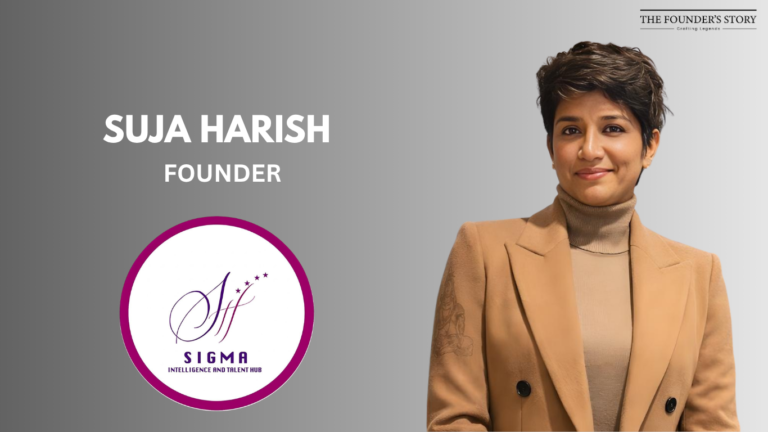
In today’s rapidly evolving business landscape, organizations need far more than traditional training programs to remain competitive. Companies now require strategic growth partners who can align leadership, capability development, emotional intelligence, culture transformation and business performance into one integrated ecosystem. This is where Sigma Intelligence and Talent Hub FZE has created a strong and differentiated presence.
Founded by Suja Harish, the company focuses on leadership transformation, capability development, onboarding excellence, culture alignment and organizational growth. Rather than offering standardized learning interventions, the startup works closely with businesses to design customized development frameworks that create measurable and sustainable business impact.
As a founder, entrepreneur and leadership strategist, Suja Harish believes learning should not remain a classroom activity. Instead, it should influence leadership behavior, workplace accountability, employee engagement and overall business performance. In this exclusive founder interview, she shares insights into her entrepreneurial journey, the vision behind Sigma Intelligence and Talent Hub FZE and the future of leadership and human capital transformation.
TFS: Suja, welcome and thank you for joining us today. We are excited to hear your founder story and learn more about the vision behind Sigma Intelligence and Talent Hub FZE.
Suja Harish: Thank you so much. It is truly a pleasure to be part of this conversation. Building Sigma Intelligence and Talent Hub FZE has been an incredibly meaningful entrepreneurial journey for me. From the beginning, my vision was very clear. I wanted to help organizations move beyond traditional training models and create meaningful transformation that becomes visible in leadership behavior, workplace culture and business outcomes.
Throughout my experience across different industries and leadership environments, I observed that many organizations invested heavily in training initiatives, yet very little changed within daily work environments. That realization became the foundation of our startup and continues to shape our growth philosophy today.
TFS: Sigma Intelligence positions itself as a “growth partner” rather than a traditional L&D provider—what fundamentally differentiates this model in terms of business outcomes?
Suja Harish: At Sigma Intelligence and Talent Hub FZE, we do not view learning as an isolated event. Traditional L&D providers often focus on conducting workshops or delivering training sessions after identifying a generic skill gap. However, our approach begins by understanding the actual business outcome the organization wants to achieve.
We focus on identifying performance gaps, leadership challenges, behavioral shifts and operational barriers that may be impacting business growth. Therefore, learning becomes connected to productivity, employee engagement, onboarding effectiveness, retention, leadership capability and overall organizational performance.
Another important difference is that we focus heavily on application and reinforcement. Training alone rarely creates sustainable transformation. Real growth happens when leaders and employees consistently apply learning within real business situations. That is why we position ourselves as a long-term growth partner rather than simply a training provider.
TFS: You emphasize “no copy-paste solutions.” In a market saturated with standardized training, how do you operationalize true customization at scale without compromising consistency?
Suja Harish: True customization requires much more than simply modifying a presentation or changing a few examples. At Sigma Intelligence and Talent Hub FZE, we maintain consistency through a structured methodology while customizing every intervention according to the client’s culture, business priorities, industry realities and leadership maturity.
Before designing any intervention, we spend time understanding the organization deeply. We analyze leadership behaviors, communication patterns, capability gaps, accountability challenges and workforce expectations. This helps us design highly relevant learning experiences instead of generic programs.
The consistency comes from our framework, reinforcement systems and measurement methodology. However, the learning journey itself is always aligned to the client’s unique business environment. That balance allows our startup to scale while still delivering personalized transformation experiences.
TFS: What systemic gaps in conventional HR and talent development frameworks led you to build Sigma Intelligence in 2023?
Suja Harish: One of the biggest gaps I observed was that many learning and HR interventions were activity-driven rather than outcome-driven. Organizations conducted training programs regularly, but leadership behavior, accountability and workplace effectiveness often remained unchanged.
I realized that many companies lacked an integrated approach that connected business strategy, leadership development, onboarding, capability building and culture transformation together. Most solutions existed in silos.
That realization inspired me to build Sigma Intelligence and Talent Hub FZE in 2023. I wanted to create a startup that focused not only on learning delivery but also on measurable business transformation. Our goal has always been to help organizations create visible movement in leadership effectiveness, employee behavior, collaboration and long-term performance outcomes.
TFS: Many organizations struggle to prove ROI on learning—how does Sigma Intelligence concretely measure behavioral and business impact post-intervention?
Suja Harish: We measure impact at multiple levels rather than focusing only on participant feedback or training satisfaction. For us, the most important question is whether the intervention created meaningful behavioral and business change.
Depending on the objective, we track indicators such as productivity improvement, onboarding effectiveness, retention, communication quality, accountability, coaching behavior and leadership effectiveness. We also monitor how consistently employees and leaders apply learning within their daily work environment.
Another important aspect is reinforcement. Without follow-through, even strong learning interventions lose momentum. Therefore, we involve managers and leadership teams throughout the transformation journey. Learning ROI becomes meaningful only when organizations can clearly observe changes in workplace behavior and business performance.
TFS: Your “visual learning path” approach is compelling—how does it change employee accountability and leadership visibility compared to traditional learning journeys?
Suja Harish: A visual learning path creates much stronger clarity and ownership. Employees can clearly see where they currently stand, what skills they need to develop and what growth milestones they are expected to achieve.
This visibility increases accountability because learning no longer feels abstract or disconnected from business goals. Employees become more engaged when they understand how development connects to career growth and organizational expectations.
For leaders, the visual learning approach provides much better visibility into capability progression, employee readiness and development gaps. Instead of learning becoming a one-time event, it becomes a continuous and measurable journey that leaders can actively support and monitor.
TFS: What are the most common misconceptions leaders have about capability development and how do you challenge them through your programs?
Suja Harish: One major misconception is that capability development is the same as training delivery. Training can transfer knowledge, but capability development must influence thinking, leadership behavior, decision-making and execution under pressure.
Another misconception is that organizations should focus on capability development only after performance problems appear. In reality, high-performing organizations build capabilities proactively before gaps become expensive.
Through our programs, we help leaders understand that sustainable business growth depends heavily on behavioral consistency, emotional intelligence, adaptability and leadership effectiveness. We connect capability development directly to measurable business outcomes so leaders can clearly see its long-term value.
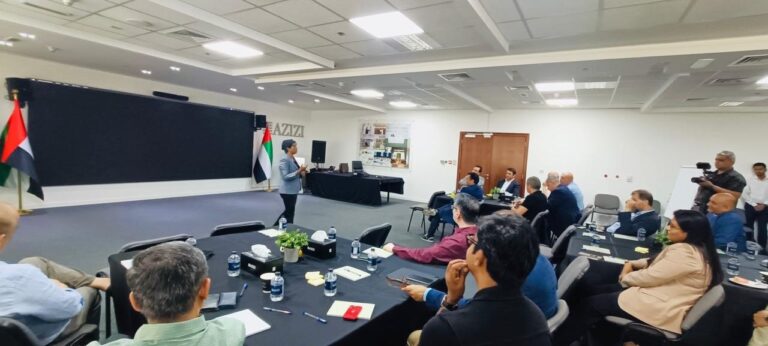
TFS: You describe yourself as a “mindset hacker”—how do you integrate neuroscience and emotional intelligence into leadership transformation in a measurable way?
Suja Harish: When I describe myself as a mindset hacker, I mean helping leaders identify limiting patterns and replace them with more effective responses and behaviors. Neuroscience helps us understand how stress, habits, emotions and attention influence workplace behavior.
At the same time, emotional intelligence helps leaders regulate themselves, communicate more effectively and build stronger relationships with their teams. We integrate both elements into leadership transformation because sustainable growth requires both self-awareness and behavioral consistency.
We measure transformation through practical behavioral indicators such as communication quality, coaching habits, conflict management, emotional regulation and leadership accountability. Transformation becomes truly visible when leaders begin responding differently during high-pressure situations.
TFS: In high-pressure environments, technical competence often outweighs emotional intelligence—how do you shift this mindset among senior leadership?
Suja Harish: In many organizations, technical expertise is prioritized because it appears easier to measure. However, technical competence without emotional intelligence often creates silos, communication breakdowns, low trust and retention challenges.
We help leaders understand that emotional intelligence directly influences business performance. Team engagement, accountability, collaboration, retention and leadership trust are all heavily shaped by leadership behavior.
Once senior leaders recognize that emotional intelligence strengthens execution rather than weakening authority, the mindset begins to shift. Emotional intelligence is not a soft skill anymore. It is a strategic business capability.
TFS: What patterns do you consistently observe in leaders who fail to drive transformation despite undergoing multiple training interventions?
Suja Harish: One common pattern is confusing exposure with adoption. Leaders attend programs, agree with the concepts and then return to old habits because there is no reinforcement or accountability.
Another pattern is selective application. Leaders adopt behaviors that feel comfortable while avoiding more difficult changes such as active listening, coaching-based leadership, or collaborative decision-making.
Sustainable transformation requires consistent behavioral practice, reflection and workplace application. Without reinforcement, even the best learning experiences eventually fade.
TFS: Resistance to change remains a major barrier—what are the most effective levers you’ve used to move organizations from awareness to actual behavioral adoption?
Suja Harish: Awareness is relatively easy to create. However, behavioral adoption requires reinforcement within real work environments. Therefore, we focus heavily on coaching, leadership involvement, accountability systems and practical application.
Visible leadership sponsorship is also critical. When senior leaders consistently model new behaviors and reinforce expectations, adoption accelerates significantly across the organization.
Employees move from awareness to action much faster when transformation becomes part of the workplace culture rather than a separate initiative.
TFS: How do you ensure that culture transformation initiatives don’t remain “HR-led programs” but become business-owned imperatives?
Suja Harish: Culture transformation cannot remain an HR project because culture is shaped through leadership behavior, operational decisions, communication patterns and accountability systems.
We position culture transformation around measurable business outcomes such as productivity, retention, customer experience, collaboration and leadership effectiveness. When business leaders see the direct impact on organizational performance, ownership increases naturally.
Culture becomes sustainable only when leaders actively model the behaviors they expect from others.
TFS: From your experience, what is the most underestimated driver of employee retention today—compensation, leadership, or growth pathways?
Suja Harish: Growth pathways are often the most underestimated driver of retention today. Compensation matters, but many employees leave organizations because they do not see meaningful development opportunities or long-term career progression.
Employees stay longer when they can clearly see how they are growing professionally and personally. That is why we strongly emphasize career development frameworks, capability mapping and visible learning pathways within organizations.
TFS: With increasing focus on internal mobility and career pathing, how should organizations rethink talent retention in a skills-first economy?
Suja Harish: Organizations need to move from role-based retention to capability-based retention. Employees today want learning opportunities, flexibility, mobility and meaningful growth experiences rather than simply titles or tenure.
Companies should create internal pathways that allow employees to move across roles based on capabilities and evolving business needs. Internal mobility should become a strategic retention strategy rather than only an HR process.
Organizations that invest in continuous capability development will build much stronger workforce resilience in the future.
TFS: What role do you see AI and digital learning ecosystems playing in human capital transformation over the next 3–5 years?
Suja Harish: AI and digital learning ecosystems will make learning far more personalized, accessible and data-driven over the next few years. Organizations will identify capability gaps faster, provide intelligent learning recommendations and track growth more effectively.
However, technology will never replace human-centered leadership development. Emotional intelligence, trust, empathy, resilience and influence remain deeply human capabilities.
The organizations that succeed will combine technology with authentic human leadership and behavioral transformation.
TFS: Having worked across diverse industries and leadership contexts, what has been the most unexpected insight about human behavior in organizations?
Suja Harish: One of the most surprising insights is that workplace behavior is far more emotion-driven than most organizations realize. Even highly analytical professionals make decisions influenced by trust, fear, identity and psychological safety.
That is why technical solutions alone rarely solve organizational problems. If the emotional environment is ignored, behavioral transformation becomes extremely difficult. Sustainable organizational growth requires both strategic clarity and emotional understanding.
TFS: For leaders reading this conversation, what is the first immediate change they should make tomorrow to build a truly high-performing culture?
Suja Harish: The first change I would recommend is simple. Leaders should spend more time observing behavior than announcing expectations.
High-performing cultures are built through what leaders consistently reinforce, reward and correct. If leaders want accountability, they must model accountability. If they want ownership, they must create clarity and trust.
Ultimately, culture transformation begins with leadership behavior and everyday consistency.
TFS: Suja, this has been an incredibly insightful conversation. Thank you for sharing your founder story, entrepreneurial journey and leadership insights with us today.
Suja Harish: Thank you. It has truly been a pleasure being part of this interview. I strongly believe organizations grow when people grow. Sustainable business transformation happens when leadership, culture, emotional intelligence and capability development align together.
At Sigma Intelligence and Talent Hub FZE, our mission is to help organizations create meaningful transformation that becomes visible in leadership behavior, workplace culture and long-term business performance.
TFS: Thank you once again, Suja. We look forward to seeing the continued growth story of Sigma Intelligence and Talent Hub FZE in the years ahead.