
Why AI Is a Business Transformation Strategy and Not Just a Technology Project: The Founder's Story of Tyler Yeom
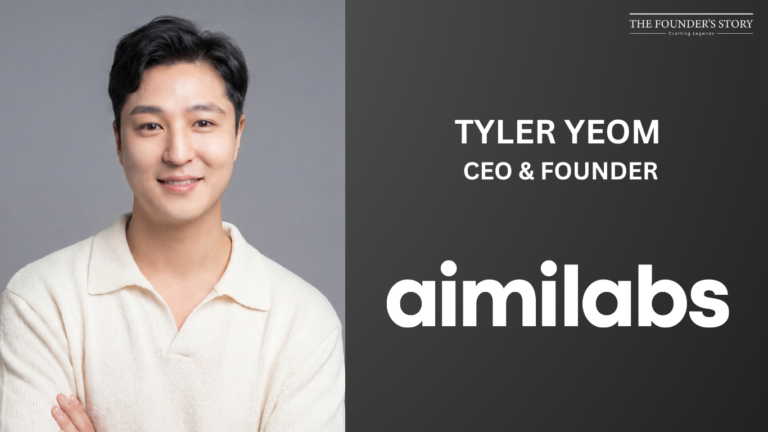
In an era where Artificial Intelligence is rapidly reshaping industries, many organizations are still struggling to move beyond experimentation and generate meaningful business outcomes. While companies continue investing heavily in AI technologies, only a small percentage have successfully transformed AI into measurable growth, operational efficiency and strategic advantage. Bridging this gap between technological possibility and business reality is precisely where Aimilabs has established its unique position.
Founded by entrepreneur and marketing veteran Tyler Yeom, Aimilabs is an AI-native agency that combines artificial intelligence, automation, creativity and data intelligence to help businesses achieve measurable transformation. Rather than following the traditional agency model that focuses on billable hours and fragmented services, the startup was built around a single principle: delivering tangible business outcomes through intelligence-driven solutions.
With more than sixteen years of experience in marketing and business strategy, Tyler Yeom recognized early that AI was not simply another technology trend. Instead, he saw it as a fundamental shift in the way organizations would operate, make decisions and engage with customers. This realization became the foundation of his entrepreneurial journey and eventually led to the creation of Aimilabs.
In this exclusive founder interview, Tyler shares the story behind building Aimilabs, his leadership philosophy, his perspective on AI adoption and his vision for a future where human creativity and machine intelligence work together to unlock unprecedented business value.
TFS: Tyler, thank you for joining us today. It is a pleasure to have you here and learn more about your entrepreneurial journey and the incredible work happening at Aimilabs.
Tyler Yeom: Thank you for having me. I’m excited to share our story, discuss the future of AI and talk about how businesses can turn intelligence into meaningful outcomes.
TFS: What was the pivotal moment that convinced you to build Aimilabs instead of pursuing a more conventional career path?
Tyler Yeom: After spending sixteen years in marketing, I reached a point where I could clearly see that the industry was entering a major inflection point. Traditional agencies were beginning to add AI capabilities to existing service models, but fundamentally nothing else was changing. They were simply attaching new technology to old frameworks.
I realized that Artificial Intelligence would not merely improve the agency model. Instead, it would completely redefine how businesses operate, make decisions, allocate resources and engage customers. That realization became my pivotal moment.
As an entrepreneur, I had two choices. I could continue adapting to a system that was slowly becoming outdated or I could take the risk of building something entirely new and create for the future instead of reacting to it.
I chose the second path because transformational moments in technology do not happen often. When they do happen, they create opportunities to rethink industries from the ground up. I believed there was an opportunity to build an AI-native company that could deliver measurable outcomes rather than simply provide services.
Building Aimilabs was not just a career decision. It was a conviction that businesses needed a new operating model for the age of intelligence. That belief became the foundation of our startup and continues to guide every decision we make today.
TFS: What personal habit, routine or mindset has contributed most to your success as a founder and CEO?
Tyler Yeom: Without question, it has been relentless curiosity.
Technology evolves at an incredible pace. What works today may become obsolete tomorrow. Therefore, I believe leaders have an obligation to remain students throughout their entire careers.
I spend a significant amount of time learning. I read extensively, study emerging technologies, follow changes in consumer behavior and engage with people from different industries. I have always believed that asking better questions is more important than pretending to have all the answers.
As a founder, curiosity creates adaptability. It prevents complacency and encourages innovation. More importantly, it allows you to identify opportunities that others may overlook.
Many leaders become successful and then begin relying entirely on their previous experiences. However, previous success can sometimes become a limitation because it creates assumptions about the future.
I try to approach every challenge with a beginner’s mindset. I remain open to new ideas and constantly challenge my own thinking. That mindset has been one of the most valuable assets throughout my entrepreneurial journey.
TFS: Outside of business and technology, what experience or interest has had the greatest influence on your leadership style?
Tyler Yeom: Growing up across different countries and cultures has had an enormous impact on the person and leader I became.
Experiencing different cultures teaches you something incredibly valuable. It shows you that there is rarely only one correct way of doing things. Different societies approach challenges differently and each perspective offers unique insights.
That experience made me adaptable and open-minded. It also taught me the importance of listening before making assumptions.
Today, Aimilabs works with people from different backgrounds, industries and experiences. Because of my multicultural upbringing, I am comfortable leading diverse teams and encouraging multiple viewpoints.
Innovation often happens at the intersection of different perspectives. Great ideas can come from anywhere and from anyone. Therefore, I believe leaders should create environments where diverse thinking can flourish.
My experiences outside business taught me that leadership is not about having all the answers. It is about creating conditions where great ideas can emerge collectively.
TFS: Aimilabs positions itself as an AI-native agency. What gap in the traditional agency model were you determined to solve?
Tyler Yeom: Traditional agencies primarily sell time and hours. However, businesses are not buying hours. They are investing in outcomes.
That disconnect became increasingly obvious to me over the years. Companies want growth, efficiency, improved customer experiences and measurable business impact.
We built Aimilabs to close that gap.
As an AI-native agency, we combine artificial intelligence, data, creativity, automation and strategic thinking into one integrated model. Instead of offering isolated services, we focus on solving business problems.
Our approach starts with identifying opportunities where intelligence can create value. Then we design systems and solutions that deliver measurable outcomes.
The future of consulting and agency work is not about producing more reports or spending more hours. It is about generating meaningful business transformation. That is the gap we set out to solve and continue to solve every day.
TFS: Many organizations are investing heavily in AI but struggling to achieve measurable results. What are the biggest mistakes you see companies making?
Tyler Yeom: The biggest mistake is that companies start with technology instead of business problems.
Organizations often ask which AI tool they should buy. However, they should first ask what challenge they are trying to solve.
Technology without purpose rarely creates value.
Successful AI adoption begins by identifying a specific business problem, understanding its root causes and then determining whether AI is actually the best solution.
Another common mistake is expecting immediate transformation. AI is not magic. It requires process redesign, change management and organizational alignment.
Many companies also underestimate the importance of data quality and employee adoption. Technology alone cannot deliver transformation.
Businesses that succeed with AI focus on outcomes first and tools second. That simple shift in thinking often determines whether AI becomes a strategic advantage or an expensive experiment.
TFS: How do you determine whether a business challenge requires AI, process redesign, automation or a combination of all three?
Tyler Yeom: We always begin by asking one simple question: What is causing the bottleneck?
Sometimes the issue is repetitive work that can be automated. Sometimes the challenge comes from inefficient processes. In other situations organizations need predictive intelligence and advanced decision-making capabilities that AI can provide.
In reality, most business problems require a combination of all three.
Technology should never be implemented in isolation. Instead, it should be viewed as part of a larger transformation strategy.
At Aimilabs, we spend significant time diagnosing challenges before recommending solutions. We focus on understanding workflows, identifying inefficiencies and evaluating where intelligence can generate the greatest value.
That disciplined approach ensures that we solve the right problems instead of simply implementing the latest technology.
TFS: What key performance indicators do you believe best demonstrate the true ROI of AI initiatives?
Tyler Yeom: I always look at four fundamental indicators.
The first is revenue growth.
The second is cost reduction.
The third is time savings.
The fourth is improvements in customer experience.
If an AI initiative does not positively impact one or more of these metrics, it probably is not creating meaningful business value.
Organizations sometimes focus heavily on technical measurements, but executives ultimately care about business outcomes.
The purpose of AI is not to build sophisticated technology for its own sake. The purpose is to improve how organizations operate and compete.
The most successful AI initiatives create measurable impact that can be clearly linked to strategic objectives and financial performance.
TFS: Among Aimilabs’ proprietary solutions, which innovation do you believe will have the greatest long-term impact on the industry and why?
Tyler Yeom: Without hesitation, I would say AIMEE.
The future is not about collecting more information because organizations already have enormous amounts of data. The real challenge is turning that information into action quickly and effectively.
That is exactly why we built AIMEE.
Its purpose is to transform intelligence into actionable insights that improve decision-making and accelerate execution.
As markets become increasingly complex and competitive, the organizations that can interpret information faster and act with greater precision will gain significant advantages.
I believe AIMEE represents the next phase of business intelligence because it helps companies move beyond reporting and toward intelligent action.
That capability will become increasingly important as businesses continue navigating a rapidly changing world.
TFS: As AI-generated content becomes increasingly common, how can brands maintain authenticity and build genuine customer trust?
Tyler Yeom: Authenticity comes from intent rather than technology.
AI can create content efficiently, but it cannot replace genuine understanding, empathy and honesty.
Customers can recognize when brands communicate authentically and when they simply generate content to increase volume.
Trust is built through consistency, transparency and meaningful engagement.
Organizations should use AI to enhance creativity and improve efficiency, but they should never allow technology to replace their values or their connection with customers.
The brands that succeed will be those that combine technological capabilities with human authenticity.
TFS: What misconceptions do CEOs and senior executives commonly have about AI adoption and digital transformation?
Tyler Yeom: One of the biggest misconceptions is believing that AI is primarily a technology project.
In reality, it is a business transformation project.
The technology itself is often the easiest part. The real challenge lies in changing processes, aligning teams, redefining operating models and managing organizational change.
Many leaders underestimate the human aspects of transformation.
Successful AI adoption requires leadership commitment, cultural alignment and strategic clarity.
Technology may enable transformation, but people ultimately determine whether transformation succeeds.
TFS: How do you balance innovation and experimentation with the need for governance, compliance and risk management?
Tyler Yeom: Innovation without governance creates unnecessary risk.
At the same time, governance without innovation creates stagnation.
The goal is to build frameworks that support both.
Organizations need clear policies, ethical standards and risk management practices. However, they also need enough flexibility to experiment and learn.
The most innovative companies are often the ones that have established strong governance foundations because those foundations give teams the confidence to move quickly and responsibly.
Balance is essential because sustainable innovation requires both creativity and discipline.
TFS: Which business functions do you believe will experience the most significant transformation from AI over the next five years?
Tyler Yeom: Marketing, customer service, operations and decision-making will undergo profound transformation.
AI is already changing how organizations engage customers, optimize workflows and allocate resources.
Perhaps the most significant change will occur in decision-making.
Businesses are moving from simply reporting historical information toward predicting future outcomes and making proactive decisions.
That transition represents a fundamental shift in how organizations operate.
Companies that embrace predictive intelligence will gain substantial competitive advantages in the coming years.
TFS: For companies just beginning their AI journey, where should they focus their initial investments to achieve the fastest and most sustainable returns?
Tyler Yeom: I encourage organizations to begin with repetitive and high-volume processes.
These areas often provide quick wins and measurable results.
Early successes build confidence and create momentum throughout the organization.
They also help employees understand the practical value of AI and generate support for larger transformation initiatives.
Starting small and scaling strategically is often more effective than pursuing ambitious projects without organizational readiness.
Successful transformation happens incrementally and every small win contributes to long-term success.
TFS: What characteristics differentiate organizations that successfully scale AI from those that struggle to move beyond pilot projects?
Tyler Yeom: The difference usually comes down to focus.
Successful organizations focus on business outcomes.
Unsuccessful organizations focus primarily on technology.
The companies that scale AI effectively have clear objectives, strong executive sponsorship and a commitment to measurable impact.
They understand that AI is not an end goal. It is a means to achieve strategic business outcomes.
Organizations that remain focused on solving real problems are far more likely to achieve sustainable transformation.
TFS: Looking ahead to 2030, how do you envision the relationship between human talent and AI evolving and what role will Aimilabs play in shaping that future?
Tyler Yeom: I firmly believe that AI will not replace people. Instead, it will amplify human potential.
The future belongs to organizations that successfully combine human creativity, strategic thinking and emotional intelligence with machine capabilities.
AI will automate repetitive tasks and provide deeper insights, which will allow people to focus on innovation, relationships and complex problem-solving.
At Aimilabs, we are building toward that future.
Our mission is to help organizations become more intelligent, adaptive and human-centric through responsible AI adoption.
We want to create a world where technology empowers people rather than replaces them.
That vision continues to inspire our team and shape every solution we build.
TFS: Tyler, thank you for sharing your insights and entrepreneurial story with us today. Your perspective on AI, leadership and business transformation offers valuable lessons for founders, executives and organizations navigating the future of work.
Tyler Yeom: Thank you. It has been a pleasure. We are living through one of the most exciting periods in technological history. The opportunities ahead are extraordinary and I believe the organizations that embrace intelligence while remaining deeply human will define the next generation of success.
TFS: We wish you and the entire Aimilabs team continued success as you shape the future of AI-driven business transformation.
Tyler Yeom: Thank you very much. The journey is only beginning and we are excited about what lies ahead.